
Email list — also called a mailing list — is a collection of email addresses that a business has gathered from people who have opted in to receive communications. These subscribers have given explicit permission to be contacted, which distinguishes a legitimate email list from purchased or scraped contact databases. Every name on a well-built list represents someone who expressed interest in your brand, products, or content.
For businesses, an email list is one of the most valuable digital assets you can own. Unlike social media followers, your email list isn’t subject to algorithm changes or platform policy shifts — you have a direct line to your audience whenever you choose to use it. Marketers who report a 760% increase in revenue from segmented campaigns are building that success on a foundation of a quality, permission-based list.
[Image: Simple diagram showing subscriber → opt-in form → email list → campaign send]
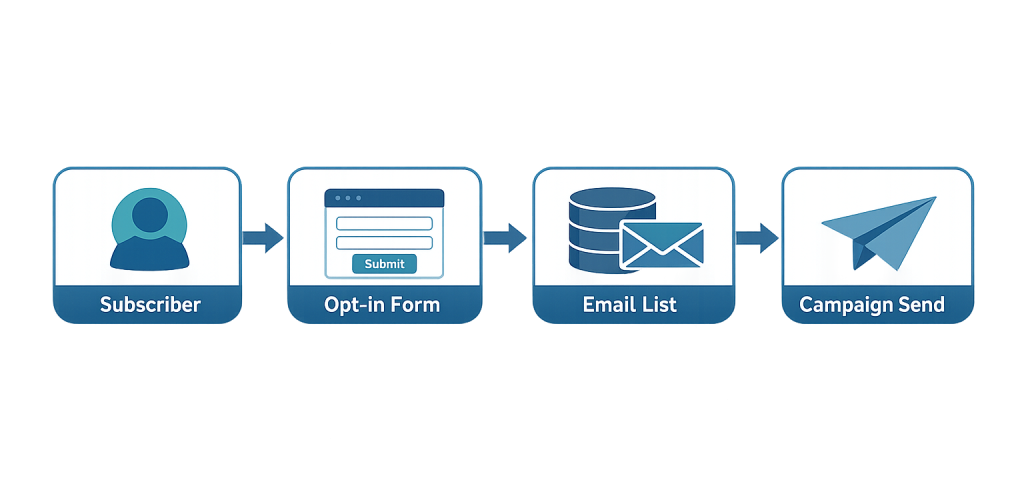
How an Email List Works
An email list is maintained through an email service provider (ESP) — platforms like Mailchimp, Klaviyo, ActiveCampaign, or ConvertKit. When someone fills out a form on your website, signs up at checkout, or downloads a lead magnet, their contact information is added to your list automatically.
Each subscriber record typically includes:
- Email address — the essential field
- First name — used for personalization
- Source — how and where they joined
- Date added — for list hygiene and engagement tracking
- Tags or segments — for targeted sending
- Engagement data — open history, click history, purchase behavior
Lists grow through opt-in mechanisms — forms, pop-ups, landing pages, and checkout prompts — and shrink through unsubscribes, bounces, and manual cleanup. Keeping a list healthy requires both adding subscribers and removing inactive ones regularly.
Purpose & Benefits
1. A Direct, Owned Marketing Channel
Unlike paid advertising or social media, your email list is an asset you own. You’re not paying per impression, and you’re not at the mercy of algorithm changes. Email reaches subscribers directly in their inboxes — and 99% of email users check their email daily, making it one of the most reliable channels for consistent engagement.
2. Enabling Segmentation and Personalization
A properly maintained list isn’t just a single group of contacts — it’s a database you can divide into meaningful segments. By tagging subscribers based on behavior, purchase history, or stated interests, you can send highly relevant messages. Segmented email marketing campaigns consistently outperform batch-and-blast sends in open rates, click rates, and revenue generated.
3. Foundation for Automation
Your email list is what makes email automation possible. Welcome sequences, drip campaigns, and behavioral triggers all rely on having subscribers to receive them. The list is the audience; the automation is what you do with that audience over time.
Examples
1. Retail Store Building a List at Checkout
An eCommerce business adds an optional checkbox to checkout: “Sign me up for exclusive offers.” Customers who opt in are added to the list and immediately entered into a welcome sequence. Over time, this list becomes the company’s primary channel for product launches, flash sales, and seasonal promotions — all at a fraction of the cost of paid advertising.
2. Service Business Offering a Lead Magnet
A home services company creates a free downloadable guide — “10 Questions to Ask Before Hiring a Contractor” — and promotes it on their website. Visitors who download the guide opt in to the email list. These subscribers are already interested in the topic, making them warm leads who are more likely to eventually request a quote.
3. Newsletter Subscriber Base
A B2B consulting firm publishes a weekly newsletter with industry insights. Over two years, they build a list of 4,000 engaged subscribers. When they launch a new service, a single email to that list generates more qualified inquiries than months of LinkedIn outreach. The list is the asset; the newsletter is what keeps it alive.
Common Mistakes to Avoid
- Purchasing email lists — Bought lists are almost always low quality, full of unengaged or invalid addresses, and violate the terms of most email service providers. They also damage your sender reputation and risk spam complaints.
- Never cleaning the list — Inactive subscribers drag down your engagement metrics and can hurt deliverability. Prune subscribers who haven’t opened an email in 6–12 months, or run a re-engagement campaign first.
- Treating all subscribers the same — Sending the same message to your entire list ignores the differences between a new subscriber, a loyal customer, and someone who hasn’t opened an email in months. Segmentation exists for good reason.
- Not confirming permission — In many regions, double opt-in (where subscribers confirm via a follow-up email) isn’t just a best practice — it’s a legal requirement under regulations like GDPR. Even where it’s not required, it produces a more engaged list.
Best Practices
1. Grow Organically Through Clear Value Exchanges
Subscribers who know exactly what they’re signing up for — and who see clear value in it — stay engaged longer. Make the benefit explicit: “Get weekly tips on improving your website’s performance.” Vague sign-up prompts attract uncommitted subscribers. Pair your list-building with an autoresponder so new subscribers immediately receive something useful.
2. Segment from the Start
Don’t wait until your list is large to start segmenting. Tag subscribers at the point of sign-up based on how they joined (lead magnet, checkout, contact form) and use that data to send more relevant messages. Even basic segmentation — new vs. returning subscribers, product buyers vs. newsletter-only — meaningfully improves performance.
3. Maintain List Hygiene Regularly
Monitor your bounce rates, spam complaint rates, and engagement metrics. Hard bounces (invalid email addresses) should be removed immediately. Run periodic re-engagement campaigns for inactive segments, and remove those who don’t respond. A list of 2,000 highly engaged subscribers outperforms a list of 10,000 unengaged ones every time.
Frequently Asked Questions
What’s the difference between an email list and an email newsletter?
The email list is the database of subscribers — the people. The newsletter is the specific type of content you send to that list. You can use an email list to send newsletters, promotional campaigns, transactional emails, or automated sequences. The list is the foundation; what you send is a separate decision.
How do I start building an email list from zero?
Start with your existing contacts — customers, past clients, and people who’ve expressed interest in your business. Then add opt-in forms to your website, especially on high-traffic pages. Offer something of value in exchange for the sign-up (a discount, a free guide, early access), and make sure you’re only adding people who explicitly agreed to receive emails from you.
How large does my email list need to be to be effective?
Size matters less than engagement and relevance. A list of 500 genuinely interested subscribers who open and click regularly will outperform a list of 5,000 disengaged contacts. Most email service providers suggest a minimum of 1,000 subscribers before paid campaigns become consistently cost-effective, but even small lists can generate meaningful results with good segmentation and messaging.
How often should I email my list?
There’s no universal answer — it depends on your industry, content type, and subscriber expectations. For most small businesses, one to four emails per month is appropriate. What matters more than frequency is consistency and relevance. If subscribers expect weekly tips and you go silent for a month, you’ll see unsubscribes when you return. Set expectations at sign-up and honor them.
Do I own my email list?
You own the data you’ve collected with permission, subject to privacy regulations like GDPR and CAN-SPAM. What you don’t own is the email platform itself — if your ESP shuts down or you stop paying, you need to be able to export your list. Always keep a backup export of your subscriber database, and understand the data portability terms of your email platform.
Related Glossary Terms
- Email Marketing
- Email Automation
- Autoresponder
- Opt-in / Opt-out
- Newsletter
- Drip Campaign
- Open Rate
- Email Segmentation
How CyberOptik Can Help
Email remains one of the highest-ROI channels in digital marketing, and getting your email list strategy right is the foundation of making it work. Our team can help you set up effective opt-in mechanisms, connect your email platform to your WordPress site, and build campaigns that reach the right people with the right message. Contact us to discuss your email strategy or learn about our marketing services.