
Social media management is the ongoing process of planning, creating, scheduling, publishing, monitoring, and analyzing content across social media platforms on behalf of a business or brand. It covers everything that happens between a social media strategy and a published post — and everything that follows after, including community engagement, performance reporting, and content iteration.
For businesses, social media management is the operational side of a social presence. It’s the discipline that turns a social media strategy into a consistent, measurable practice. When done well, it keeps a brand visible and engaged with its audience without requiring the business owner to be personally online managing posts throughout the day. When done poorly — or not done at all — a social presence becomes inconsistent, reactive, and hard to measure.
Key Components of Social Media Management
Effective social media management involves several interconnected functions:
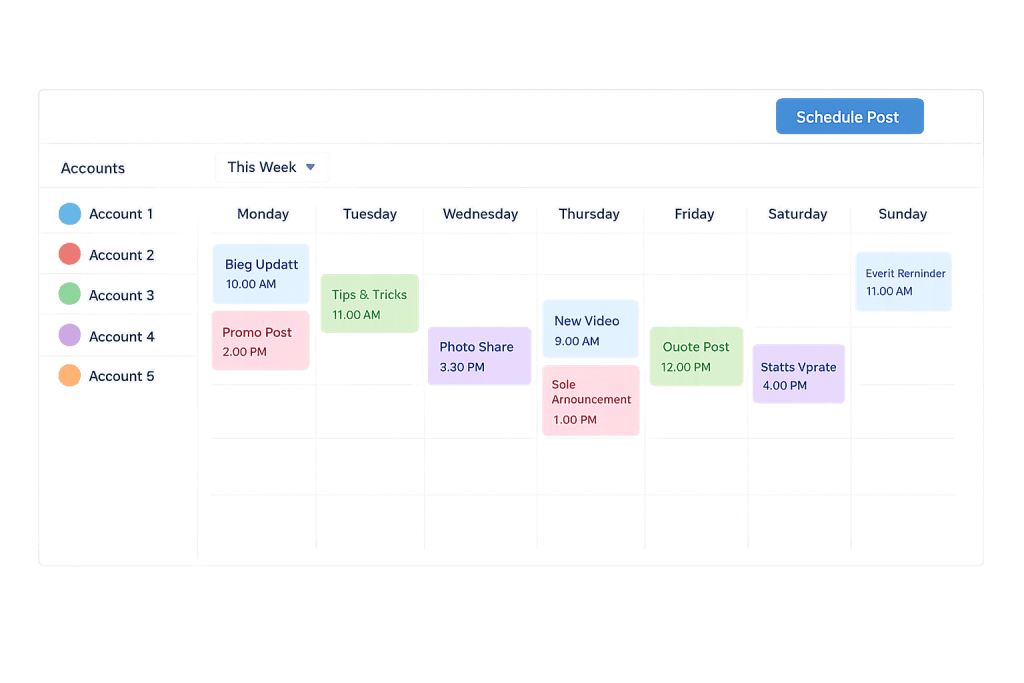
- Content planning — Deciding what to post, when, and on which platforms. Often organized through a content calendar that maps posts to business goals, campaigns, and key dates.
- Content creation — Writing captions, selecting or producing images and videos, and formatting content for each platform’s specifications and audience expectations.
- Scheduling — Using tools like Hootsuite, Buffer, or Sprout Social to publish content at optimal times without manual posting. Consistent scheduling maintains a presence even when the team is focused elsewhere.
- Community management — Responding to comments, messages, and mentions in a timely, on-brand way. Engagement signals to both the audience and the algorithm that the account is active.
- Analytics and reporting — Reviewing performance metrics — reach, engagement rate, clicks, follower growth — to understand what’s working and adjust the content approach accordingly.
- Social listening — Monitoring broader conversations about the brand, industry, and competitors to inform content direction and identify issues early.
[Image: Screenshot of a social media scheduling tool dashboard showing a content calendar with posts queued across multiple platforms]
Purpose & Benefits
1. Maintains Consistent Brand Presence Without Manual Daily Effort
Consistency is the foundation of social media effectiveness — algorithms favor accounts that post regularly, and audiences trust brands that show up reliably. A managed social media calendar, built in advance and scheduled ahead of time, keeps the account active even during busy weeks. This is where professional social media management pays for itself: our social media posting services handle planning, creation, and scheduling so businesses stay visible without diverting internal resources to it daily.
2. Improves Content Quality Through Planning and Process
Reactive posting — creating content in the moment because something needs to go out today — typically produces lower-quality content. A managed approach builds content in batches, reviews it before scheduling, and aligns posts with business goals, promotions, and seasonal relevance. The result is content that’s more thoughtful, more visually consistent, and better aligned with what the audience actually engages with.
3. Turns Performance Data Into Ongoing Improvement
Social media management isn’t just execution — it’s also analysis. Reviewing which posts generate the most engagement, which formats outperform others, and when your audience is most active creates a feedback loop. Each month’s data informs next month’s plan. Without this cycle, content strategy stagnates; with it, the social presence steadily improves in reach and effectiveness.
Examples
1. Monthly Content Calendar for a Service Business
A law firm uses a managed social media calendar to plan four posts per week across LinkedIn and Facebook, one month in advance. Content themes include client-facing legal tips, team spotlights, case study summaries (anonymized), and relevant industry news. Because posts are planned and scheduled in advance, the team spends a half day per month on social instead of scrambling daily — and output consistency increases significantly.
2. E-Commerce Brand Using Platform-Specific Content
A WooCommerce-based home goods retailer manages separate strategies for Instagram (visual product content and lifestyle photography), Pinterest (curated room inspiration), and Facebook (promotions and customer engagement). Each platform gets content tailored to its format and audience behavior. A single piece of content is often adapted across platforms rather than created from scratch for each one.
3. Community Management During a Campaign
A service business runs a promotion and receives 40 comments and 15 direct messages over two days. A managed social presence means someone monitors and responds within hours — answering questions, addressing concerns, and thanking positive responses. Unmanaged, many of those would go unanswered, leaving potential customers with unresolved questions at the moment they were most interested.
Common Mistakes to Avoid
- Posting without a strategy — Random posting fills a feed but rarely advances business goals. Every post should connect to a purpose: brand awareness, product promotion, community engagement, or traffic generation. Without that connection, volume doesn’t translate to results.
- Ignoring platform differences — Content that works on LinkedIn doesn’t work on Instagram. Each platform has its own tone, format, and audience expectations. Copying the same post verbatim to all platforms typically underperforms on all of them.
- Treating social media as broadcast-only — Posting without monitoring or responding to comments misses the relational dimension of social platforms. Engagement — even brief, genuine responses — signals that a real brand is behind the account.
- Measuring vanity metrics only — Follower count and likes are easy to track but don’t always reflect business impact. Connect social metrics to outcomes: website traffic, lead form completions, and conversions driven from social.
Best Practices
1. Build Content in Batches Using a Content Calendar
Create a content calendar that maps posts 2–4 weeks in advance. Batch content creation — writing captions, selecting images, and staging posts in a scheduling tool — is significantly more efficient than creating posts individually each day. It also allows for review and revision before publishing, which improves quality.
2. Align Social Content With Business Goals and Campaigns
Each month, identify the business priorities — an upcoming service launch, a seasonal promotion, a content marketing push — and build social content that supports those goals. This keeps social media integrated with the broader marketing effort rather than running as a separate, disconnected activity. Cross-link social content to relevant website pages and service offerings where natural.
3. Review Analytics Monthly and Adjust
Pull performance data at least monthly. Look for patterns: which content formats generate the most engagement, which topics resonate, and which posting times consistently outperform. Use this data to refine the next month’s calendar. Social listening and native platform analytics together provide enough data to make meaningful adjustments without expensive tools.
Frequently Asked Questions
How often should a business post on social media?
There’s no universal answer — it depends on the platform, the audience, and the resources available. Generally, 3–5 posts per week on primary platforms is a reasonable baseline for most businesses. Consistency matters more than volume: a reliable 3 posts per week outperforms sporadic weeks of 10 posts followed by silence.
What’s the difference between social media management and social media marketing?
Social media management is the operational function — the day-to-day execution of planning, creating, scheduling, and monitoring content. Social media marketing is the broader strategic function — using social platforms to achieve specific marketing goals like brand awareness, lead generation, or sales. Management is how the marketing gets done.
Should I manage social media in-house or outsource it?
Both are viable depending on resources and goals. In-house management keeps the brand voice internal and allows for real-time responsiveness, but requires consistent time and skill. Outsourcing to an agency or specialist provides professional execution and frees up internal time — but requires clear communication about brand voice, values, and priorities. A hybrid approach (strategy in-house, execution managed externally) works well for many businesses.
What tools are used for social media management?
Common tools include Hootsuite, Buffer, Sprout Social, Later, and Meta Business Suite. These platforms allow multi-account scheduling, team collaboration, analytics, and in some cases social listening. The right tool depends on the number of accounts, platforms, team size, and budget.
How do I measure whether social media management is working?
Track metrics tied to your goals. For brand awareness: reach and impressions. For engagement: likes, comments, shares, and saves. For traffic: clicks and referral sessions in Google Analytics. For leads and conversions: track UTM parameters from social links. Define what success looks like before you start, and review regularly.
Related Glossary Terms
How CyberOptik Can Help
A strong social media presence takes more than occasional posting — it takes a plan, consistent execution, and a process for measuring what’s working. Our team helps businesses build and maintain social media presences that support their broader marketing goals, from content planning and scheduling to performance reporting. Explore our social media services or contact us to discuss what consistent, managed social looks like for your business.