
Social media marketing is the use of social media platforms to achieve specific marketing and business goals — including building brand awareness, driving website traffic, generating leads, and increasing sales. It encompasses both the organic side (content published without paid promotion) and the paid side (sponsored posts, social ads, and boosted content), often used in combination.
For businesses, social media marketing is distinct from simply having a social presence. A social presence means you have accounts and post content. Social media marketing means those accounts and posts are tied to deliberate goals, measured against specific outcomes, and adjusted based on performance data. The platforms — Instagram, Facebook, LinkedIn, TikTok, X/Twitter, YouTube, and others — are channels. Social media marketing is the strategic use of those channels to serve a business objective.
Types of Social Media Marketing
Social media marketing takes several forms, and most effective strategies combine more than one:
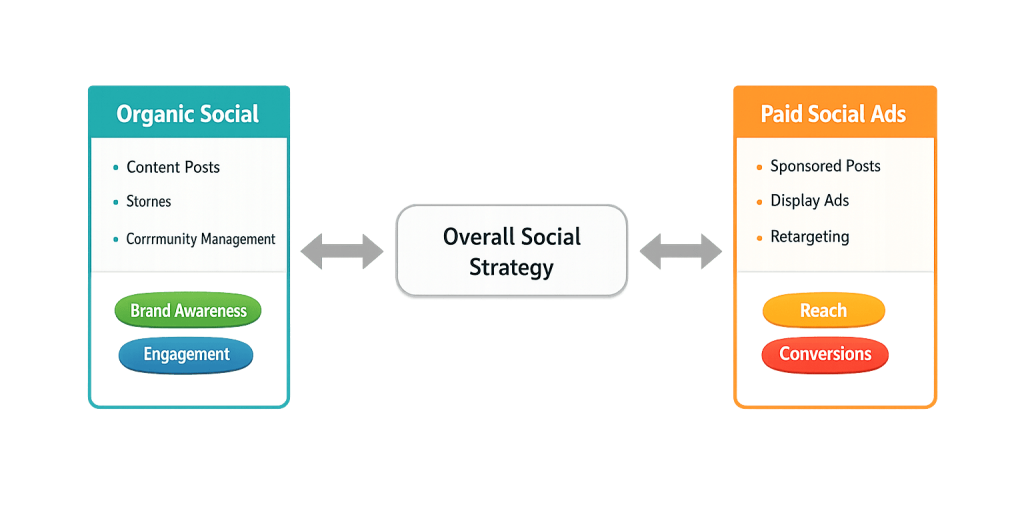
- Organic content marketing — Regular posts, stories, and videos published to your social profiles without paid promotion. The goal is to build an engaged audience and maintain visibility with existing followers.
- Paid social advertising — Sponsored posts and targeted ad campaigns that reach audiences beyond your existing followers. Platforms like Meta Ads (Facebook/Instagram), LinkedIn Ads, and TikTok Ads offer detailed targeting by demographics, interests, and behaviors.
- Influencer marketing — Partnering with individuals who have established audiences in your category to promote a product or service to their followers.
- Community building — Creating or participating in groups, forums, and discussions on platforms like Facebook Groups or LinkedIn Communities to build relationships around a topic or brand.
- User-generated content (UGC) — Encouraging customers to create and share content about your brand, which functions as authentic social proof and extends organic reach.
[Image: Diagram showing the relationship between organic social content, paid social ads, and their respective goals — awareness, engagement, and conversion]
Purpose & Benefits
1. Builds Brand Awareness at Scale
Social media platforms collectively reach billions of users. Even for smaller businesses, consistent, well-crafted social content can build meaningful brand recognition within a target market — particularly when combined with strategic use of hashtags, engagement, and occasional paid amplification. Organic content that resonates gets shared, extending reach beyond existing followers without additional spend. Our social media services help businesses build this kind of consistent, compounding presence.
2. Drives Measurable Traffic and Conversions
Posts, stories, and ads with clear calls to action drive measurable traffic back to a website or landing page. Platforms provide native analytics, and UTM parameters in links allow attribution in Google Analytics — so it’s possible to track exactly how much traffic, how many leads, and how much revenue comes from social media. This makes social media marketing accountable in a way that older brand marketing often wasn’t.
3. Enables Precise Targeting With Paid Campaigns
Paid social advertising offers targeting capabilities that few other channels match: specific age ranges, geographic areas, job titles, interests, behaviors, and even lookalike audiences built from your existing customer list. For businesses with a well-defined ideal customer, paid social can put the right message in front of the right person with precision. Even modest budgets can produce meaningful results when targeting is specific.
Examples
1. B2C Brand Awareness Campaign
A local bakery posts daily on Instagram — product photos, behind-the-scenes baking content, and customer stories — without paid promotion. Over six months, the account grows from 400 to 2,200 followers. Foot traffic increases on days when a new product is announced on social. This is organic reach building brand awareness and driving real-world outcomes.
2. Lead Generation via LinkedIn Ads
A B2B software company runs a LinkedIn Ads campaign targeting marketing managers at companies with 50–500 employees. The ad promotes a free industry report in exchange for an email address. The campaign generates 180 leads over 30 days at a cost per lead well within the company’s target range. The leads enter a drip campaign for follow-up.
3. Retargeting Visitors With Facebook Ads
A WooCommerce store installs the Meta Pixel on their site. Visitors who viewed a specific product category but didn’t purchase are retargeted with Facebook and Instagram ads featuring those products. The retargeting campaign achieves a significantly higher conversion rate than cold audience ads because it reaches people who already showed purchase intent.
Common Mistakes to Avoid
- Using every platform without clear reasoning — More platforms mean more content to create and manage. Focus on 2–3 platforms where your audience actually spends time, rather than maintaining a thin presence everywhere. A strong presence on two platforms outperforms weak activity on six.
- Mixing up organic and paid strategy — Organic content builds relationships; paid ads drive specific actions. Applying the same approach to both — or expecting organic reach to perform like paid targeting — leads to misaligned expectations. Each needs its own goals and measurement.
- Posting without reviewing analytics — Platform analytics are free and accessible. Reviewing them regularly reveals which content earns engagement and which falls flat. Ignoring this data means repeating mistakes and missing opportunities to double down on what works.
- Treating social media as independent from the rest of marketing — Social media marketing performs best when it’s integrated with content marketing, SEO, email, and paid search. Cross-channel coordination amplifies each individual channel.
Best Practices
1. Set Platform-Specific Goals With Measurable KPIs
Before creating content, define what success looks like on each platform. Instagram might be measured by follower growth and engagement rate; LinkedIn by profile visits and leads generated; Facebook by ad-driven website traffic. Without clear KPIs, it’s impossible to evaluate performance or justify the time and budget invested. Revisit and update these goals quarterly.
2. Invest in Content That’s Native to Each Platform
Content that performs on LinkedIn (professional insights, case studies, industry commentary) rarely translates directly to Instagram (visual storytelling, behind-the-scenes, lifestyle). Adapt both format and tone for each platform rather than cross-posting identical content. This takes more effort but produces meaningfully better results — higher engagement, better organic reach, and more relevant paid ad performance.
3. Integrate Social With Your Broader Marketing Funnel
Use social media to serve every stage of the funnel. Awareness content (educational posts, brand storytelling) fills the top. Consideration content (case studies, product demonstrations, testimonials) serves the middle. Conversion content (promotions, direct CTAs, retargeting ads) drives the bottom. Businesses that use social only for brand awareness leave conversion potential untapped.
Frequently Asked Questions
How is social media marketing different from social media management?
Social media management is the operational execution — planning, creating, scheduling, and monitoring content. Social media marketing is the broader strategic function — using social platforms to achieve specific business and marketing goals. Management is how the marketing gets done. The two are closely related and often handled by the same team or partner.
How long does it take to see results from social media marketing?
Organic social results build over time — typically 3–6 months before consistent growth in reach and engagement becomes visible. Paid social can produce results within days. For most businesses, a realistic expectation is that organic social compounds slowly while paid social delivers faster, more targeted outcomes. Don’t measure organic success over a 30-day window.
What social media platforms should my business be on?
It depends on your audience. B2C businesses with visual products often do well on Instagram and Pinterest. B2B companies typically find LinkedIn most effective. Local service businesses benefit from Facebook and Google Business Profile. TikTok is growing for both B2C and B2B if your content approach fits short-form video. Research where your customers are before committing to a platform.
Do I need a large following for social media marketing to work?
No. A small, engaged following of people who match your ideal customer is more valuable than a large, disengaged audience. Paid social ads don’t require any following at all — they target audiences based on demographics and behaviors regardless of your account size. Quality of audience matters far more than raw follower count.
Related Glossary Terms
- Social Media Management
- Organic Reach
- Content Marketing
- Social Proof
- Retargeting
- Drip Campaign
- Call to Action (CTA)
- Social Listening
How CyberOptik Can Help
A strong social media marketing strategy takes more than occasional posting — it takes a plan tied to real business goals. Our team helps businesses build consistent, platform-specific social content strategies that support brand awareness, drive traffic, and contribute to measurable outcomes. Explore our social media services or contact us to talk through what your social strategy should look like.