
A white paper is a long-form, research-backed document that examines a specific business problem, industry trend, or technical subject in depth — and typically proposes a solution or framework for thinking about it. White papers sit at the intersection of education and persuasion: they demonstrate expertise, provide genuine value to the reader, and position the publishing organization as a credible authority on the subject. Unlike a blog post or brochure, a white paper is a substantial piece of content designed to inform decision-making, not just generate a click.
White papers are most common in B2B marketing, where complex buying decisions involve multiple stakeholders and extended consideration periods. A prospect who downloads and reads your white paper has invested real time in your thinking — which is why white papers consistently generate high-quality leads. They’re particularly effective for businesses selling professional services, software, or other solutions where trust and expertise are central to the buying decision.
Types of White Papers
White papers generally fall into several categories, each serving a different purpose:
- Problem/solution white papers — Identify a specific challenge your audience faces and walk through a structured approach to resolving it. This is the most common format for lead generation.
- Research and data white papers — Present original survey findings, industry data, or case study analysis. These earn backlinks and media coverage because they contain citable primary data.
- Technical white papers — Explain how a technology, product, or methodology works in detail. Common in software, engineering, and IT sectors.
- Policy or position papers — Argue for a particular approach, standard, or regulation. More common in government, advocacy, and enterprise contexts.
The length of a white paper typically runs 6–20 pages, though there’s no fixed rule. What distinguishes a white paper from a long blog post is the rigor: original research or analysis, proper citations, professional layout, and a clear logical structure from problem to solution.
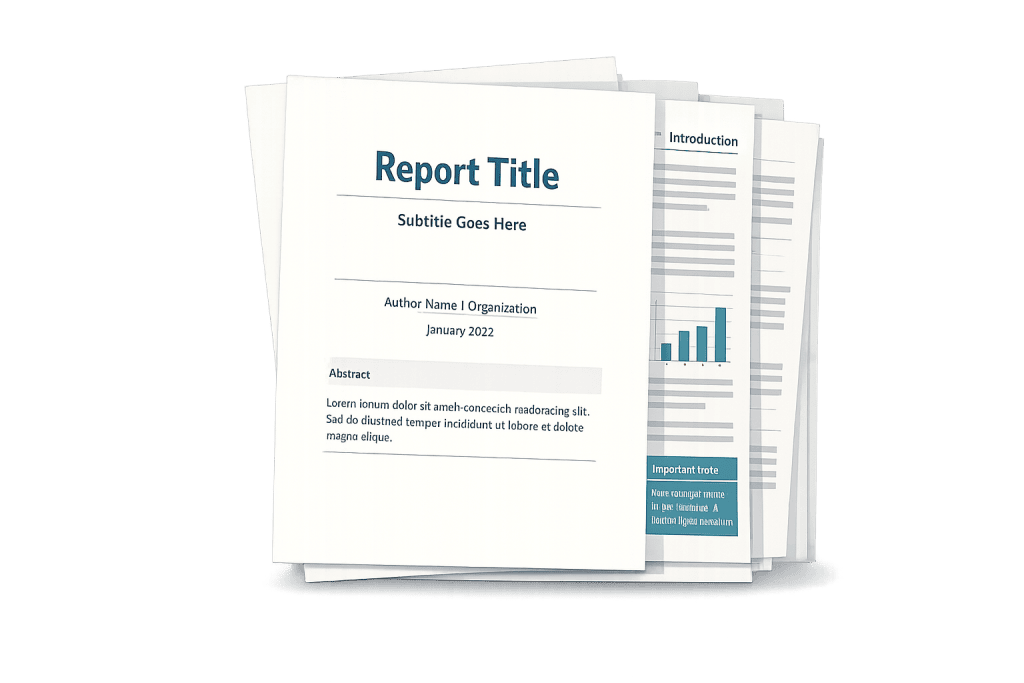
[Image: Example white paper layout showing cover page, executive summary, structured sections, and data visualization]
Purpose & Benefits
1. Generates High-Quality, Qualified Leads
White papers are frequently gated behind a lead capture form — meaning readers exchange their contact information to download the document. Because the content requires genuine interest and time to consume, the leads generated tend to be more qualified than those from other top-of-funnel content. Someone who downloads a white paper on a specific topic is actively researching solutions in that space.
2. Establishes Subject Matter Authority
Publishing a well-researched white paper signals that your organization has real depth of knowledge on a topic. This positions your business as a credible resource — not just a service provider — and builds the kind of trust that influences purchase decisions over time. Our copywriting services help businesses develop white papers that genuinely reflect their expertise, not just regurgitate industry talking points.
3. Supports the Full Sales Cycle
White papers work at multiple stages of the buyer’s journey. Early-stage prospects use them to understand a problem space. Mid-funnel prospects use them to compare approaches and vendors. Late-stage prospects share them internally to build consensus among decision-makers. A well-crafted white paper can accelerate deals by giving your prospect the information they need to build internal buy-in for choosing you.
Examples
1. Professional Services Firm — Industry Benchmark Report
An accounting firm publishes an annual benchmark report on financial practices among mid-sized businesses in their sector. The report includes survey data from 300+ companies, visualized in charts, and closes with strategic recommendations. Each year, the report is downloaded thousands of times, mentioned in industry publications, and referenced by prospects during sales conversations — establishing the firm as the go-to authority in their niche.
2. Software Company — Problem/Solution White Paper
A project management software company publishes a white paper titled “Why Remote Teams Fail at Accountability — and What the Data Shows.” It includes original research, quotes from project managers, and a framework for structuring accountability in distributed teams. The paper is gated behind a simple form, generating leads who are actively seeking solutions — and primed for a follow-up conversation about the company’s software.
3. B2B Service Provider — Technical Guide
A managed IT services company produces a white paper on cybersecurity frameworks for healthcare organizations. The document explains HIPAA compliance requirements, common security gaps, and a phased approach to remediation. It’s written by their security team, reviewed by a compliance attorney, and distributed to their prospect list. Readers arrive at sales conversations already trusting the company’s expertise.
Common Mistakes to Avoid
- Writing a white paper that’s really a sales brochure — If the document is primarily about your company and products rather than the reader’s problem, it won’t be read or shared. White papers that lead with genuine insight and treat the product as a supporting element consistently outperform those that lead with a pitch.
- Skipping professional design and layout — A well-written white paper presented in a poorly formatted document loses credibility. Proper typography, data visualizations, a clear table of contents, and consistent visual style signal that your organization takes the content seriously.
- Neglecting distribution — Creating a white paper and burying it on your website isn’t a strategy. Effective distribution includes email campaigns, LinkedIn promotion, industry forum sharing, PR outreach to relevant publications, and making it easy for sales teams to share with prospects.
- Making it too long — White papers should be as long as the content requires, not longer. Padding a 10-page document into 25 pages to look impressive reduces readability and completion rates. Respect your reader’s time.
Best Practices
1. Lead with Original Research or Analysis
The most valuable white papers contain information readers can’t easily find elsewhere. If you can commission or conduct original research — a survey, internal data analysis, or structured case study — the white paper becomes a citable, linkable asset. Even modest research (surveying 100 customers or analyzing publicly available data through a fresh lens) can produce findings worth publishing.
2. Structure the Argument Clearly
A strong white paper follows a clear structure: establish the problem, present evidence, explore the landscape of solutions, and arrive at recommendations. Each section should build logically on the last. Readers — especially time-pressed executives — should be able to read the executive summary and section headers and understand the core argument without reading every word.
3. Gate It Strategically
Decide intentionally whether to gate your white paper (require contact information to download) or publish it openly. Gating generates leads but limits organic reach and backlink potential. Publishing openly makes the content more shareable and discoverable, which builds authority over time. Many organizations use a hybrid approach — gating for direct campaign promotion while leaving the document accessible for organic search.
Frequently Asked Questions
How long should a white paper be?
Most effective white papers run 6–12 pages for business audiences, or up to 20 pages for highly technical subjects. Length should match content depth — not be padded to hit an arbitrary page count. An 8-page white paper with original data and clear structure will outperform a 20-page document filled with general observations.
What’s the difference between a white paper and a case study?
A case study focuses on a specific client success story — what problem they had, what solution was implemented, and what results were achieved. A white paper addresses a broader issue or question relevant to an entire audience segment, drawing on research, data, and frameworks rather than a single client narrative. Both are valuable; they serve different purposes in a content marketing strategy.
Do white papers still work in an era of short-form content?
Yes — particularly in B2B contexts. While social media and short-form content are effective for awareness, white papers serve buyers who are in the research and evaluation phase. These are often the decision-makers and budget holders you most want to reach. IDC research has noted that whitepapers remain a preferred content format for B2B technology buyers making purchase decisions.
How do I promote a white paper once it’s published?
The most effective channels are targeted email campaigns to your existing list, LinkedIn posts and direct outreach to relevant prospects, outreach to industry publications for editorial coverage, paid promotion via LinkedIn or search ads for high-value topics, and enabling your sales team to share it in prospect conversations.
Related Glossary Terms
How CyberOptik Can Help
Strong content is the foundation of every effective website and marketing strategy. Our copywriting team can help you develop white papers that reflect genuine expertise, resonate with your target audience, and support your sales process — from research and structure through to layout and distribution strategy. Explore our copywriting services or get in touch.