
Just looking for our Best Attorney Repair Website examples list?
Key Takeaways:
- A well-designed attorney or law firm website establishes credibility, builds trust with potential clients, and amplifies lead generation and conversions—positioning your firm above competitors.
- Mobile‑first, fast-loading, professional design keeps users engaged and is essential for SEO—slow or cluttered design loses visitors before you can engage them.
- Clear practice area pages, detailed attorney bios with credentials and client testimonials, and visible contact methods enhance trust signals and encourage conversion.
- Strategic use of SEO—targeted keywords, local SEO optimization, schema markup, and regularly updated legal content—boosts organic visibility and rankings.
- Interactive conversion tools like chatbots, appointment booking, secure client portals, and legal calculators improve engagement and capture leads efficiently.
- Meeting accessibility and compliance standards(WCAG, ABA advertising rules, testimonials disclosures, secure site practices) safeguards ethics and enables inclusive user experiences.
- Proactive site maintenance and content refreshes—including updating attorney profiles, practice areas, blog posts, and legal resources—keep your site relevant, support SEO, and sustain conversions over time.
Build a Website That Wins Clients: Why Law Firm Website Design Matters
When someone needs legal help, their first impression of your firm often comes from your website. In a market where trust, credibility, and professionalism are non-negotiable, your site is far more than a digital brochure—it’s your most powerful tool for attracting new clients.
The competition among firms is fierce, and a generic, outdated, or difficult-to-navigate site can instantly disqualify you in the eyes of potential clients. Your law firm website design should reflect the same excellence, clarity, and confidence you bring to the courtroom. A high-performing, conversion-optimized site isn’t just nice to have—it’s critical for modern success.
In this guide, we’ll break down the essential elements of effective web design tailored specifically for legal services. Whether you’re launching your first website for your law practice or revamping an outdated one, we’ll walk you through the strategies, best practices, and design insights that separate the best law firm sites from the rest. This is not about using a quick website builder. It’s about designing with purpose to create a site that earns trust, ranks in search, and drives meaningful results for your firm.
Website Planning & Purpose
Successful web design starts with strategic planning—not just for how the site will look, but what business goals it needs to support. Before a single page is designed or a line of code is written, law firms must define their objectives, audience, and desired outcomes. Is the goal to generate leads, showcase credentials, improve search visibility, or all of the above?
For most professionals, the website serves as both a first impression and a silent salesperson. That means everything from branding and user flow to content and navigation should support clarity, trust, and lead generation. Planning a website for your law practice begins with identifying your primary services, unique value proposition, and what actions you want visitors to take.
Equally important is knowing your audience. Are you speaking to individuals facing a crisis, such as personal injury or family law matters? Or are you targeting corporate clients who expect a polished, professional presence? Understanding the mindset of your ideal client informs tone, structure, and functionality.
Finally, site structure matters. Law firm websites should be easy to navigate, mobile-friendly, and built with conversion in mind. Defining page hierarchy and creating clear calls to action ensures that users don’t just visit—they contact you.
For a complete walkthrough of how to plan your law firm’s website, visit our step-by-step guide to the web design process.
Design Principles
Designing a law firm website isn’t about flair—it’s about function, clarity, and reinforcing trust. The best designs don’t distract; they guide the visitor intuitively toward action. Several key principles distinguish high-performing law firm websites from forgettable ones.
First and foremost, simplicity matters. Legal websites must be clean, uncluttered, and logically structured. White space, intuitive menus, and consistent layouts all contribute to a professional feel and user-friendly experience. This approach ensures your content is digestible and directs attention to critical calls to action.
Visual hierarchy is another foundational principle. Important elements like contact buttons, practice area links, and lead forms should be strategically placed above the fold or along the user’s natural reading path. Using contrast, font sizes, and strategic colors helps highlight what matters most.
Brand alignment is also vital. From color palette to typography to photography, every design choice should reflect your firm’s identity. Whether your firm emphasizes compassionate representation or aggressive litigation, the visual tone should match. It reinforces your message before the first word is read.
Responsiveness is non-negotiable. Over half of legal service searches begin on mobile devices. Your design must adapt flawlessly to smartphones and tablets without sacrificing load speed or user experience.
Trust-building features like testimonials, photos, bar certifications, and recognizable security symbols help convert visitors into contacts. These elements must be incorporated naturally and prominently, not buried deep within secondary pages.
Finally, make conversion easy. Clickable phone numbers, sticky contact forms, and clear CTAs should be built into every key interaction point on the site. Avoid forcing users to hunt for how to reach you.
For additional insight on what makes a successful legal site, review our 4 tips for a successful law firm website.
Content & Navigation
Strong content and intuitive navigation are critical to an effective law firm website. Visitors arrive looking for clarity, guidance, and fast answers. The site must deliver this with structured, relevant content that flows logically and is easy to find.
Every law firm website needs foundational pages: Home, About, Practice Areas, Attorney Bios, Testimonials, Contact, and often a Blog. These are the pillars that define the site and guide both visitors and search engines. Within practice areas, each service—such as personal injury, family law, or business litigation—should have its own dedicated page with clear descriptions, FAQs, and local SEO signals.
Navigation must be clean and predictable. Top navigation bars should include no more than seven main links, prioritizing ease of access to your most important pages. Dropdown menus should be used thoughtfully to guide visitors deeper into the site without overwhelming them. Sticky headers that follow users as they scroll can improve engagement and help keep contact points in sight.
Organize content around user intent. Someone looking to hire a lawyer likely wants to know who you are, what you do, and how you can help—fast. Use skimmable formatting: subheadings, bullet points, and bolded key phrases. Pair these with high-quality visuals and calls to action that encourage next steps.
Don’t overlook internal linking. Connecting blog posts to practice pages, or bios to contact forms, strengthens your SEO and improves site structure. A well-planned internal link strategy helps search engines crawl your content more effectively and keeps visitors on your site longer.
A successful website design for law firms is built on content that informs and structure that guides. Navigation isn’t just about getting from page to page—it’s about ushering visitors toward becoming clients. For small law firm sites and larger practices alike, getting this right can mean the difference between passive traffic and active conversions.
Visual Elements
Visual elements do more than enhance aesthetics—they drive clarity, trust, and engagement. In law firm website design, every image, color, and layout choice should support the user experience and communicate your firm’s values at a glance.
Photography is one of the most powerful tools at your disposal. Use professional headshots for each attorney and real office imagery to build authenticity and establish a personal connection. Avoid generic stock photos that feel impersonal or disconnected from your brand.
Color schemes should reflect your firm’s tone and area of focus. A personal injury firm might lean into bold, assertive tones while a family law practice could choose calming, neutral palettes. Consistency across pages reinforces brand recognition and helps guide visitors through the site.
Typography should be legible and aligned with your firm’s image. Serif fonts may convey tradition and authority, while modern sans-serif fonts suggest a forward-thinking, innovative approach. Whatever style you choose, consistency across all headings and body text is essential for professionalism.
Icons and infographics simplify complex ideas. Use them to represent the areas that you practice, explain processes, or highlight key stats. They keep visitors engaged and visually break up large blocks of text.
Animation and video should be used sparingly, but purposefully. A short introductory video or subtle hover effects on service boxes can create a polished feel without overwhelming the user.
Visual storytelling is particularly important for communicating credibility. Showcasing awards, bar memberships, notable media features, and client testimonials visually helps build confidence and makes your firm more relatable.
For a deeper look at how visual elements enhance legal websites, explore our website solutions for attorneys and lawyers.
Ongoing WordPress Maintenance
Launching a website is only the beginning. To keep it secure, fast, and functioning properly, ongoing WordPress maintenance is essential. An outdated or broken site damages your credibility and puts client data and SEO performance at risk.
Routine updates are critical. WordPress core software, themes, and plugins should be regularly updated to patch security vulnerabilities and maintain compatibility. Skipping these updates can lead to broken features or potential breaches that affect your clients’ trust.
Regular backups are equally important. A reliable backup system ensures that your site can be quickly restored in the event of a crash or data loss. This is especially important for lawyers who may store sensitive client information or maintain digital intake forms.
Monitoring uptime and site speed helps ensure your website performs consistently. Downtime means lost leads, and slow load times hurt SEO and frustrate users. Performance optimization through database cleanup, image compression, and server tuning helps keep your site fast and reliable.
Security measures should include malware scanning, firewall implementation, and login protection. Law firm websites are attractive targets for attackers due to the nature of the information they collect. Proactive monitoring can prevent serious issues before they impact your reputation.
Finally, reviewing site analytics and functionality ensures all contact forms, appointment schedulers, and CTAs are operating properly. Tracking what content performs best allows you to make informed updates that align with client behavior and conversion goals.
Ongoing maintenance is not optional for attorneys. It’s a key part of protecting your brand, retaining search rankings, and delivering a seamless experience to every potential client who visits your website.
Best Law Firm Web Design Examples
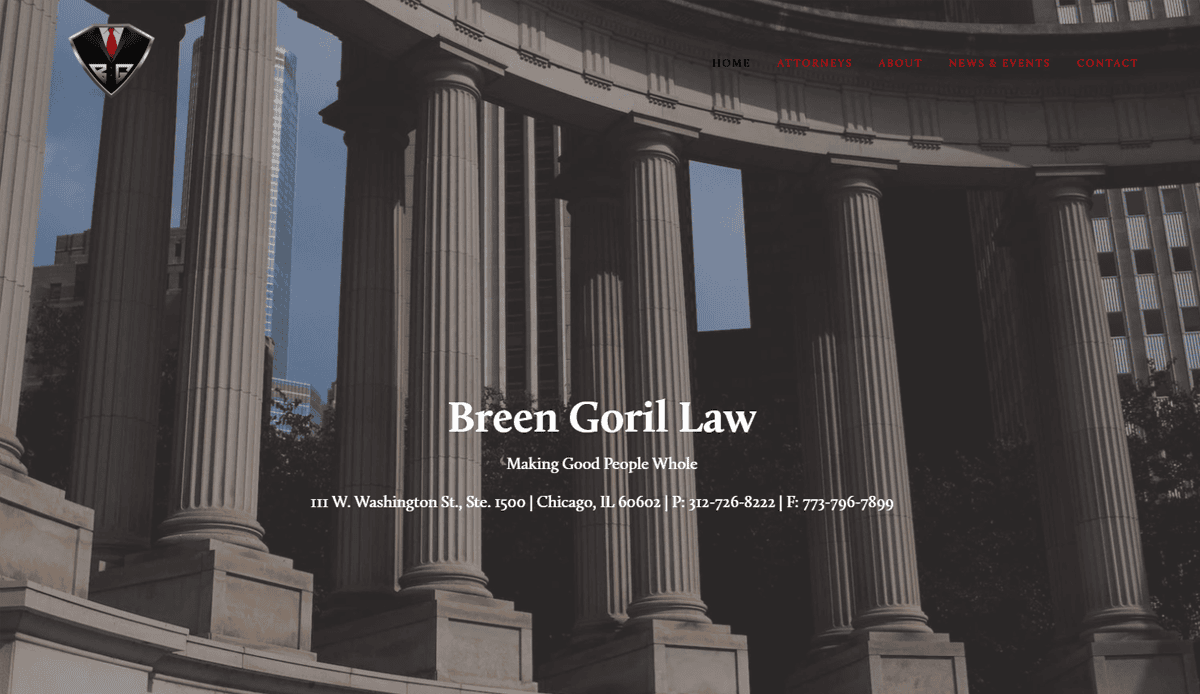
1. Breen Goril Law
Location: Chicago, IL
Key Takeaways:
- Sleek, professional layout with muted color scheme.
- Clear CTA for consultations right at the top of the page.
- Custom visuals and bios enhance attorney credibility.
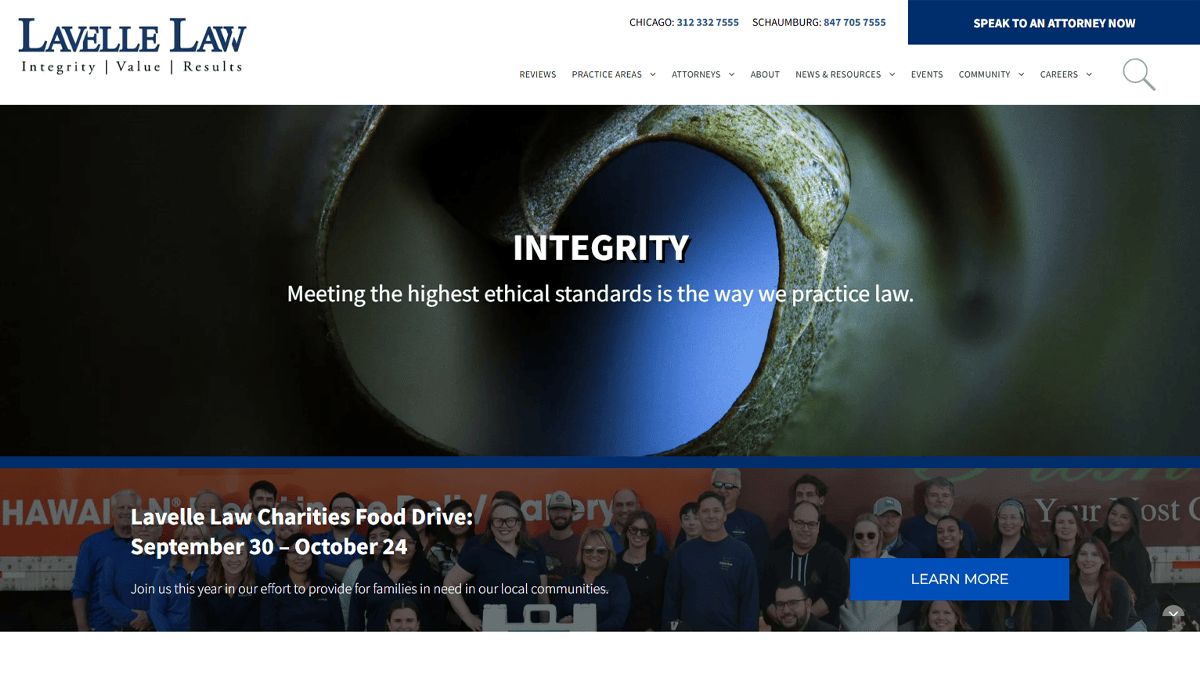
2. Lavelle Law
Location: Schaumburg, IL
Key Takeaways:
- Highly organized practice area navigation.
- Embedded legal news builds authority.
- Consistent use of law-focused branding.
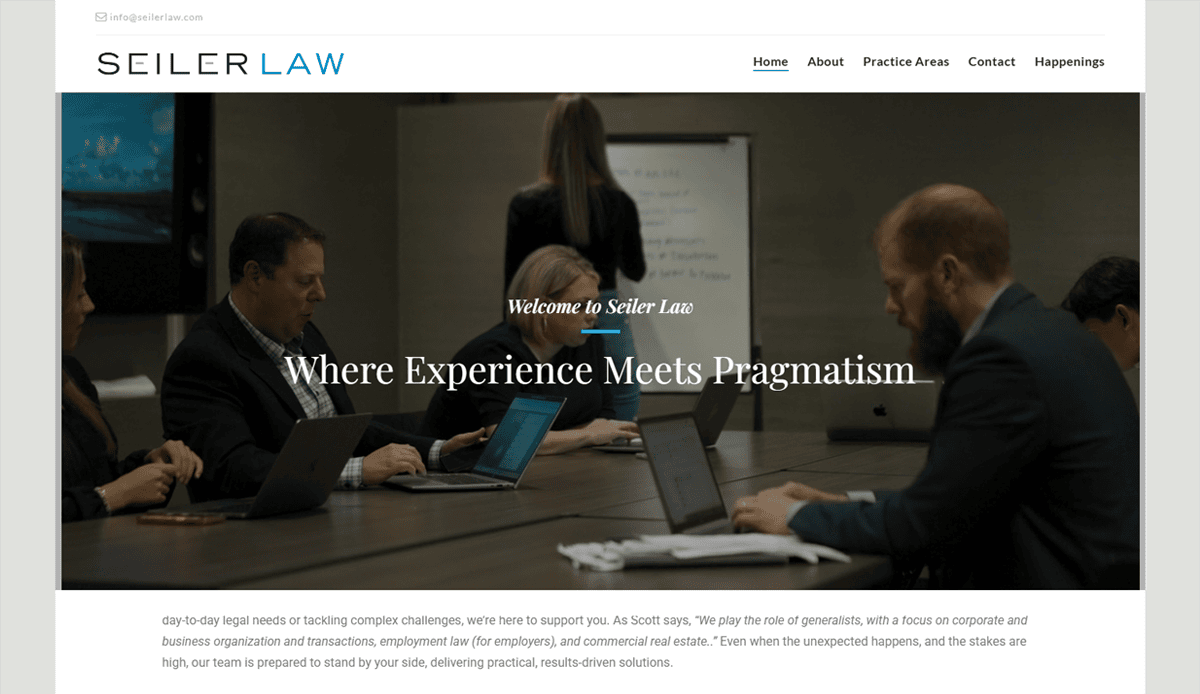
3. Seiler & Parker, P.C.
Location: Hastings, NE
Key Takeaways:
- Balanced use of imagery and informative website content.
- Trust-building homepage layout.
- Prominent display of awards and credentials.
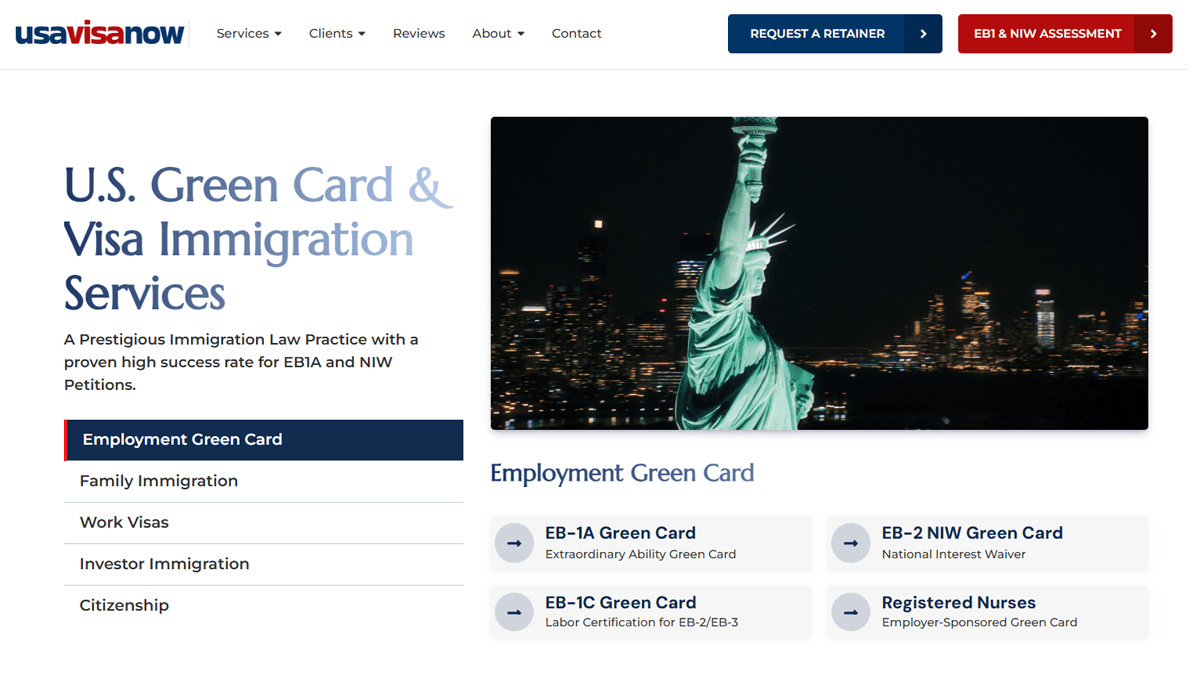
4. Eran Regev, ESG
Location: Manhasset, NY
Key Takeaways:
- Elegant, sophisticated design with high-resolution, branded imagery that enhances professional appeal.
- Bold, clear text overlays and easily accessible CTAs deliver a strong user experience.
- Simple bullet navigation supports intuitive user flow and highlights key practice areas.
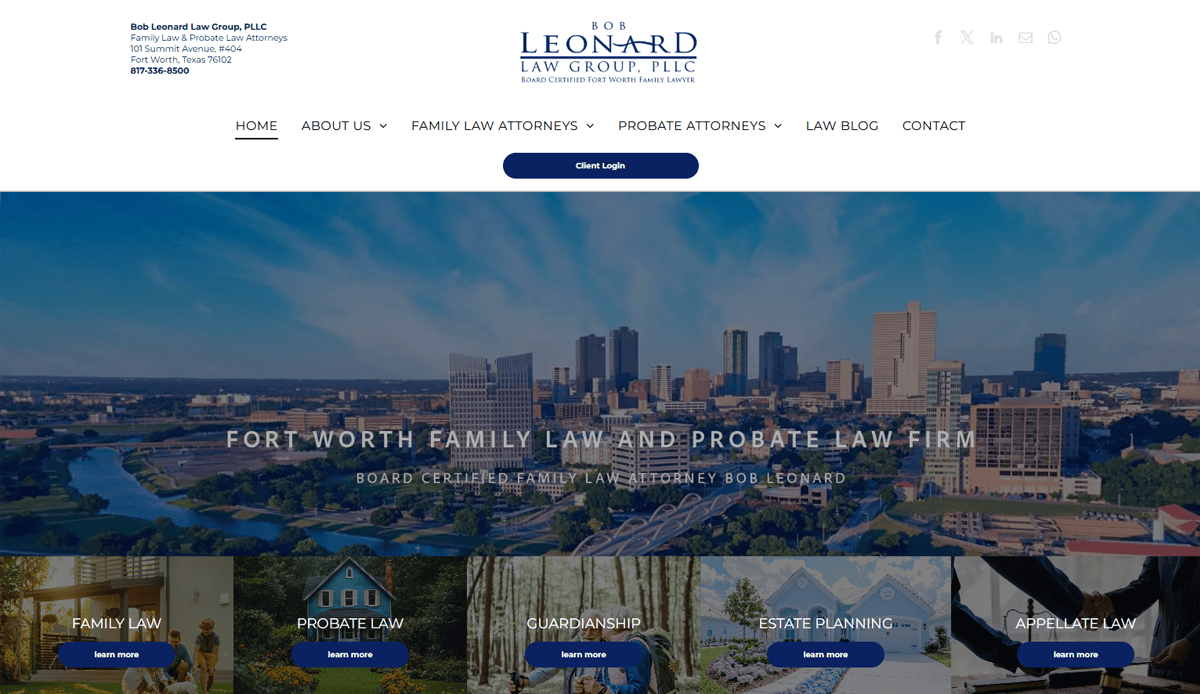
5. Bob Leonard Law Group
Location: Chico, CA
Key Takeaways:
- Strong visual hierarchy focused on client experience.
- High‑quality imagery and concise CTAs draw attention.
- Dynamic homepage elements that encourage engagement.

6. O’Flaherty Law
Location: Naperville, IL
Key Takeaways:
- Dynamic website built for multi-location SEO.
- Comprehensive guide on each legal service.
- Strong local signals with schema integration.
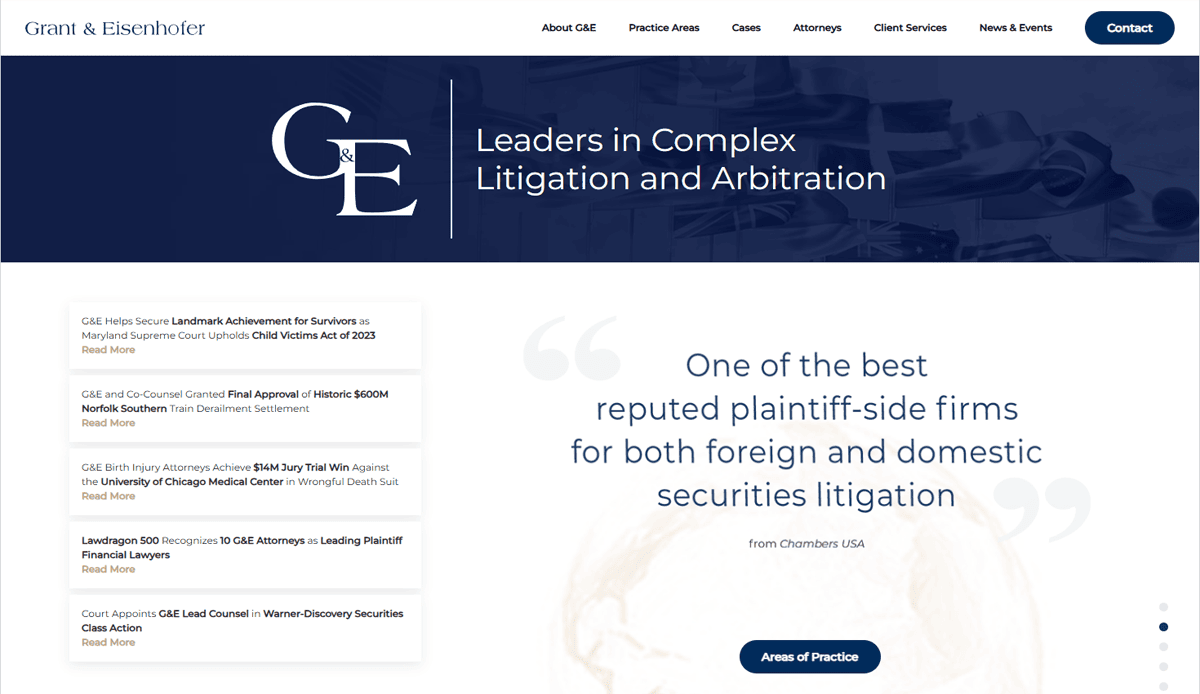
7. Grant & Eisenhofer P.A.
Location: Wilmington, DE
Key Takeaways:
- Visual hierarchy prioritizes practice specialties.
- Great law firm website structure for class action work.
- Full-featured content system for thought leadership.
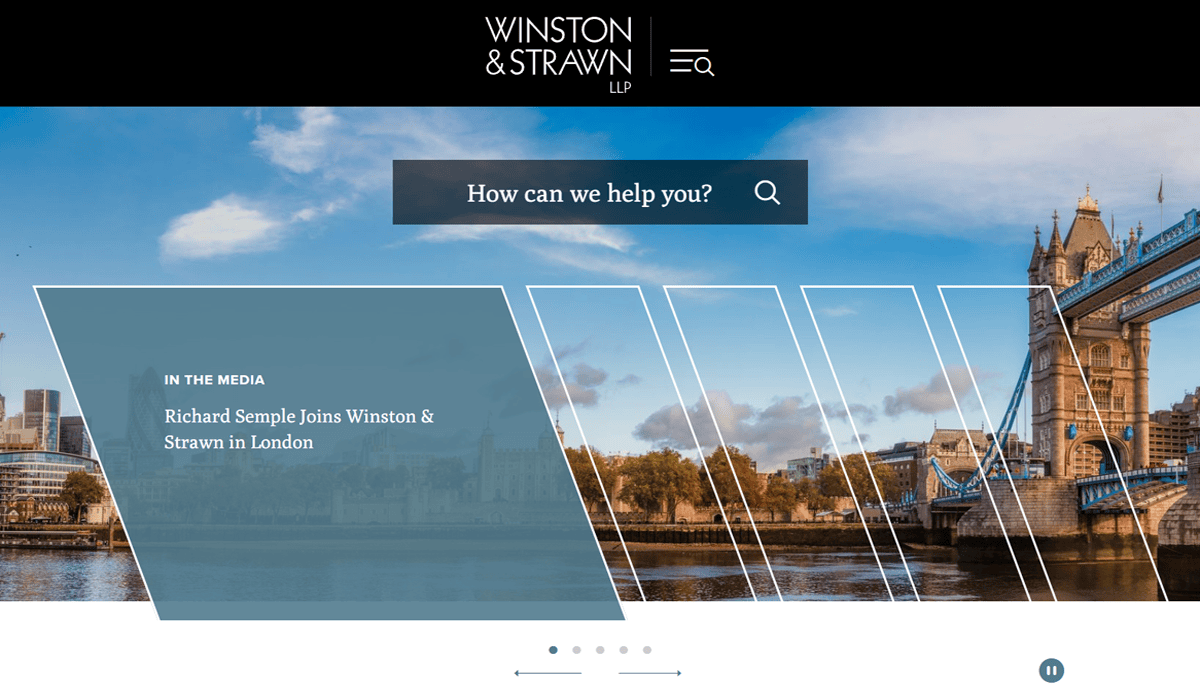
8. Winston & Strawn LLP
Location: Chicago, IL
Key Takeaways:
- Use of interactive design features.
- Sophisticated typography and modern website layout.
- Strong use of the firm name for branding continuity.
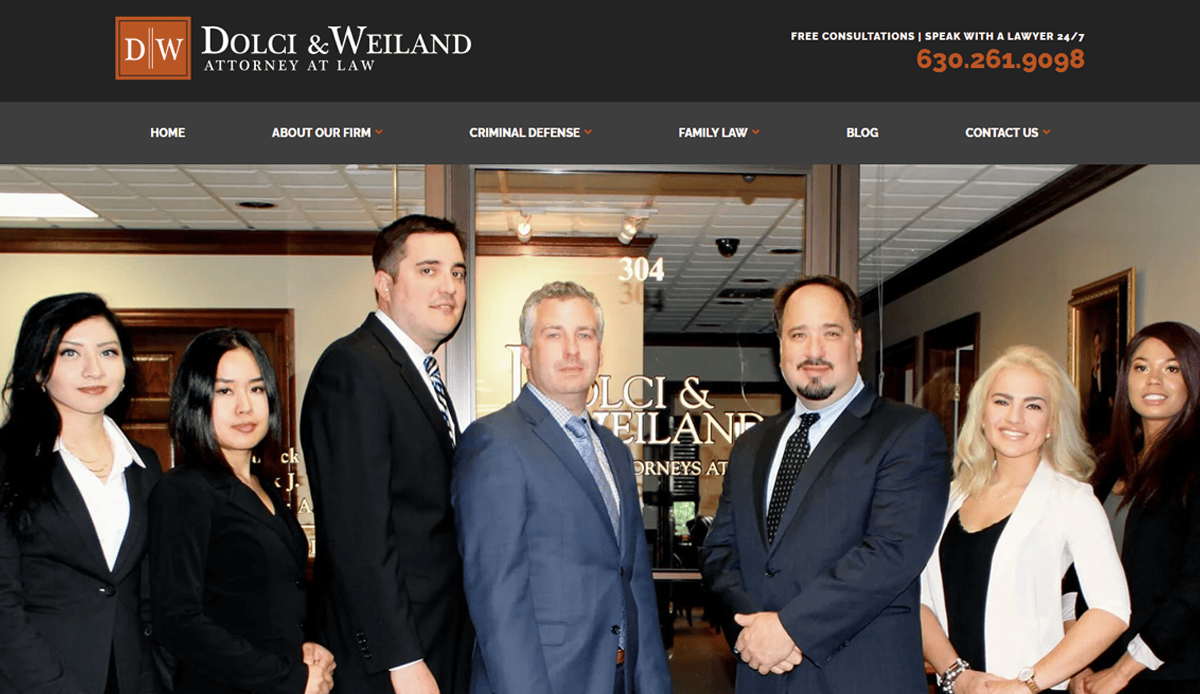
9. Dolci & Weiland
Location: Oakbrook Terrace, IL
Key Takeaways:
- Effective law firm website for criminal defense.
- Bold, trust-driven layout with easy CTAs.
- Client-focused homepage messaging.
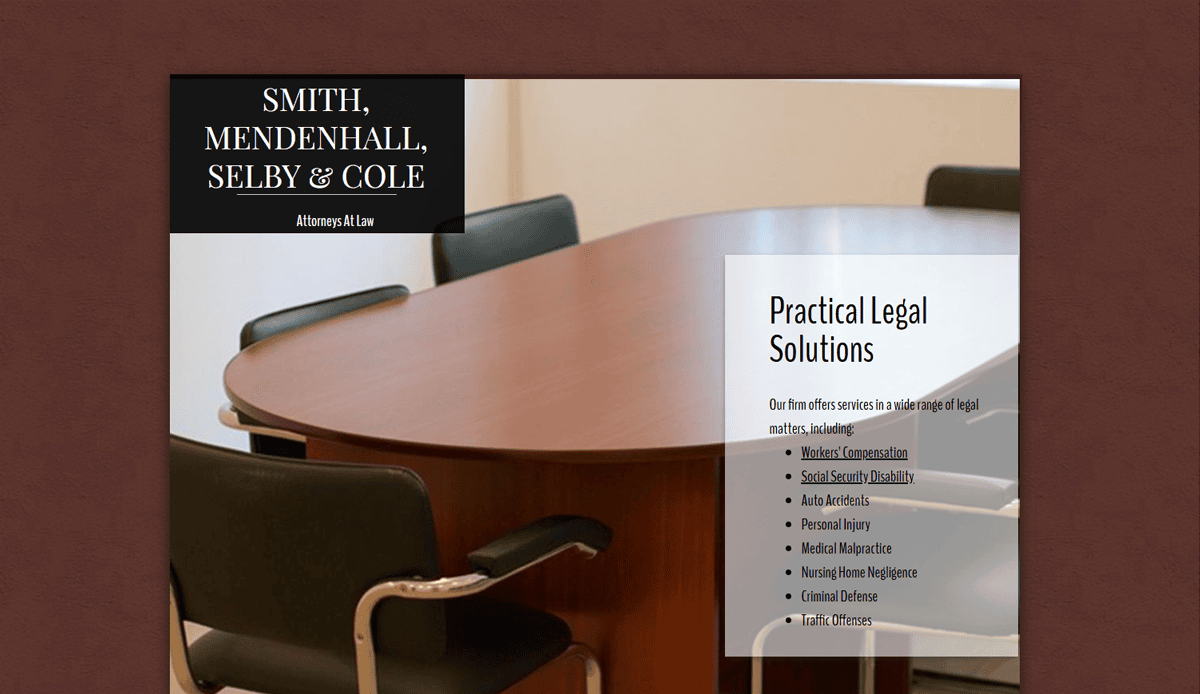
10. Smith, Mendenhall & Selby
Location: Dayton, OH
Key Takeaways:
- Informative website structure for estate law.
- Streamlined site design with calming colors.
- Detailed profiles to establish trust.

11. The Horwitz Law Group
Location: Chicago, IL
Key Takeaways:
- Engaging video content on the homepage.
- Conversion-optimized layout for consultations.
- Strong branding tied to personal injury law firm expertise.

12. Silver Law PLC
Location: Scottsdale, AZ
Key Takeaways:
- Rich content for tax law audiences.
- Excellent integration of a legal blog.
- Mobile-friendly with fast load time.
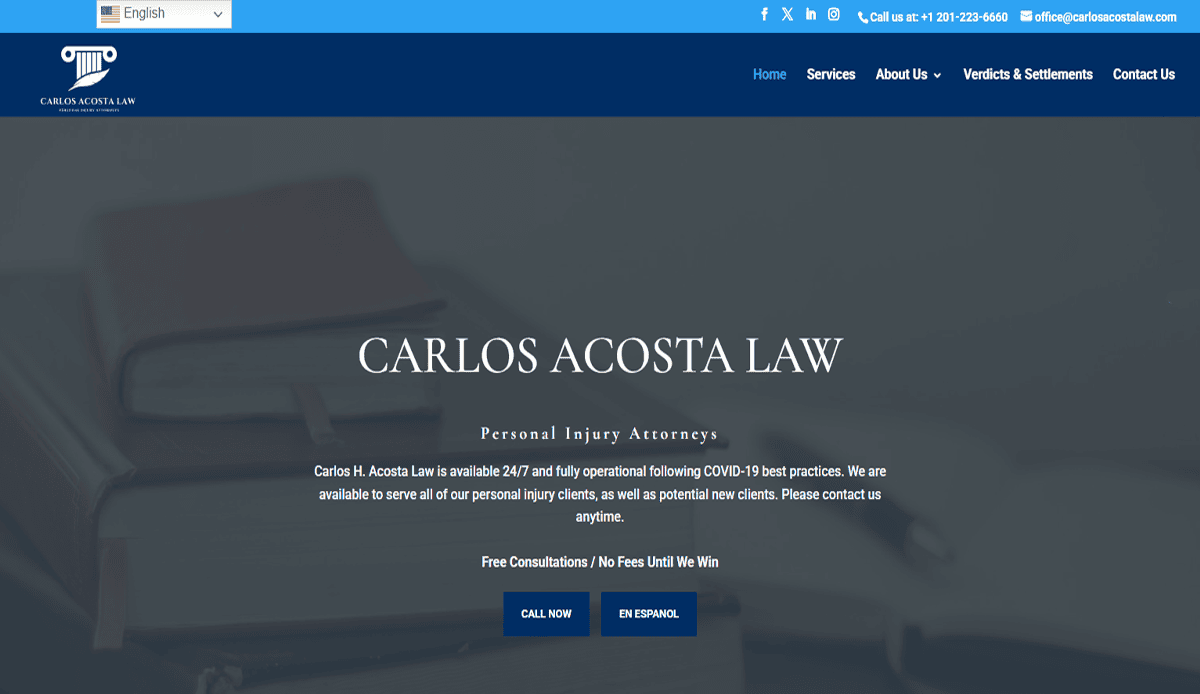
13. Greenberg & Walden
Location: North Bergen, NJ
Key Takeaways:
- Bilingual content for client accessibility.
- Optimized service pages with FAQs.
- Cohesive site design and UX flow.
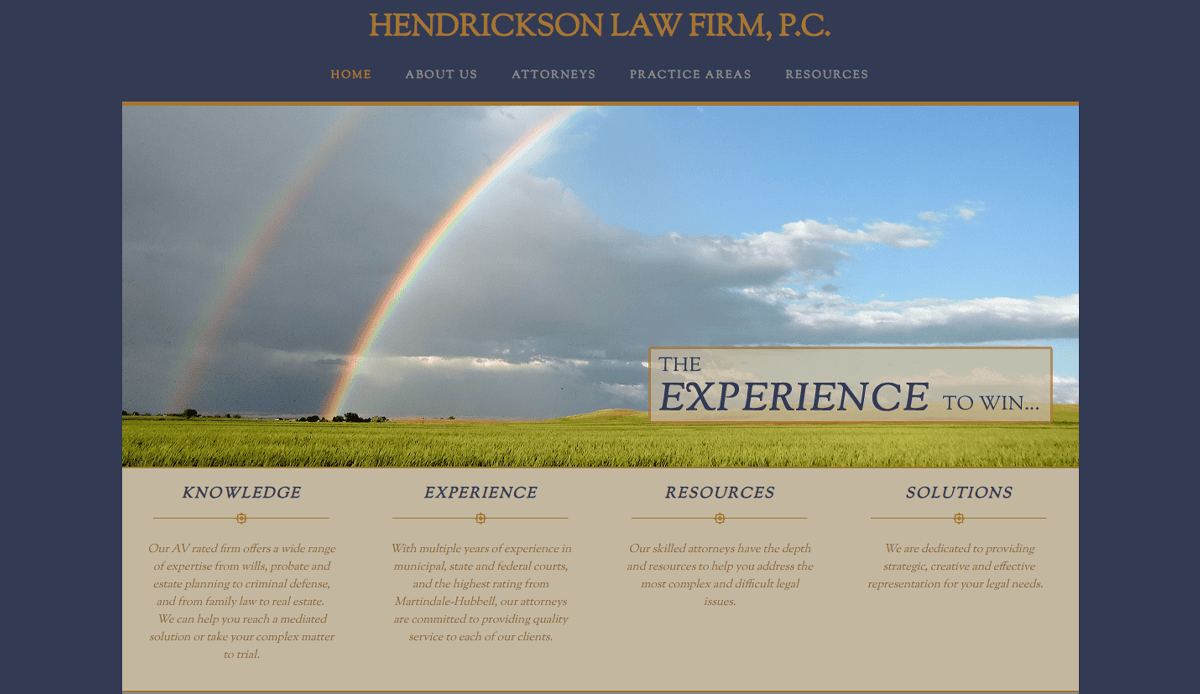
14. Hendrickson Law Firm
Location: Billings, MT
Key Takeaways:
- Modern visuals with a Western tone.
- Clear practice breakdown by need.
- Optimized contact and CTA pathways.
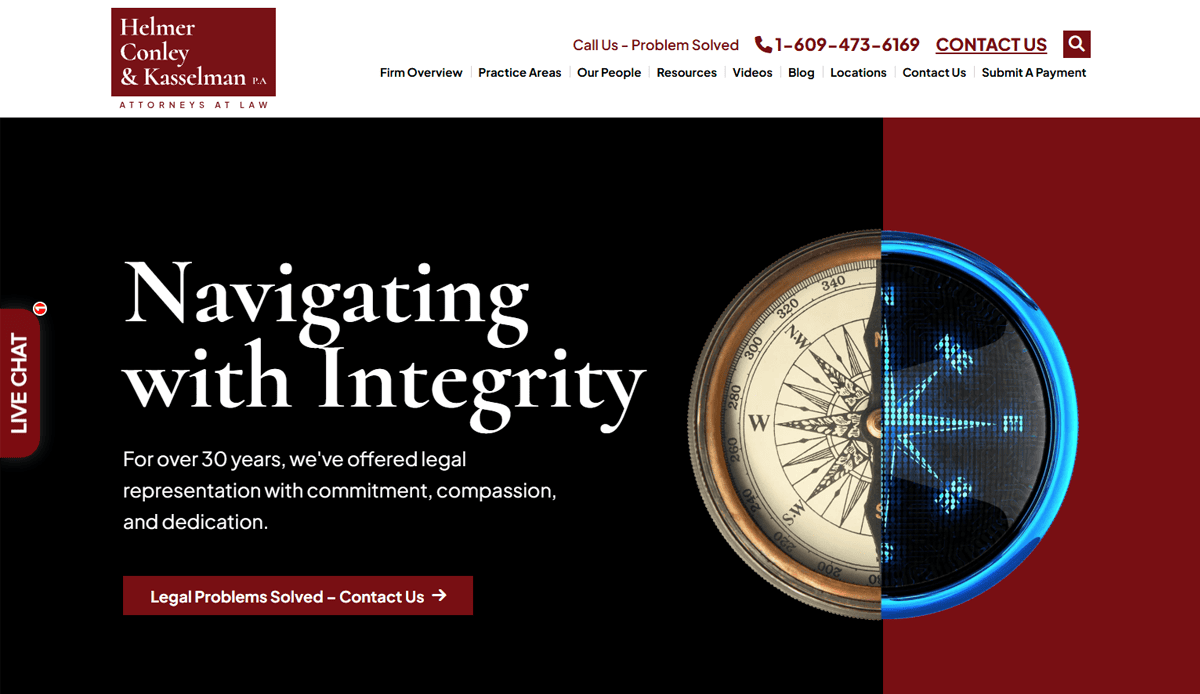
15. Helmer, Conley & Kasselman
Location: Jersey City, NJ
Key Takeaways:
- Geo-targeted location SEO structure.
- Fast performance and responsive site design.
- Visual storytelling with attorney profiles.
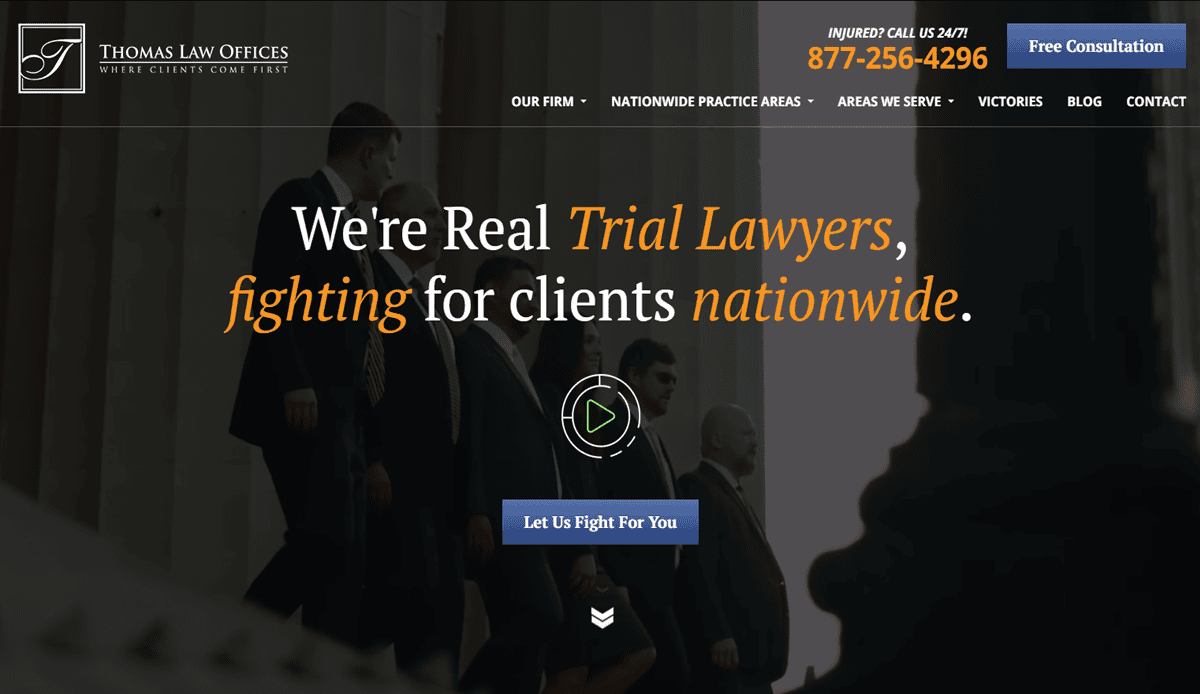
16. Thomas Law Offices
Location: Louisville, KY
Key Takeaways:
- Rich branding that stands out.
- Compelling homepage narrative.
- Built-in chat feature for leads.
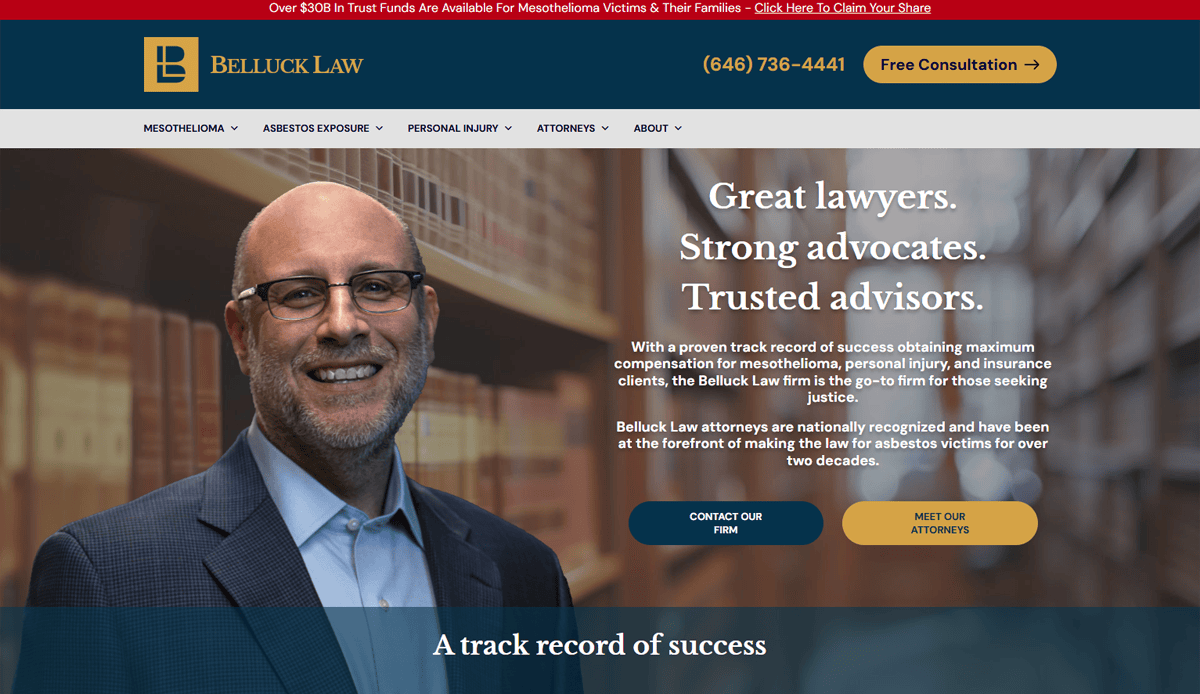
17. Belluck & Fox
Location: New York, NY
Key Takeaways:
- Strong presence in the personal injury law firm vertical.
- Clean navigation and layout.
- High-performing local SEO setup.
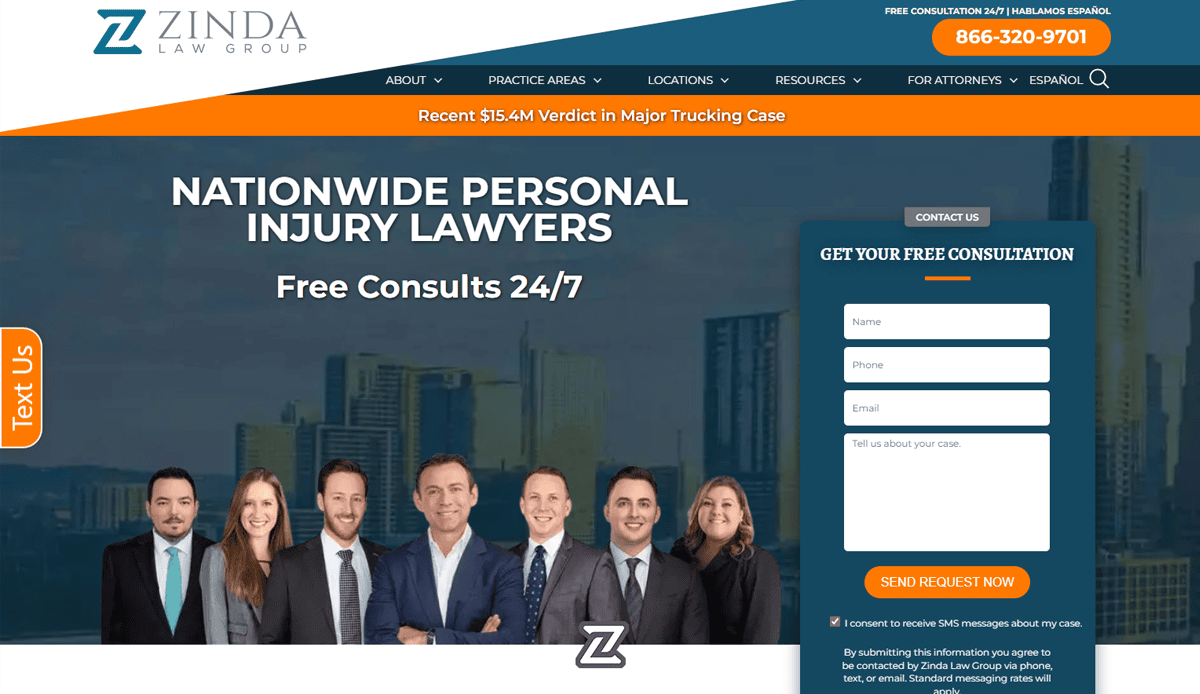
18. Zinda Law Group
Location: Austin, TX
Key Takeaways:
- Eye-catching use of color and visuals.
- Scrolling the homepage with featured verdicts.
- Intuitive contact form at the top of the page.

19. Cotten Law Firm
Location: Fayetteville, NC
Key Takeaways:
- Localized branding and testimonials.
- Focused site structure for traffic tickets.
- Clean, modern interface.
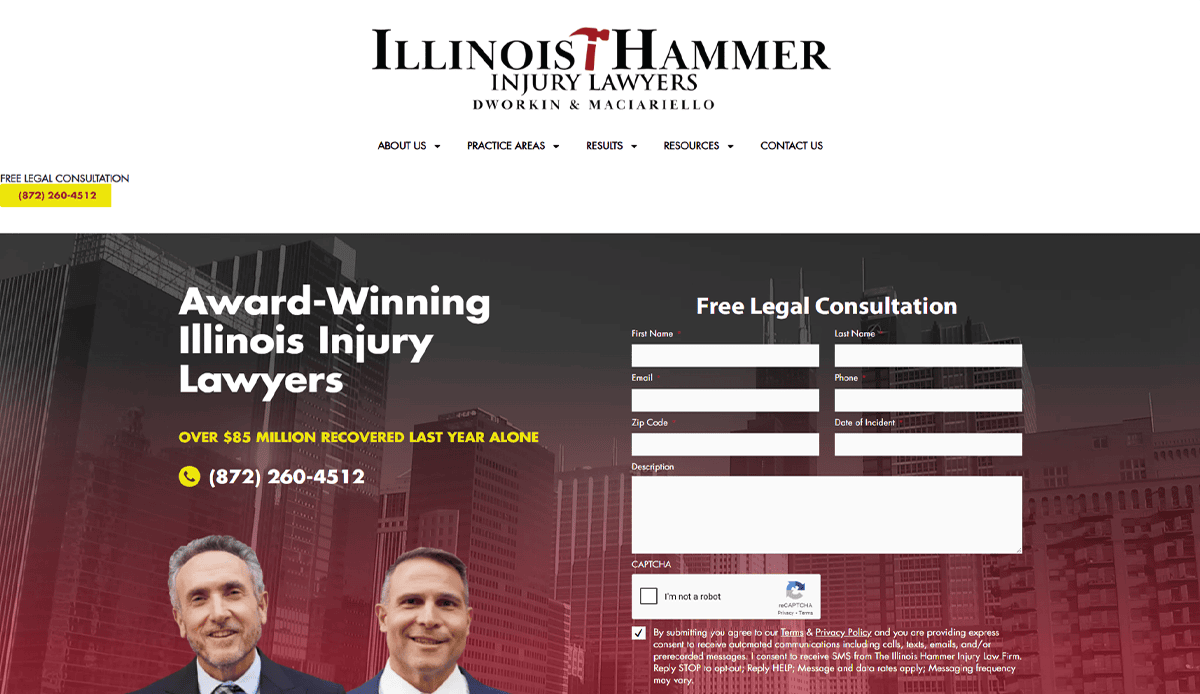
20. The Law Offices of Dworkin & Maciariello
Location: Chicago, IL
Key Takeaways:
- Optimized layout for workers’ compensation law.
- SEO-structured content supporting many law firm websites.
- Fast loading speed and mobile optimization.
Ready to Build the Right Website for Your Law Firm?
Whether you’re launching a new site or optimizing an existing one, making sure that your website reflects your firm’s strengths and delivers a seamless user experience is crucial. A well-designed website can help you attract more qualified leads, communicate your value clearly, and stay competitive in today’s legal market.
Our full-service digital marketing agency specializes in custom website development and law firm SEO tailored to your practice area, location, and client base. Our approach to web design for law firms combines clarity, performance, and strategy—everything your firm needs to build trust and drive results.
Schedule a free consultation with our legal web design team to build a professional website that works as hard as you do.
Site Design for Attorneys, FAQs
What should a law firm website include?
A lawyer’s website should include important pages on your website such as a compelling homepage, detailed practice area descriptions, bios, client testimonials, contact forms, and a blog. These are the elements of your website that help build credibility, answer questions, and guide users toward contacting your firm.
How do I create a website for my law firm?
You can create a website by partnering with a professional web design agency that specializes in website design for lawyers. Avoid trying to build your own website using generic templates—law firms require a site design that aligns with their brand, converts users, and meets SEO best practices.
What are the key design features of a great law firm website?
Great law firm websites prioritize clean design, strong visual hierarchy, mobile responsiveness, and intuitive navigation. Key design elements also include custom photography, clear CTAs, and design basics that reinforce professionalism.
Why is SEO important for law firm websites?
Law firm SEO helps drive traffic to your website by improving visibility in local and organic search results. Using SEO best practices such as structured content, internal links, and optimized page titles helps your site perform better and attract more qualified leads.
How often should I update my lawyer website?
Website content should be updated regularly to reflect changes in your practice areas, firm name, and staff. Keeping your blog current, updating your bios, and adjusting CTAs based on analytics ensures your website stays relevant and effective.
Should I use a template or invest in custom website design?
While a DIY website might seem affordable, it rarely delivers the results professionals need. A custom website ensures your site meets your firm’s goals, looks professional, includes the right design strategies, and supports long-term success.
What makes an effective website for a personal injury law firm?
For a personal injury law firm, an effective website should focus on empathy, clarity, and conversion. Important features include bold CTAs, testimonials, results-driven messaging, and content that builds trust with visitors quickly.
How does website design impact user trust?
Website design for lawyers directly influences how professional and trustworthy your firm appears. A modern website with a clean design and strategic layout assures potential clients that they’re dealing with a credible and capable firm.
Can website design help increase conversions?
Yes. A well-designed website is designed to convert visitors into leads. Clear CTAs, fast load times, strong messaging, and mobile-friendly layouts help users take action—whether calling, submitting a form, or scheduling a consultation.
Where can I see examples of law firm websites?
You can review examples of law firm websites in our industry portfolio for attorneys and lawyers. These showcase website content, layout, and design features tailored for legal practices.