
Just looking for our Best Aerospace Website examples list?
Designing an Aviation Site To Drive Real Results
In an industry where precision is paramount and a single handshake can be worth millions, your digital presence is the first, most critical test of your credibility. For charter operators, MRO facilities, and aircraft manufacturers, a website is no longer a simple online brochure—it is your global hangar, your virtual showroom, and your most persistent business development tool. Yet, too many websites in the industry remain grounded in the past: static, uninspiring digital relics that fail to capture the sophistication of the services they represent. They don’t build trust, they don’t showcase complex capabilities, and most importantly, they don’t generate the high-value leads that drive real growth.
This guide is your flight plan to change that. We’re moving beyond checklists and basic design tips. We will explore how to build an experiential digital hub—a high-performance website that mirrors the safety, innovation, and meticulous detail of the aviation industry itself. It’s time to create a digital presence that doesn’t just look professional but actively works to differentiate your brand, build unshakeable trust with a discerning clientele, and ultimately, deliver tangible business results. This is your definitive guide to securing digital air superiority.
The Digital Flight Plan: Defining Your Website’s Core Mission
In aviation, no flight takes off without a meticulously prepared plan. The route is mapped, fuel is calculated, risks are assessed, and the ultimate destination is defined with absolute clarity. The same rigorous, upfront strategic thinking is non-negotiable when designing a high-value aviation website. The planning phase is the most critical stage of the entire project, as it sets the coordinates for every design choice, content decision, and technical feature that follows. A failure here guarantees a turbulent journey and a missed destination.
For this industry, planning goes far beyond simply choosing a color scheme and a domain name. It involves a deep, strategic dive into the very purpose of your digital presence. Before a single pixel is placed, your team must answer a series of foundational questions:
1. What is the Primary Business Objective?
A website can serve many functions, but it must excel at one primary goal to be effective. You must decide what the single most important action you want a visitor to take is. Is it to:
- Generate Qualified Leads? This is the most common objective for charter, sales, and MRO services. The site’s entire architecture must be geared towards guiding visitors to a contact form, a quote request, or a consultation booking.
- Build Brand Prestige? For luxury or highly exclusive brands, the website might function more like a high-end magazine, designed to immerse the user in the brand’s world and solidify its position as a market leader.
- Support Existing Clients? A website might be a vital operational tool, featuring secure client portals for scheduling, maintenance tracking, or accessing important documents.
- Recruit Top-Tier Talent? In a competitive hiring market, the website can be a powerful tool for showcasing company culture and attracting skilled pilots, engineers, and technicians.
Clarity on this primary objective is paramount. A site designed to generate leads will look and function very differently from one designed primarily for client support.
2. Who is Your Target Audience (And What Do They Need)?
The term “aviation industry” is vast. The needs of a Director of Maintenance for a commercial airline are fundamentally different from those of a high-net-worth individual looking to charter a private jet. You must define your specific audience personas and map their digital journey.
- The Director of Maintenance: Needs to quickly find technical specifications, certifications, and case studies that prove your MRO capabilities. They value data, efficiency, and proven expertise.
- The Charter Client: Is looking for an experience. They need to see stunning visuals of the fleet, transparent pricing or quoting options, and reassurance of impeccable safety and service.
- The Aircraft Broker: Wants easy access to detailed aircraft listings, spec sheets, and a direct line to your sales team.
A successful site anticipates the needs of each audience segment and creates clear, intuitive pathways for them to find the exact information they are looking for without friction.
3. How Will You Measure Success?
Your primary business objective must be tied to measurable Key Performance Indicators (KPIs). Vague goals like “increasing traffic” are vanity metrics. Instead, define success with concrete data points that tie directly to business results:
- Number of qualified consultation forms submitted.
- Downloads of high-value content like fleet guides or white papers.
- Bookings are made through an integrated scheduling tool.
- Logins to a secure client portal.
By defining these KPIs during the planning phase, you create a benchmark for success and can accurately measure the website’s return on investment (ROI) post-launch. This data-driven approach transforms your website from a marketing expense into a predictable and profitable business asset.
Crafting the Digital Cockpit: Key Design Principles
The visual design of your website is the digital equivalent of your hangar’s pristine floor, your aircraft’s flawless finish, and your flight crew’s professional demeanor. It’s an immediate, powerful signal of your brand’s quality, attention to detail, and trustworthiness. In an industry built on precision and safety, your design cannot afford to be anything less than impeccable. This is not about chasing fleeting trends; it’s about deploying timeless design principles to communicate authority and competence at a glance.
1. Establish a Clear Visual Hierarchy
Just like an aircraft’s instrument panel, your website must present the most critical information in the most prominent way. A strong visual hierarchy guides the user’s eye naturally through the page, from the main headline to the key value points and finally to the call-to-action. This is achieved through the strategic use of:
- Size and Scale: Headlines should be significantly larger than subheadings and body text. Key images or data points should command the most visual space.
- Color and Contrast: A bright, action-oriented color should be reserved almost exclusively for clickable elements like buttons, ensuring they stand out. High contrast between text and background is non-negotiable for readability.
- Strategic Use of White Space: White space (or negative space) is not empty space; it’s a powerful design tool. It reduces clutter, improves focus, and creates a sense of sophistication and calm, preventing the user from feeling overwhelmed.
2. Deploy a Sophisticated and Purposeful Color Palette
Your color palette is a core component of your brand identity. While blue is a common choice for its association with trust and the sky, a truly effective palette goes deeper. It should reflect your specific market position.
- For Luxury and Charter: Consider palettes built around deep navies, rich blacks, and clean whites, accented with metallic tones like gold, silver, or brushed platinum to evoke a sense of exclusivity and high value.
- For MRO and Technical Services: Palettes using strong charcoals, grays, and a single, bold accent color (like a specific red or orange) can communicate technical precision, strength, and reliability. The key is to use color with intent, creating a cohesive and professional aesthetic that feels custom-tailored to your brand.
3. Demand High-Impact, Authentic Imagery
This is perhaps the single most important design principle in aviation. Stock photography is the enemy of trust. Your clients are experts in their field; they can spot a generic image of a private jet from a mile away, and it instantly devalues your brand.
- Invest in Professional Photography and Videography: Showcase your actual fleet, your state-of-the-art facilities, and your professional team in action. High-resolution, expertly shot images communicate transparency and pride in your assets.
- Leverage Immersive Visuals:Use drone videography to provide stunning aerial views of your operation. Implement 360-degree virtual tours to allow a prospective client to step inside your aircraft or walk through your hangar from anywhere in the world. This moves beyond telling and into the realm of showing, creating a powerful and memorable experience.
4. Choose Typography that Communicates Authority
The fonts you choose say a great deal about your brand. Your typography must be clean, modern, and exceptionally legible across all devices.
- Prioritize Readability: Sans-serif fonts like Helvetica, Open Sans, or Montserrat are often excellent choices for digital interfaces, offering clarity on screens of all sizes.
- Create Typographic Hierarchy: Use different font weights (light, regular, bold) and sizes to clearly distinguish between headlines, sub-headings, and body paragraphs. This improves readability and adds to the overall visual structure of the page, making content easier to scan and digest for busy executives.
Mapping the Journey: Intuitive Navigation and Strategic Content Structure
For any website, content and navigation are two sides of the same coin. Your content can be world-class, but if it is not organized logically and accessed through an intuitive navigation structure, it may as well not exist. The goal is to create a frictionless path to complex information for a time-sensitive and detail-oriented audience. Your website’s structure should anticipate a user’s intent and guide them seamlessly toward the answers they seek, building their confidence in your brand with every click.
Core Navigation Principles
Your website’s navigation is its primary control system. It must be clear, predictable, and free of turbulence.
- Clarity and Simplicity in the Main Menu: The top-level navigation bar should feature a limited number of broad, universally understood categories. Avoid using internal jargon or overly clever terms. Users expect to see familiar items like:
- Home
- Services (or Our Solutions)
- Our Fleet (or Aircraft)
- About Us
- Resources (or Insights, Blog)
- Contact
- Leverage Well-Organized Mega-Menus: For aviation companies with diverse service offerings (e.g., an FBO that also offers MRO, charter, and aircraft management), a mega-menu is an invaluable tool. When a user hovers over “Services,” a large, organized panel can display all sub-services grouped under logical headings. This prevents users from having to click through multiple pages to understand the full scope of your capabilities and allows them to jump directly to their specific area of interest.
- The Footer as a Detailed Sitemap:While the main navigation should be clean and focused, the website footer is the appropriate place for a more comprehensive set of links. This is the “second sitemap” where users intuitively look for secondary information. Use the footer to provide links to every major page, as well as items like Careers, Press Releases, Privacy Policy, and Terms of Service.
Strategic Content Structuring
Your content must be organized in a tiered structure that serves users at every stage of their decision-making process.
- Tier 1: High-Level Service Pages:These are your primary landing pages linked from the main navigation. A top-level page like “Aircraft Management” should provide a compelling, benefit-driven overview. It should answer the question, “Why should I choose your company for this service?” It should focus on the value proposition—peace of mind, cost savings, operational excellence—before getting into granular details.
- Tier 2: Specific Detail Pages:Linked from your main service pages, these pages dive into the specifics. For “Aircraft Management,” this could include dedicated pages for “Crew Management,” “Maintenance Coordination,” “Regulatory Compliance,” and “Financial Reporting.” These pages are for the user who is further down the funnel and actively comparing the nuts and bolts of different providers.
- Tier 3: Proof Points and Thought Leadership:This is the content that proves your expertise and builds ultimate trust. It includes detailed case studies, downloadable white papers, technical articles, and market analyses. This content should be housed in a dedicated “Resources” or “Insights” hub and cross-linked from relevant service pages. For example, on your “Maintenance Coordination” page, you should feature a link to a case study about how you minimized downtime for a specific aircraft model. This layered approach allows you to provide the right depth of information at the right time, satisfying casual browsers and highly qualified prospects alike.
Beyond the Blueprint: Using Visual Elements to Build Trust and Tell a Story
In the aviation industry, your physical assets—your aircraft, your facilities, your team—are your greatest differentiators. While words can describe your commitment to quality, powerful visual elements provide irrefutable proof. The visual components of your website are not decorative flair; they are the primary tools for building trust, conveying the scale of your operation, and telling your brand’s story in a way that is both immediate and memorable. They transform an informational website into an immersive brand experience.
High-Fidelity, Authentic Photography
This is the cornerstone of visual trust-building. Discerning clients can spot generic stock photos instantly, and their use immediately undermines your credibility. Investing in a portfolio of professional, high-resolution photography is essential. Your visual library should include:
- Exterior “Hero” Shots: Dramatic, perfectly lit images of your aircraft against clean or compelling backgrounds. These are your glamour shots, designed to capture the beauty and power of your fleet.
- Detailed Interior Walkthroughs: Meticulous shots of the cabin interior, highlighting the craftsmanship, luxury materials, technology, and immaculate condition. Allow the user to visually inspect the quality.
- Operational and Facility Imagery: Clean, wide shots of your hangars, FBO lounges, and MRO bays. This demonstrates the scale, professionalism, and quality of your infrastructure.
- Professional Team Portraits: Images of your pilots, engineers, and client-facing staff in their work environment. Putting a face to the name humanizes the brand and builds a personal connection.
Cinematic and Purposeful Videography
Video allows you to tell a story and evoke an emotion that static images cannot. It captures the dynamism of flight and the human element of your service.
- Homepage Brand Anthem: A short (60-90-second), professionally produced video on your homepage can immediately establish your brand’s ethos. It combines aerial footage, shots of your team, and client interactions to tell a powerful story.
- Client Testimonial Videos: A well-produced video of a satisfied client sharing their positive experience is one of the most powerful trust signals you can create. It is authentic, relatable, and incredibly persuasive.
- Drone Footage: Breathtaking, sweeping aerial shots of your aircraft taking off or your facilities in operation provide a sense of scale and majesty that is impossible to capture from the ground.
Interactive 3D Models and Virtual Tours
To truly stand out and offer a cutting-edge experience, interactive visuals are key. This technology shows a commitment to transparency and allows for unparalleled digital exploration.
- 360-Degree Aircraft Tours: Allow a prospective buyer or charter client to virtually “walk through” an aircraft from their computer or mobile device. They can explore the cockpit, lounge, and staterooms at their own pace, giving them a true sense of the space and amenities.
- Virtual Facility Tours: For MRO or FBO clients who cannot visit in person, a virtual tour of your state-of-the-art facility can be a critical deciding factor, showcasing your investment in technology and infrastructure.
Custom Icons and Infographics
Not all visuals need to be photographic. Custom graphics play a vital role in simplifying complex information and reinforcing your brand identity.
- Bespoke Iconography: Instead of using generic, mismatched icons, a set of custom-designed icons for your services and features creates a polished, cohesive, and professional look.
- Data-Rich Infographics: Use clean, branded infographics to break down complex processes (like the stages of an aircraft acquisition), present market data, or highlight your safety record. This makes dense information digestible, scannable, and more engaging.
Post-Flight Checks: The Critical Role of Ongoing WordPress Maintenance
An aircraft is not retired after a single successful flight; it undergoes rigorous, scheduled maintenance to guarantee its safety, reliability, and peak performance for every subsequent journey. Your high-value WordPress website, a significant business asset, demands the same disciplined approach. Ongoing maintenance is not a discretionary IT task—it is a core operational function for protecting your investment, mitigating risk, and ensuring your website continues to perform its mission flawlessly.
Neglecting regular maintenance is like ignoring a manufacturer’s service bulletin; it creates unnecessary risks and performance degradation over time. A professional maintenance plan is built on several key pillars:
Consistent Core, Theme, and Plugin Updates
The WordPress ecosystem is dynamic, with its global community of developers constantly releasing updates. These updates are not just about adding new features; they are often critical patches for security vulnerabilities that have been identified. Failing to apply these updates in a timely and controlled manner leaves your website exposed to known exploits. A professional maintenance process involves testing updates on a staging environment before deploying them to the live site to prevent any compatibility issues, ensuring the update enhances security without disrupting operations.
Proactive Security Monitoring and Hardening
In the digital world, a strong defense is an active one. A comprehensive maintenance plan goes beyond simple updates to actively harden your website’s security posture. This includes:
- Web Application Firewall (WAF):To block malicious traffic before it ever reaches your website.
- Continuous Malware Scanning: Regularly scanning the site’s files for any signs of malicious code.
- Login Protection: Limiting login attempts and enforcing strong password policies to prevent unauthorized access.
- Reputation Protection: Monitoring your brand’s reputation and ensuring client data remains secure is paramount. A security breach can cause irreparable damage.
Performance and Uptime Monitoring
A website’s performance is not static. Over time, factors like database bloat from post revisions or unoptimized images can slow the site down, creating a poor user experience and negatively impacting your search engine rankings. A thorough maintenance routine includes:
- Database Optimization: Regularly cleaning and optimizing the WordPress database to keep it lean and efficient.
- Uptime Monitoring: Using automated tools that check your website every few minutes. If the site goes down, your technical team is instantly notified to address the issue, minimizing downtime.
- Performance Audits: Periodically analyzing page load times and other Core Web Vitals to identify and fix any performance bottlenecks.
Comprehensive Backup and Recovery Plan
Even with the strongest defenses, a reliable contingency plan is essential. This is your ultimate safety net. A professional backup strategy is more than just a plugin; it’s a tested procedure.
- Automated, Off-Site Backups: Your website’s files and database should be backed up automatically on a daily basis, with those backups stored securely in a separate, off-site location (like Amazon S3 or a similar cloud service).
- Tested Recovery Process: Having backups is only half the battle. A robust plan includes a documented and regularly tested process for rapidly restoring the website from a backup in the event of a catastrophic failure. This ensures that in an emergency, your digital presence can be brought back online with minimal data loss.
Best Aviation Web Design Examples
A theoretical examination of design principles is valuable, but seeing them in practice is what truly inspires action. We have compiled a list of 20 of the best aviation company websites, including a few of standout projects designed by our experts. These examples from across the industry—from global aerospace giants to boutique charter services—demonstrate what a strategic, well-executed online presence can achieve.
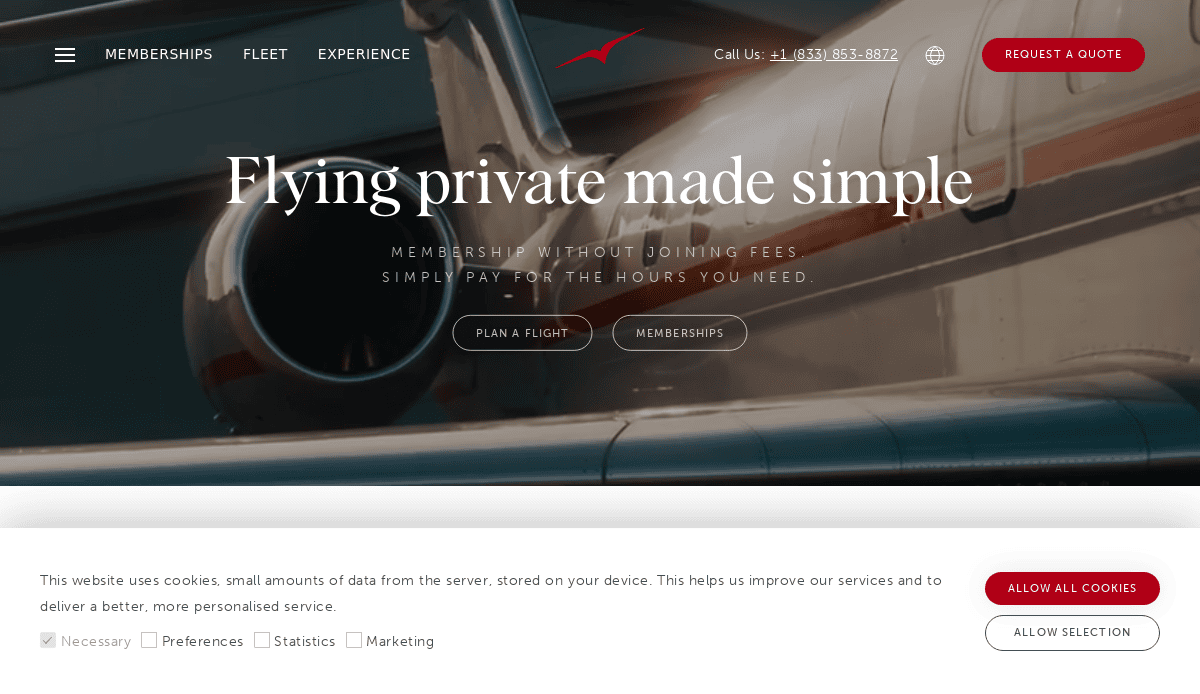
1. VistaJet
- Location: New York, NY
- Key Takeaways:
- Immersive Hero Video: Immediately establishes a tone of unparalleled luxury and global reach, capturing the user’s attention.
- Elegant Program Visualization: Clearly explains complex membership tiers (Program vs. VJ25) with clean graphics and concise benefits.
- “Private World” Section: Effectively sells the lifestyle beyond the flight with exclusive partnerships, adding significant value to the brand.
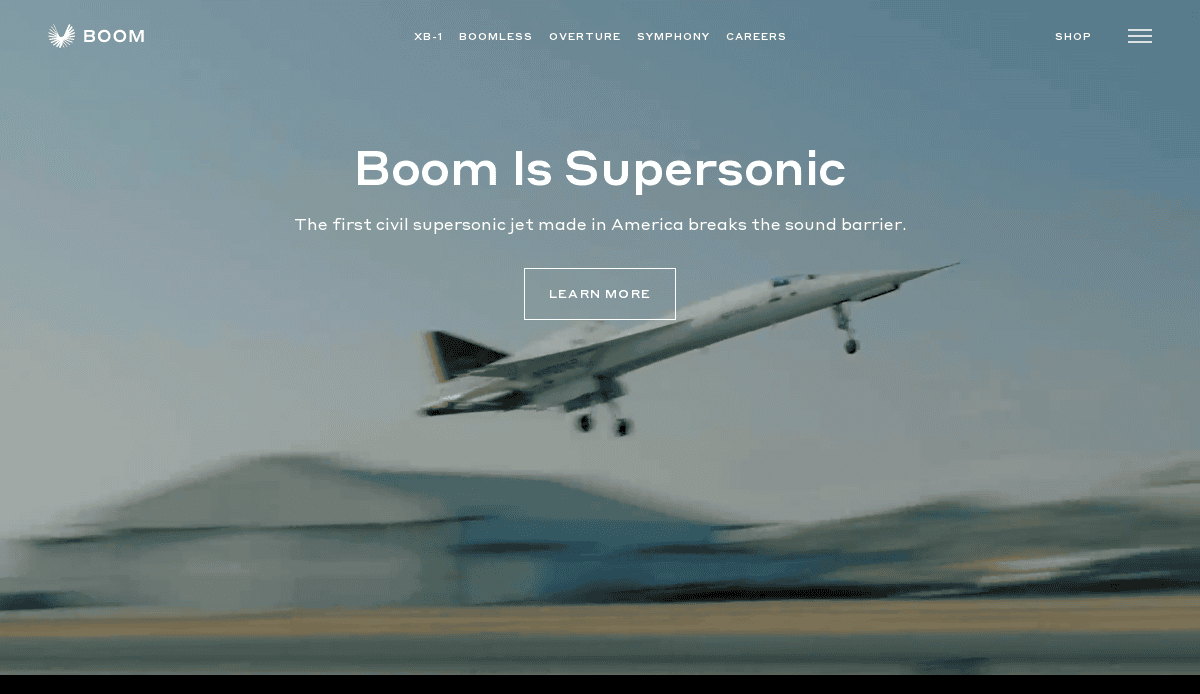
2. Boom Supersonic
- Location: Centennial, CO
- Key Takeaways:
- Future-Focused Narrative: The entire site is built around a powerful story of innovation, using stunning renders and animation to sell a vision.
- Bold, Minimalist Design: A clean, spacious layout with a simple color palette lets the revolutionary aircraft design be the star.
- Compelling Data Visualization: Uses infographics and animated timelines to explain complex engineering and sustainability goals in an accessible way.
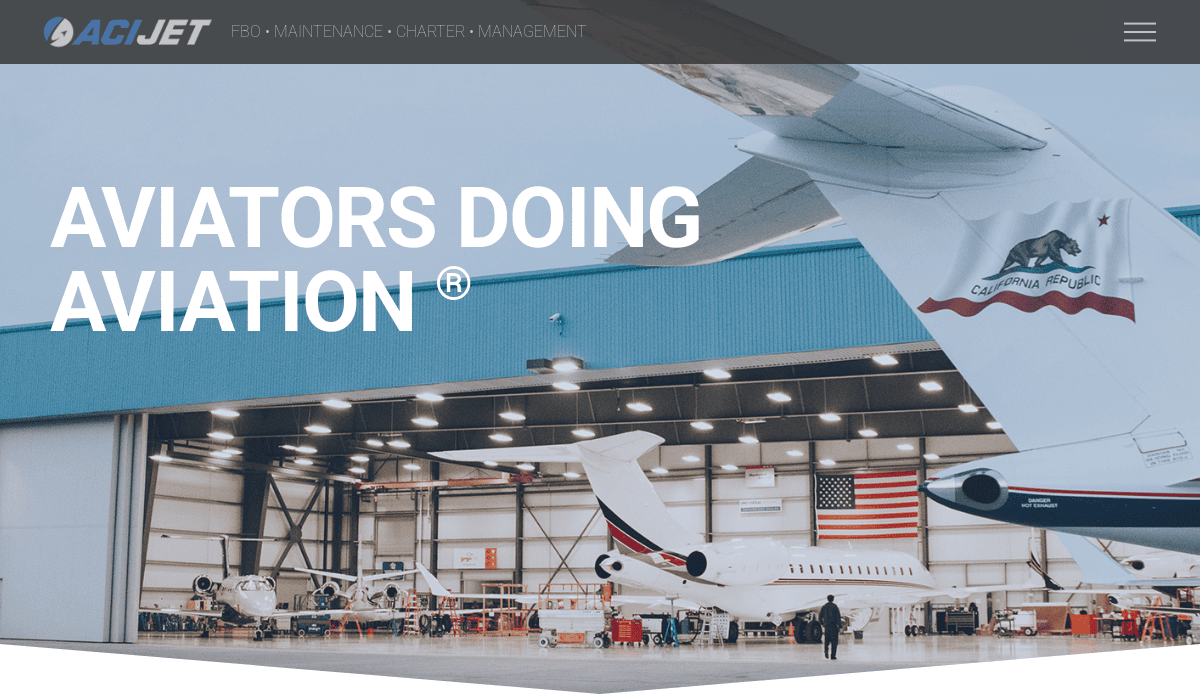
3. ACI Jet
- Location: San Luis Obispo, CA
- Key Takeaways:
- Exceptional Photography: Uses vibrant, high-quality images of their actual facilities, aircraft, and team, creating an immediate impression of quality and authenticity.
- Clean Service Organization: Neatly organizes its diverse business lines (FBO, Charter, Maintenance, Management) into a clear, intuitive navigation structure that is easy for users to follow.
- “Careers” Section as a Brand Pillar: Features a robust careers section with video testimonials that not only attract talent but also powerfully communicate the company’s positive culture and values.
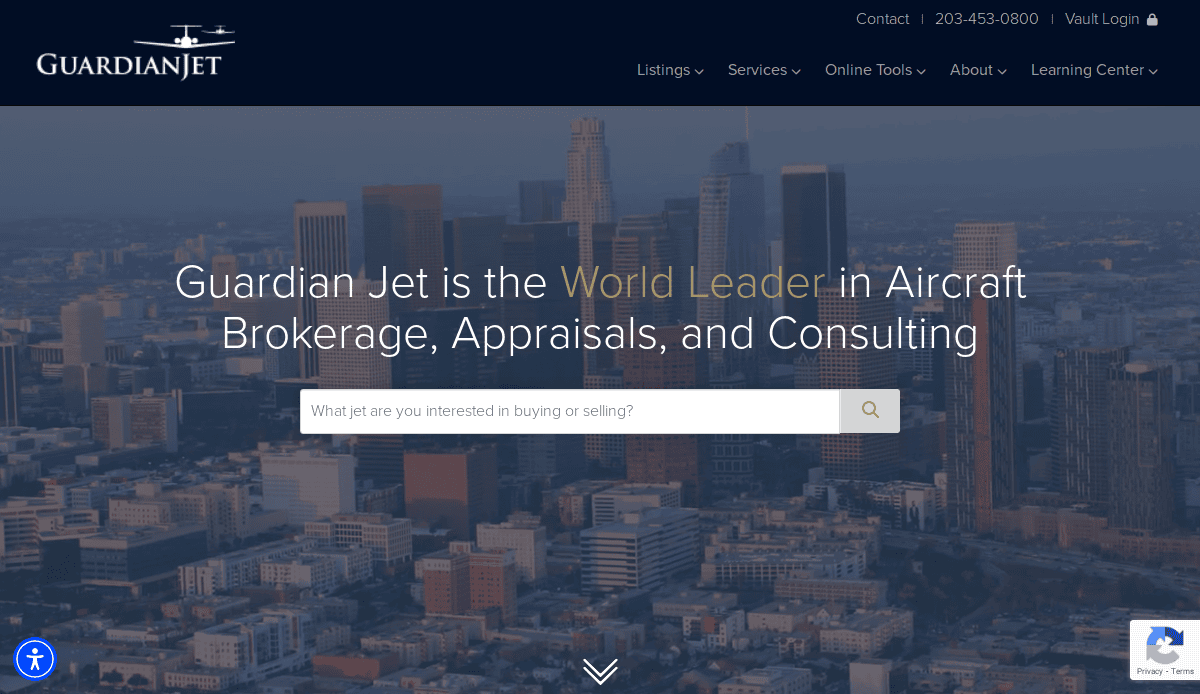
4. Guardian Jet
- Location: Guilford, CT
- Key Takeaways:
- Data-Driven Aircraft Listings:Presents a massive amount of technical and market data for each aircraft in a clean, digestible format.
- Strong “Consulting” Focus:Positions itself not just as a broker but as an essential advisor, building trust through insightful content.
- Intuitive Search and Filtering:Allows serious buyers to easily filter the aircraft market by manufacturer, model, and year, providing immense utility.
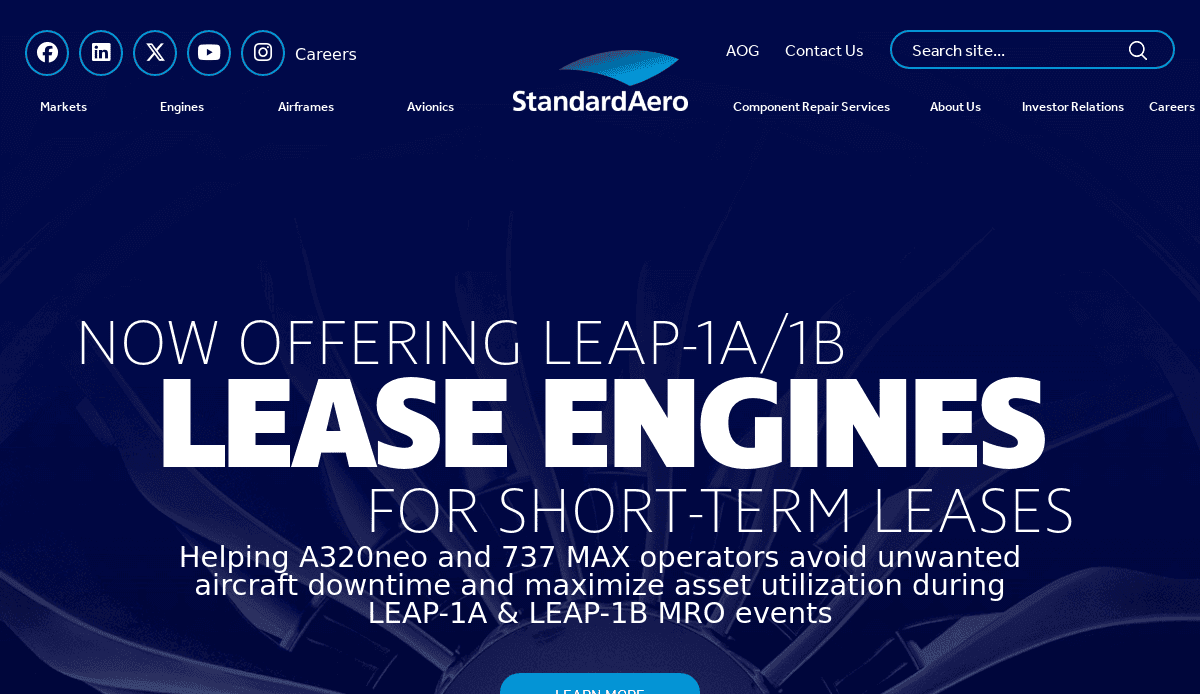
5. StandardAero
- Location: Scottsdale, AZ
- Key Takeaways:
- Masterful B2B Organization:Organizes a vast portfolio of highly technical MRO services by platform, engine, and component, making it easy for technical users to navigate.
- “Expertise” as a Trust Signal:The site is structured around showcasing deep technical knowledge and certifications, building credibility with engineers and fleet managers.
- Effective Use of Case Studies:Provides detailed case studies that prove their problem-solving capabilities and the value they deliver to clients.
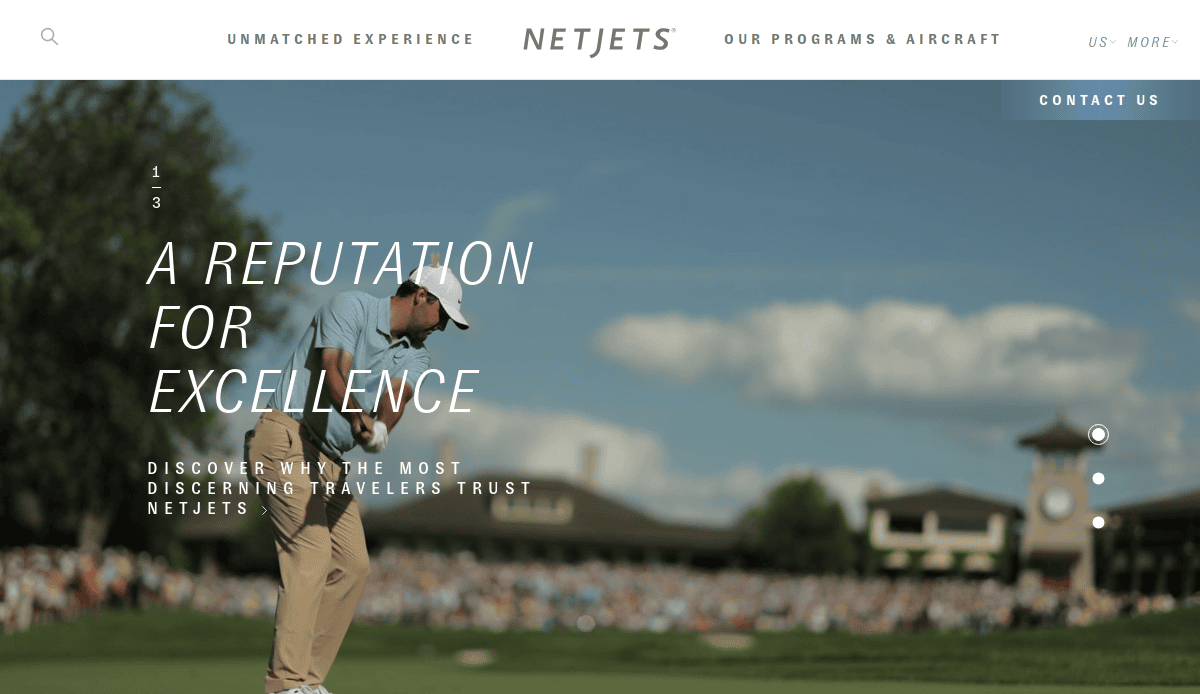
6. NetJets
- Location: Columbus, OH
- Key Takeaways:
- Immersive Fleet Showcase:Uses high-quality visuals and 3D tours to create a tangible sense of luxury.
- Strong Trust Signals:Prominently features its Berkshire Hathaway ownership and safety record to build immediate credibility.
- Clear Program Pathways:Effectively guides users to the right ownership model (Share vs. Card) with clear comparisons.
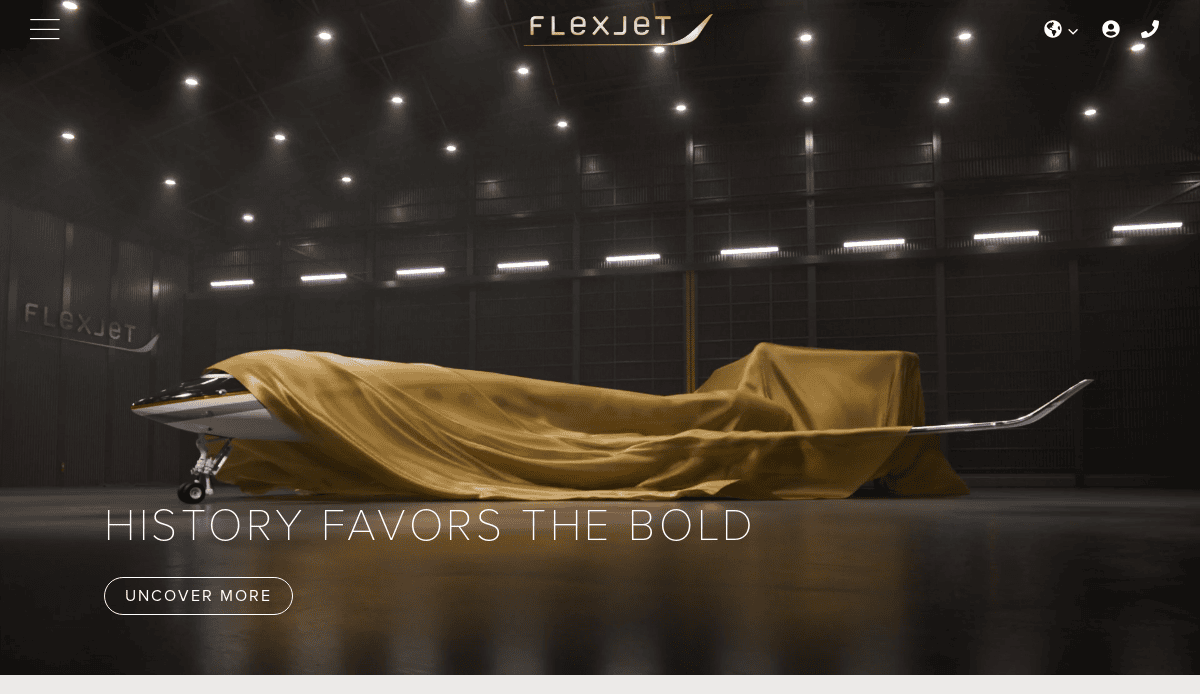
7. Flexjet
- Location: Cleveland, OH
- Key Takeaways:
- Lifestyle-Oriented Branding:Focuses heavily on the exclusive experiences and destinations, selling the “why” behind private travel.
- Stunning, Artistic Photography:Uses a unique, high-contrast photographic style that feels more like a luxury magazine than a corporate website.
- “Red Label” Differentiation:Clearly articulates its unique value proposition (dedicated crews, youngest fleet) throughout the site.
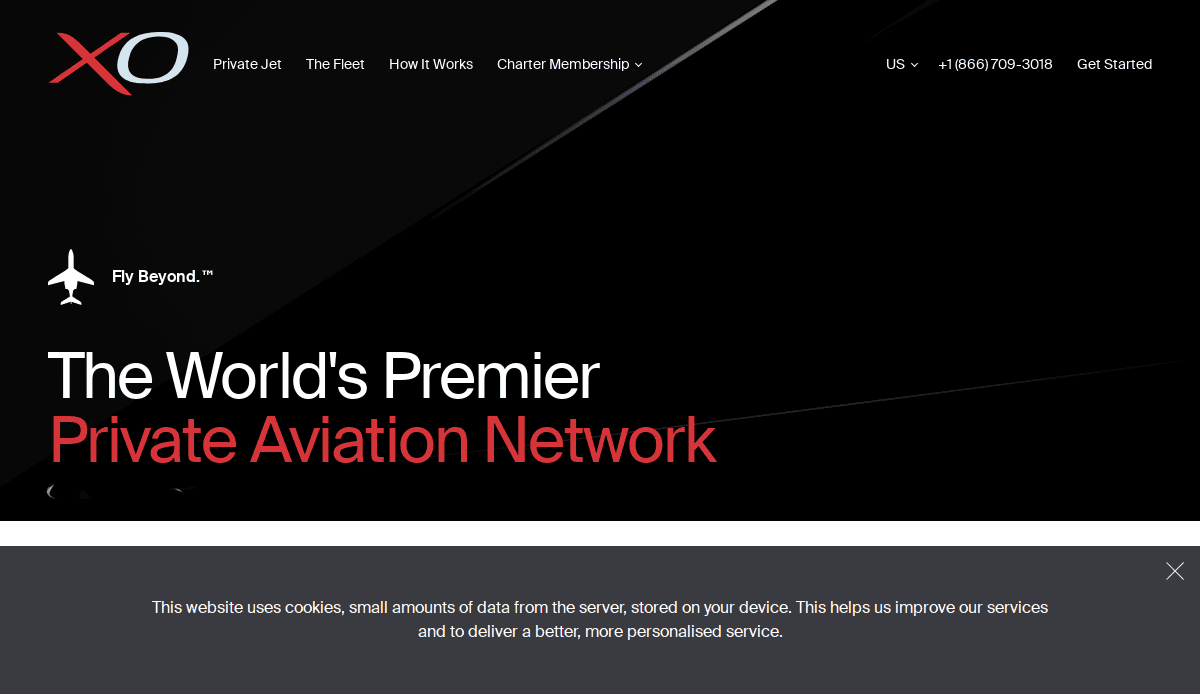
8. XO
- Location: Fort Lauderdale, FL
- Key Takeaways:
- Tech-Forward Approach:The design emphasizes its mobile app and instant booking technology, appealing to a modern, digitally-native client.
- Disruptive “Shared Flight” Model:Clearly explains its innovative seat-sharing service, opening up the market to a new audience.
- Transparent Pricing Model:The prominent booking engine provides instant estimates, a key differentiator from more traditional charter sites.
9. Boeing
- Location:Arlington, VA
- Key Takeaways:
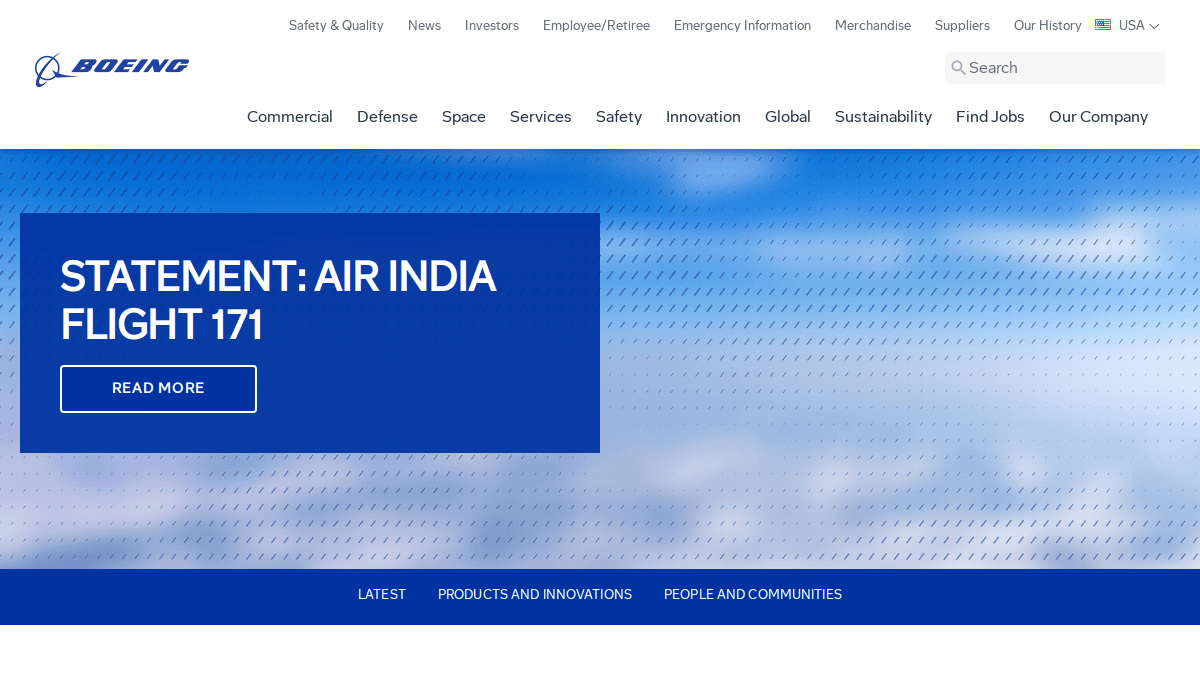
- Corporate Storytelling:Effectively communicates its vast scope, from commercial to defense and space, through compelling stories and news.
- Focus on Innovation:Dedicated sections on sustainability and future aircraft concepts position the brand as a forward-thinking industry leader.
- Rich Investor and Media Resources:Serves its corporate audiences with an incredibly deep and well-organized repository of reports, data, and news.
10. Lockheed Martin
- Location:Bethesda, MD
- Key Takeaways:
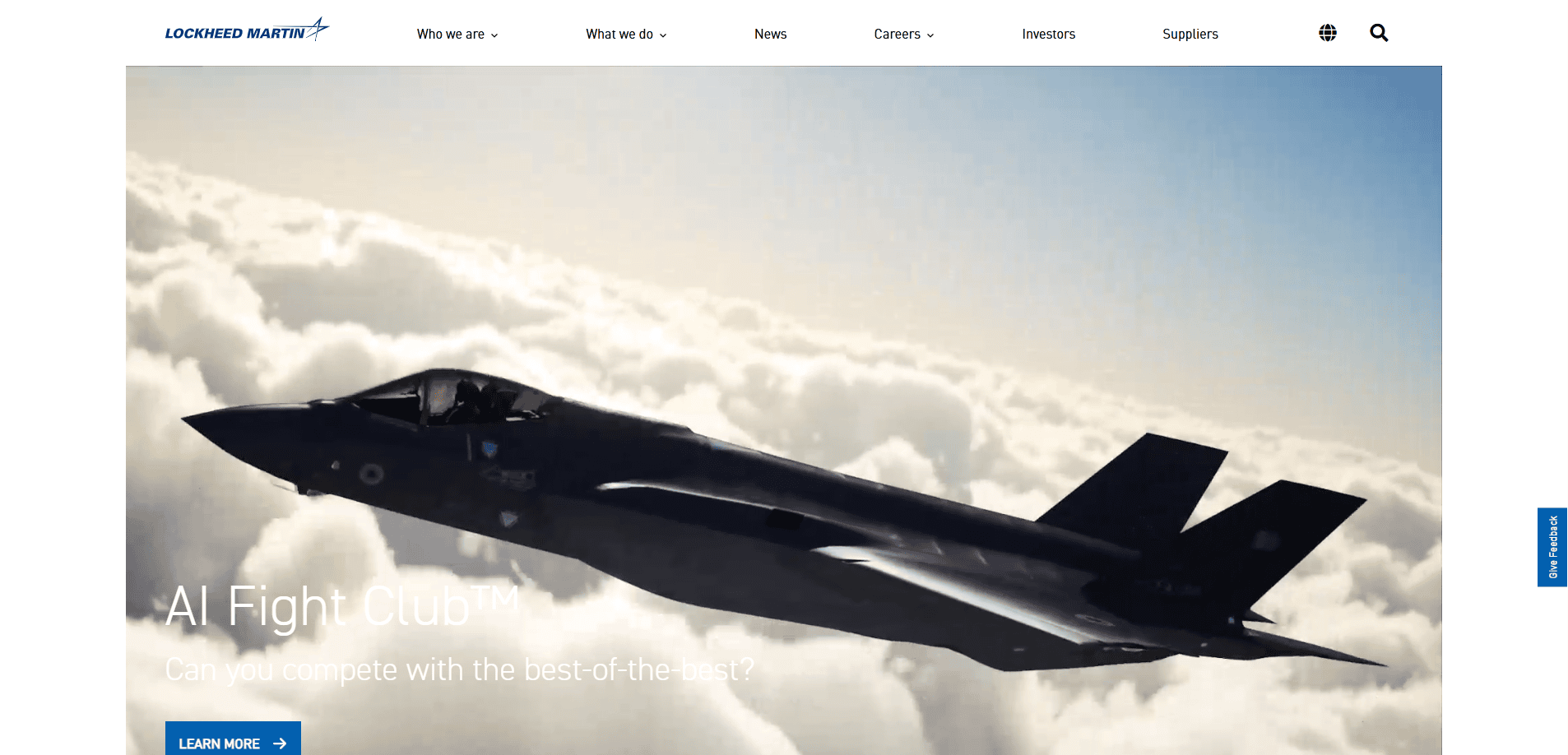
- Mission-Driven Messaging:The entire site is framed around national security and solving complex challenges, creating a powerful brand identity.
- Bold, Cinematic Visuals:Uses dramatic imagery and video to showcase its advanced technology in a compelling way.
- Clear “What We Do” Section:Manages to simplify its incredibly complex business lines into understandable categories for a broad audience.
11. Cirrus Aircraft
- Location:Duluth, MN
- Key Takeaways:
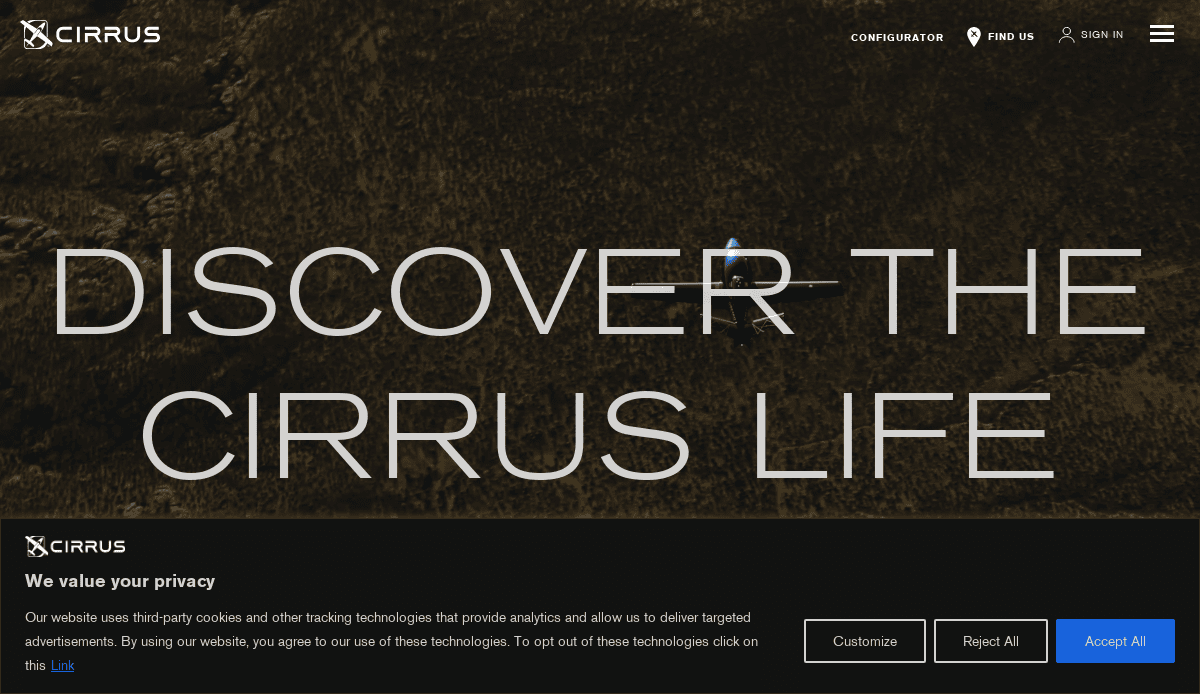
- Owner-Centric Experience:The site is clearly designed for current and prospective owners, focusing on the “Cirrus Life” and community.
- Interactive Configurator:A best-in-class tool that allows users to customize their aircraft, creating a highly engaging and personal experience.
- Integrated Flight Training:Seamlessly weaves its “Cirrus Approach” training program into the ownership journey, creating a holistic ecosystem.
12. Gulfstream Aerospace
- Location: Savannah, GA
- Key Takeaways:
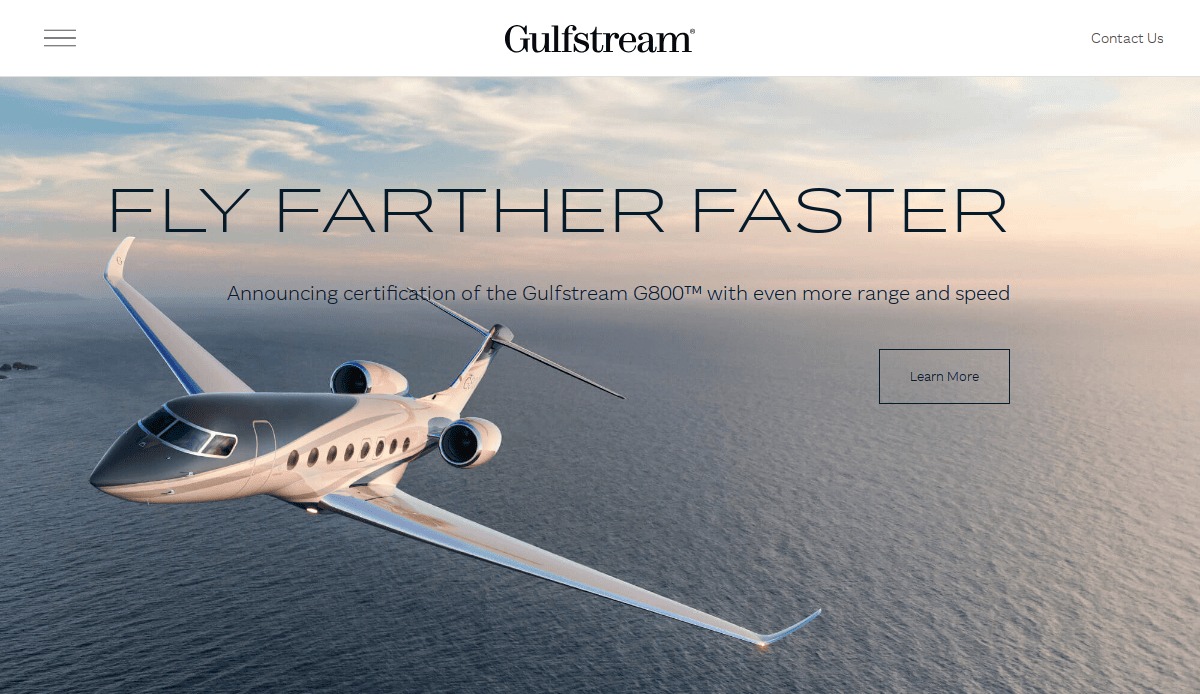
- Uncompromising Luxury: The design uses expansive white space, elegant typography, and stunning visuals to create an atmosphere of pure luxury.
- Aircraft as the Hero: Each aircraft model has a dedicated microsite experience with breathtaking visuals and detailed specifications.
- Focus on Craftsmanship: Emphasizes the human element of design and manufacturing to build a narrative around quality and attention to detail.
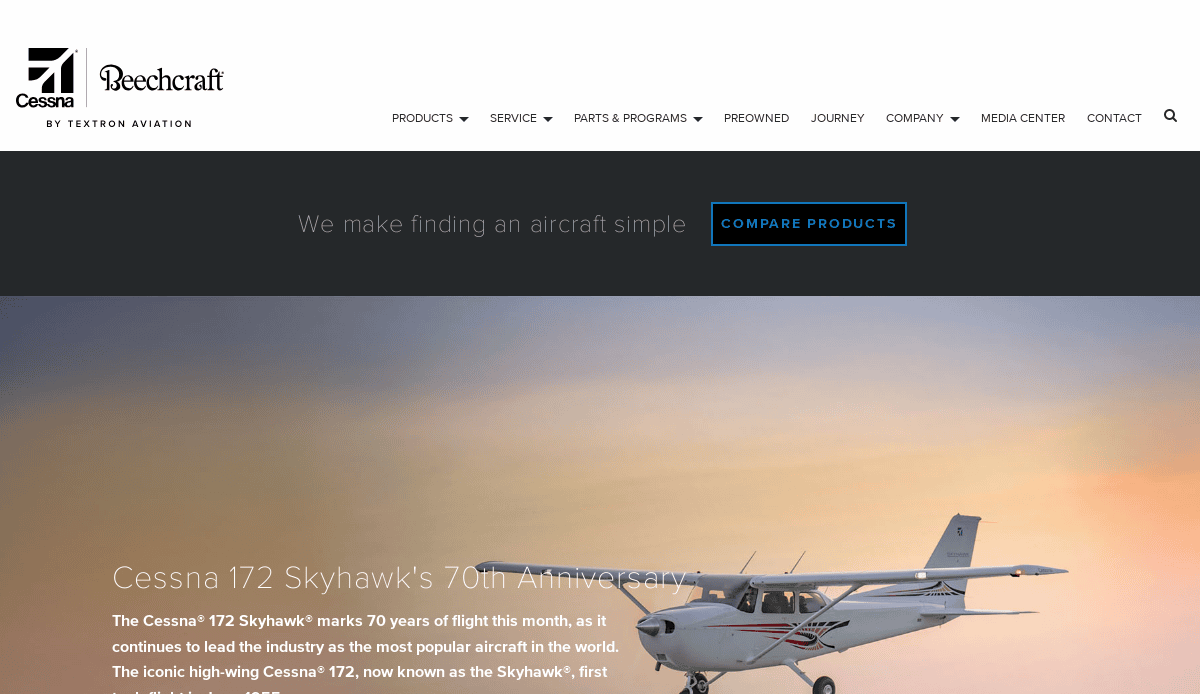
13. Textron Aviation
- Location:Wichita, KS
- Key Takeaways:
- Strong Brand Architecture:Effectively houses multiple iconic brands (Cessna, Beechcraft) under one cohesive corporate umbrella.
- Clear Customer Pathways:Guides users based on their mission, whether it’s special operations, flight training, or private ownership.
- Excellent Defense Showcase:Clearly articulates its capabilities for military and government clients with strong visuals and case studies.
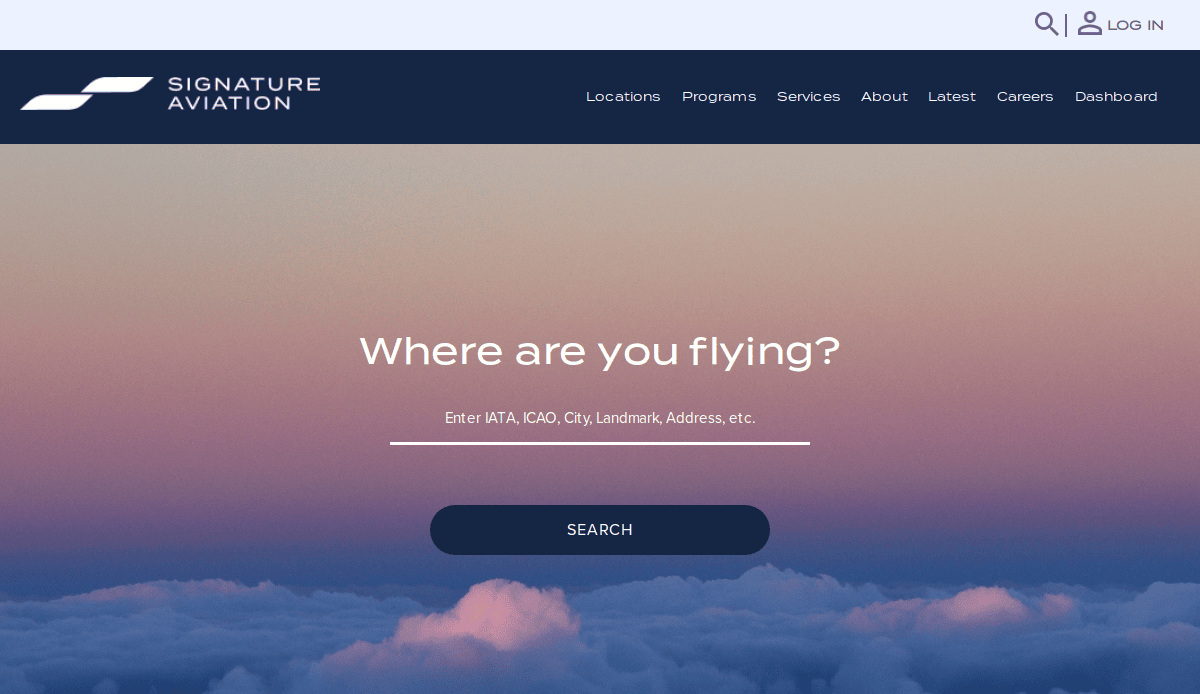
14. Signature Aviation
- Location: Orlando, FL
- Key Takeaways:
- Utility-Focused Design: The primary focus is its powerful location finder and booking tool, providing immediate value to pilots and flight departments.
- Simple, Clean Interface:Avoids clutter, allowing for fast and easy access to critical information like FBO locations and services.
- Effective Rewards Program Promotion: Prominently features its Signature TailWins® program to encourage loyalty.
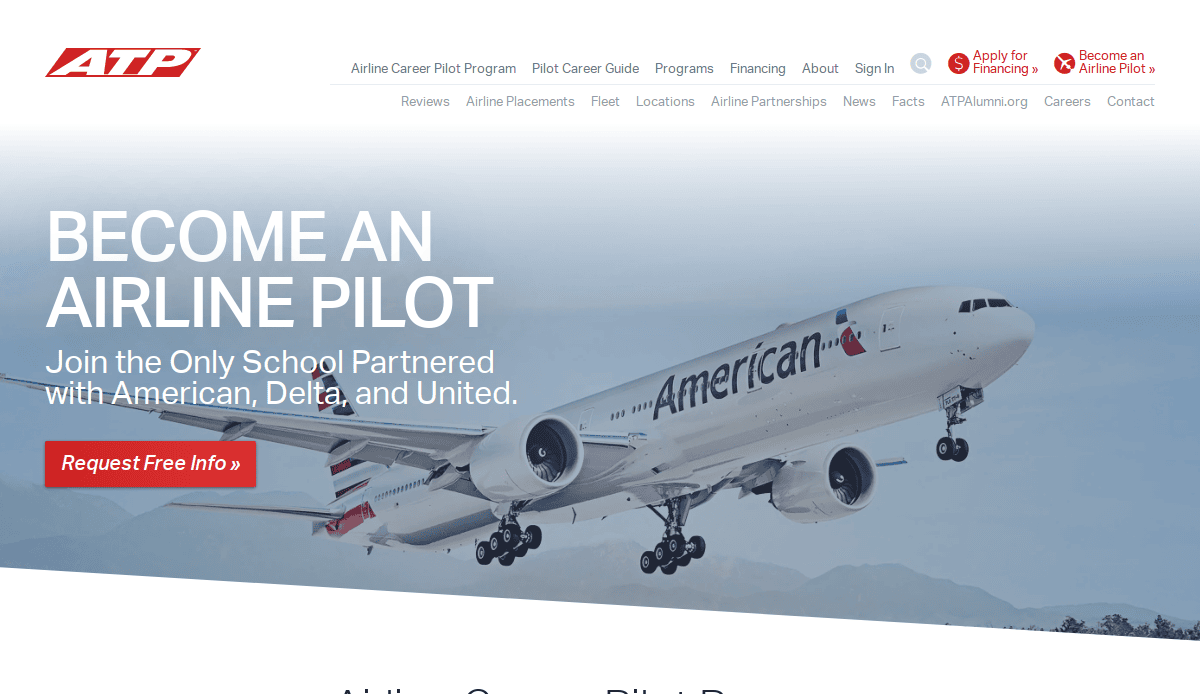
15. ATP Flight School
- Location: Jacksonville Beach, FL
- Key Takeaways:
- Conversion-Oriented Design:The site is relentlessly focused on one goal: getting prospective students to request more information or book an introductory flight.
- Transparent Program Outlines:Clearly presents timelines, costs, and career paths, answering the most critical questions for aspiring pilots upfront.
- Powerful Social Proof:Uses a constant stream of student testimonials and success stories to build credibility and desire.
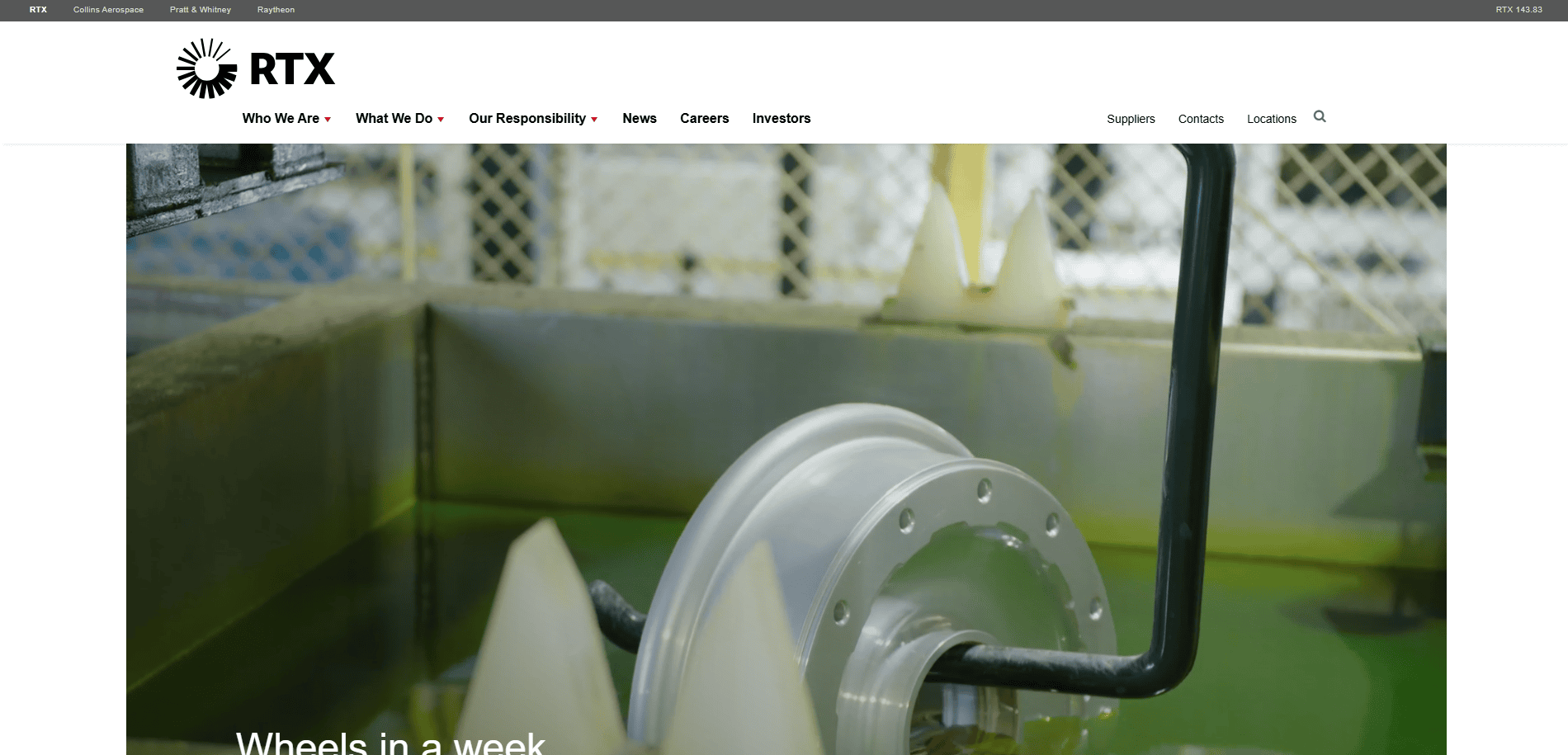
16. RTX (formerly Raytheon Technologies)
- Location:Arlington, VA
- Key Takeaways:
- Unified Corporate Identity:Successfully combines the heritage of Raytheon, Collins Aerospace, and Pratt & Whitney into a single, modern brand.
- Technology-First Content:Focuses on core technologies (propulsion, avionics, connectivity) rather than just end-products.
- Clean, Modern Aesthetics:Utilizes a bright color palette and clean lines to feel more like a tech company than a traditional defense contractor.
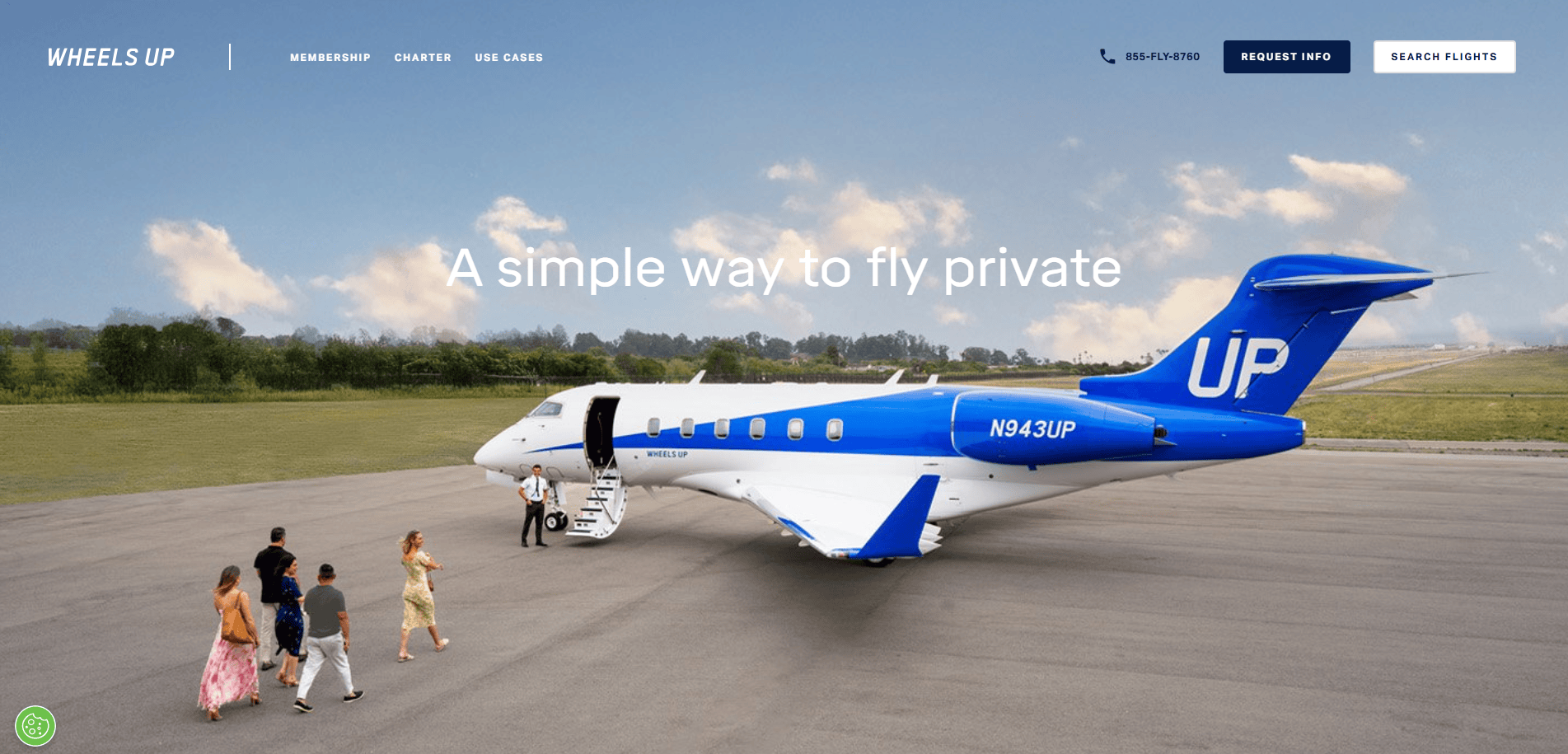
17. Wheels Up
- Location:New York, NY
- Key Takeaways:
- Clear Membership Value Proposition:The site does an excellent job of explaining the benefits of its membership model versus on-demand charter.
- Strong Lifestyle Integration:Features partnerships with luxury brands and exclusive events, positioning itself as a lifestyle company.
- Seamless Mobile Experience:The site and associated app are designed for on-the-go booking and account management.
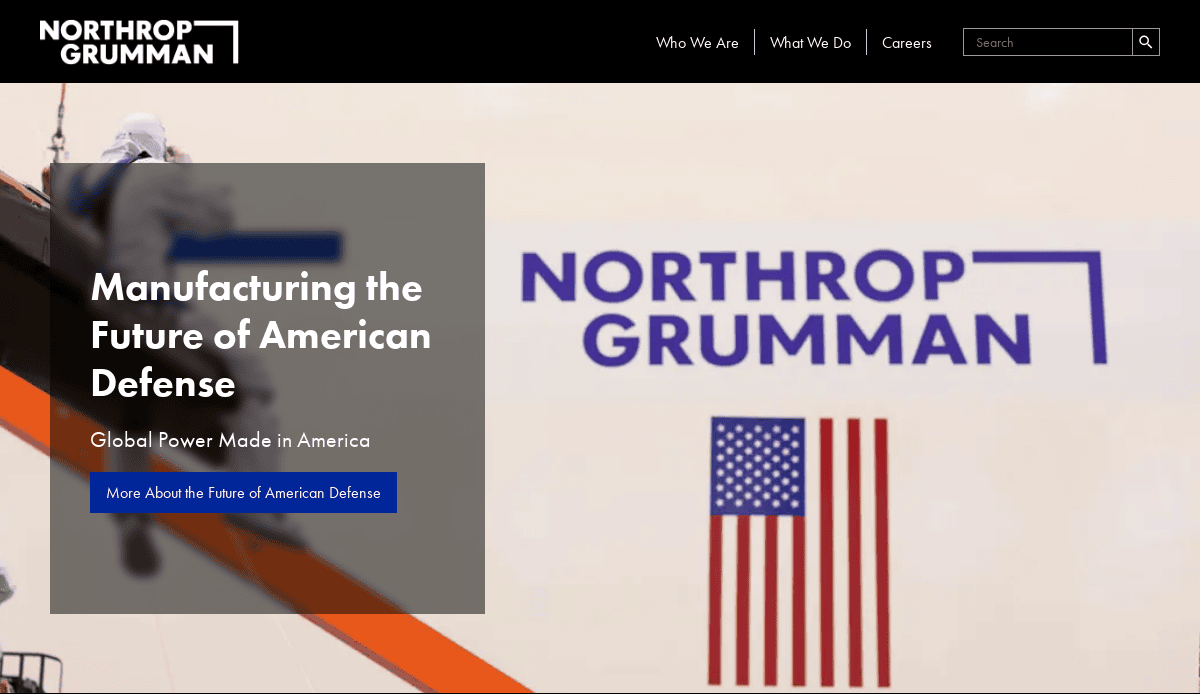
18. Northrop Grumman
- Location: Falls Church, VA
- Key Takeaways:
- “Defining Possible” Theme: Uses a powerful, aspirational tagline and supporting stories to create a strong, innovative brand image.
- Excellent Career Section:Provides a deep, engaging portal for recruitment that showcases company culture and mission.
- Visually Engaging Product Sections:Breaks down complex defense and space systems with video, animation, and clear explanations.
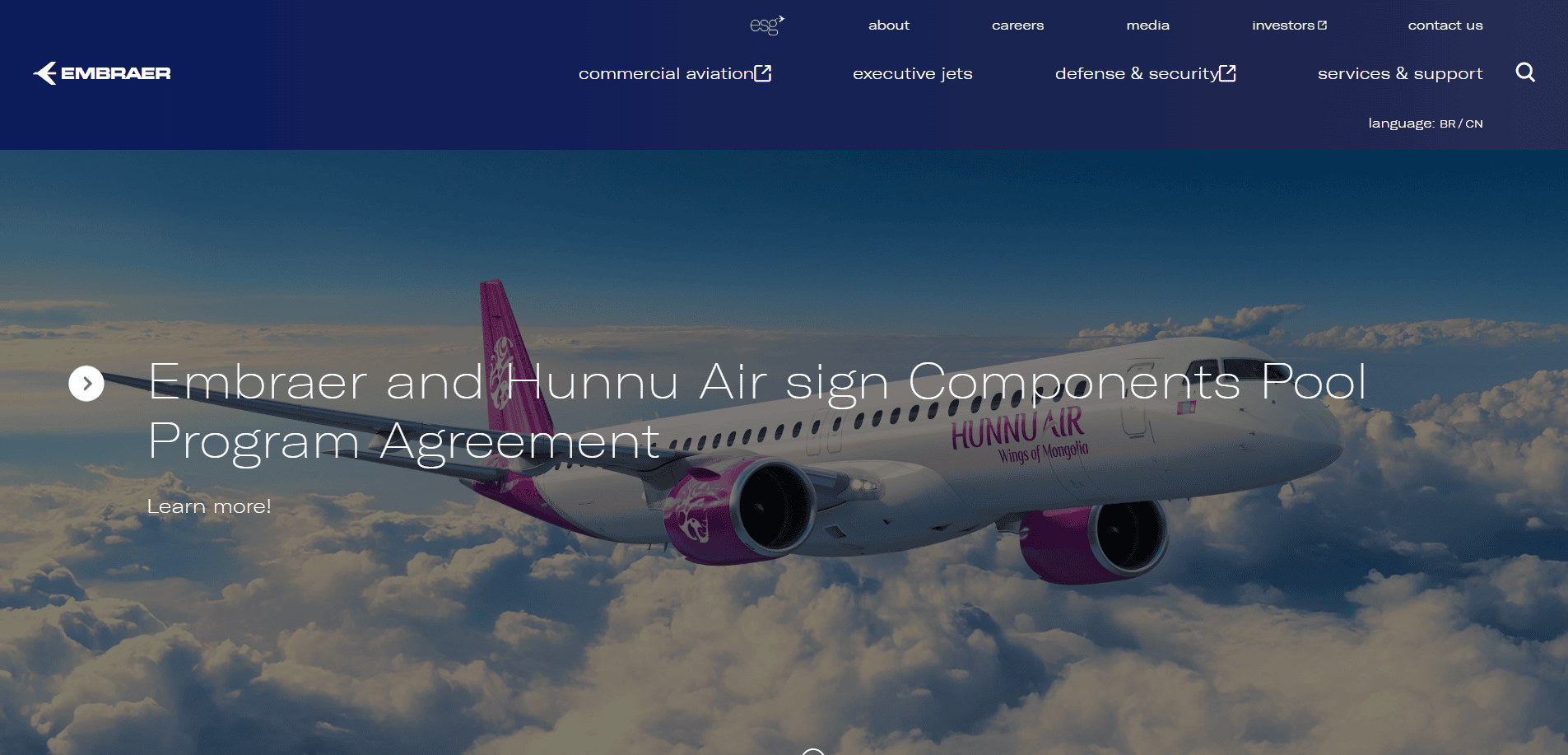
19. Embraer
- Location:Fort Lauderdale, FL (US Headquarters)
- Key Takeaways:
- Global, Multi-Segment Appeal:Successfully speaks to diverse audiences in commercial, executive, and defense aviation within one site.
- Focus on Sustainability (Eve):Prominently features its forward-thinking Eve Air Mobility venture, showcasing a commitment to the future of flight.
- Beautiful Aircraft Imagery:Employs stunning, almost artistic photography and video to highlight the design of its aircraft.
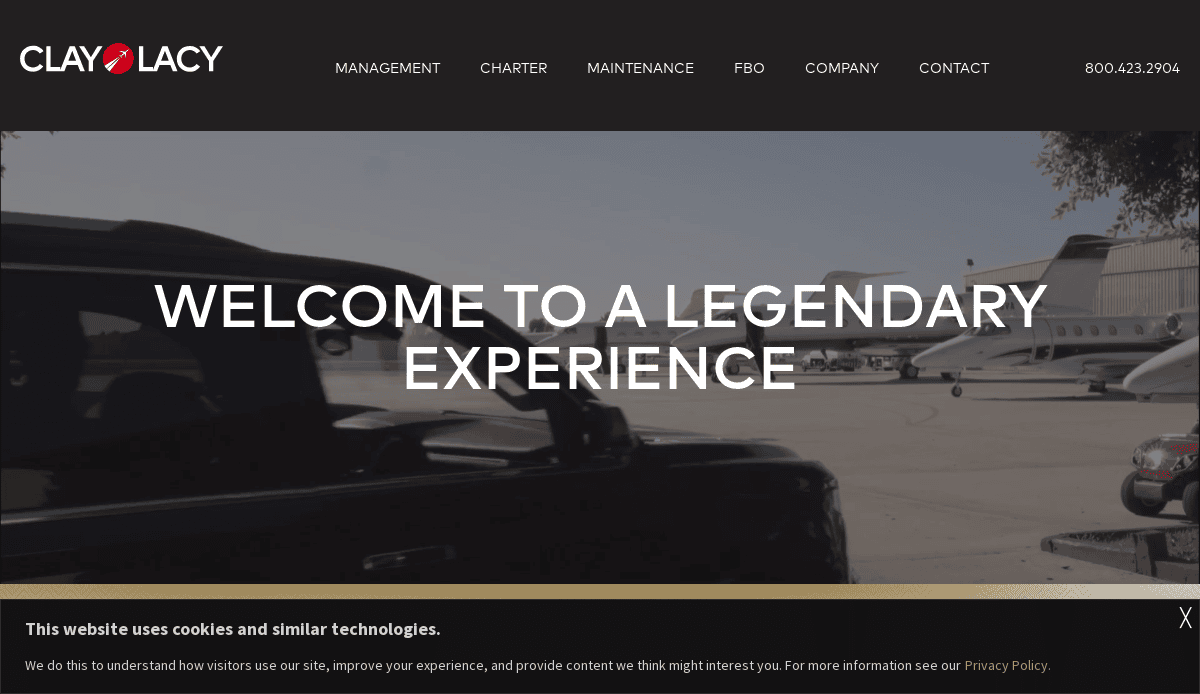
20. Clay Lacy Aviation
- Location:Van Nuys, CA
- Key Takeaways:
- Heritage and Trust:Leverages its long history and founder’s legacy to build a powerful narrative of experience and reliability.
- Comprehensive Service Offering:Presents a clean and easy-to-navigate overview of its diverse services, from charter to MRO.
- Strong Sustainability Focus:Has a dedicated, detailed section on its sustainability efforts, a key differentiator in the FBO and charter space.
Your Ascent Begins Now!
Creating a world-class digital presence is a complex undertaking that requires more than just great design; it demands a deep understanding of your specific aviation business. A strategic approach to your online presence is the key to effective lead generation and sustained growth. Whether you manage charter services or another specialized enterprise, our team of aviation professionals is dedicated to engineering comprehensive aviation solutions that deliver measurable results. If you are ready to elevate your brand and empower your marketing, it is time to take the next step.
Request a free consultation with our aviation web design experts today.
Common Questions About Aviation Web Design
What makes a website user-friendly and easy to navigate?
A user-friendly site is built on a foundation of intuitive design. This means having a clean layout and a logical structure that helps guide users to the information they need with minimal effort. Key elements include a simple main menu, a well-organized list of services, and a predictable path to contact information. To be truly easy to use, the design must anticipate what aviation professionals are looking for, whether that’s technical data or booking information, and present it clearly. Learn more about the core principles of design.
Why is a modern design so important for an aviation service provider?
For any aviation service provider, from a charter service and flight school operator to an aerospace engineering firm, trust is the ultimate currency. A modern design communicates professionalism, attention to detail, and credibility. An outdated or poorly designed site can make a highly professional operation look amateur, deterring potential clients and partners. It signals that your business is current, technologically savvy, and aligns with the high standards of the industry, including those set by bodies like the Federal Aviation Administration.
What kind of images should I use?
Authenticity is paramount. You should feature high-resolution, professional images of planes that are part of your actual fleet or operation. Dynamic shots of aircraft in flight are powerful, as are detailed pictures of cabins, hangars, and your team at work. Avoid generic stock photos at all costs. Your goal is to give potential clients, from marketing professionals to aviation enthusiasts, a true and impressive view of your assets and capabilities.
How detailed should our “About Us” page be?
Your “About Us” page is a critical tool for building trust. While it should be concise and easy to read, it needs to tell your story effectively. Go beyond just listing facts. Introduce your key leadership, explain your company’s mission, and convey the values that drive your business. For an industry built on relationships, this page humanizes your brand and provides a powerful reason for a potential client to choose you over a competitor. Check out our guide to the web design process to learn more.
Does my website really need to work on smartphones?
Absolutely. Your website must be fully responsive and function flawlessly across all screen sizes, from large desktop monitors to tablets and smartphones. Many of your clients and prospects are busy executives and aviation professionals who will access your site on the go. If your site displays and functions poorly on their mobile device, you will lose credibility and business. A responsive design is a non-negotiable component of any professional digital marketing strategy today.
Can we use a color scheme like navy blue and white?
Yes, a classic navy blue and white palette is an excellent choice that communicates trust, sophistication, and a clean layout. Many of the best websites in this industry use a limited, professional color palette, such as a white color scheme accented with strong blues or a combination of greens and grays. The key is consistency and ensuring the colors align with your brand’s specific identity, whether you’re a luxury charter company or a rugged flight training school helping people learn to fly.