
Just looking for our Best Accountant Website examples list?
Why a High-Performing Accountant Website Matters
We are more than aware that today, a website is more than just a digital business card—it’s the cornerstone of your accounting firm’s online presence and a pivotal marketing tool. With the majority of potential clients initiating their search for accounting services online, a well-designed website can significantly influence their decision-making process. A professional website showcases your firm’s credibility and expertise and serves as a platform to engage and convert visitors into clients.
Modern accounting websites must prioritize user experience, ensuring intuitive navigation, responsive design, and clear calls to action. Incorporating search engine optimization (SEO) techniques is essential to enhance visibility and attract organic traffic. By aligning your website’s design and content with the needs and expectations of your target audience, you position your firm to stand out in a competitive market and drive business growth.
In this guide, we’ll explore the critical elements of effective accountant website design, providing insights and strategies to help your firm thrive.
Website Planning & Purpose: Laying the Groundwork for a High-Impact Website
Before diving into design elements or content creation, accountants must establish a clear plan and purpose for their website. This foundational phase ensures that the website aligns with the firm’s goals, resonates with the target audience, and effectively showcases the firm’s services and expertise.
Define Your Firm’s Objectives
Begin by identifying what you want your website to achieve. Common objectives for accounting firms include:
- Lead Generation: Attracting new clients through contact forms, newsletter sign-ups, or consultation bookings.
- Client Education: Providing resources like blogs, FAQs, and guides to inform clients about accounting topics.
- Service Showcase: Highlighting the range of services offered, such as tax preparation, bookkeeping, or financial consulting.
- Brand Establishment: Building credibility and trust through professional design and informative content.
Clearly defined objectives will guide the website’s structure, content, and functionality, ensuring that every element serves a strategic purpose.
Understand Your Target Audience
Identify the specific demographics and needs of your ideal clients. Consider factors such as:
- Client Type: Are you targeting individuals, small businesses, or large corporations?
- Industry Focus: Do you specialize in certain industries like healthcare, real estate, or non-profits?
- Service Needs: What accounting services are most relevant to your audience?
Understanding your audience allows you to tailor content and design elements that speak directly to their needs and preferences.
Develop a Content Strategy
Plan the types of content that will populate your website, ensuring they align with your objectives and audience interests. Key content areas might include:
- Service Pages: Detailed descriptions of each service offered.
- About Us: Information about your firm’s history, team, and values.
- Blog: Regularly updated articles on accounting topics, tax tips, and financial advice.
- Testimonials: Client reviews and success stories to build trust.
A well-thought-out content strategy ensures that your website remains informative, engaging, and relevant to visitors.
Plan Site Structure and Navigation
Design a logical and intuitive site structure that allows users to easily find information. Consider the following:
- Main Navigation Menu: Include clear labels like Home, Services, About Us, Blog, and Contact.
- Service Categories: Group-related services under umbrella categories for easier navigation.
- Call-to-Action (CTA) Placement: Strategically place CTAs on each page to guide users toward desired actions.
Effective navigation enhances user experience and encourages visitors to explore more of your website.
Incorporate SEO Best Practices
Ensure your website is optimized for search engines to increase visibility and attract organic traffic. Key SEO considerations include:
- Keyword Research: Identify and incorporate relevant keywords throughout your content.
- Meta Tags: Craft compelling meta titles and descriptions for each page.
- Mobile Optimization: Design a responsive website that performs well on all devices.
- Page Load Speed: Optimize images and code to ensure fast loading times.
Implementing SEO effective techniques will improve your website’s ranking on search engine results pages, making it easier for potential clients to find you.
Establish a Timeline and Budget
Set realistic timelines and budgets for the website development process. Consider:
- Development Phases: Break down the project into stages like planning, design, content creation, testing, and launch.
- Resource Allocation: Determine the personnel and tools needed for each phase.
- Contingency Plans: Prepare for potential delays or additional costs.
A well-planned timeline and budget help keep the project on track and within financial constraints.
For a more detailed overview of the web design process, refer to our step-by-step guide to the web design process.
By thoroughly planning and defining the purpose of your website, you lay a solid foundation for a successful online presence that effectively attracts and serves your clients.
Design Principles: Crafting an Effective Website
A well-designed website serves as a powerful marketing tool, establishing credibility and facilitating client engagement. To achieve this, certain design principles are essential:
1. Professional and Clean Layout
A clean, uncluttered layout conveys professionalism and trustworthiness. Utilize ample white space, consistent color schemes, and readable fonts to enhance user experience. Avoid overly complex designs that can distract or confuse visitors.
2. Intuitive Navigation
Ensure that your website’s navigation is straightforward and user-friendly. Organize content logically, with clear menus and calls to action, allowing visitors to find information effortlessly. This enhances user satisfaction and encourages exploration of your services.
3. Mobile Responsiveness
With the increasing use of mobile devices, your website must be responsive. Design layouts that adapt seamlessly to various screen sizes, ensuring accessibility and functionality across all devices.
4. Clear Calls to Action (CTAs)
Incorporate prominent and persuasive CTAs to guide visitors toward desired actions, such as scheduling consultations or contacting your firm. Effective CTAs improve conversion rates by directing user behavior.
5. SEO Optimization
Implement search engine optimization guidelines to enhance your website’s visibility. This includes using relevant keywords, optimizing meta tags, and ensuring fast load times. An SEO-friendly website attracts more potential clients by appearing higher in search results.
By adhering to these design principles, your business can create a website that looks professional and effectively engages visitors and converts them into clients. For a more detailed overview of web design fundamentals, refer to our guide for beginners.
Content & Navigation: Structuring Your Site for Maximum Impact
An effective website hinges on well-organized content and intuitive navigation. By presenting information clearly and guiding visitors seamlessly, you enhance user experience, build trust, and encourage engagement. Here’s how to structure your website’s content and navigation to achieve these goals.
1. Define Clear Navigation Paths
Your website’s navigation should be straightforward, allowing visitors to find information effortlessly. Implement a primary navigation menu with concise labels such as:
- Home: Overview of your firm and services.
- About Us: Firm history, team bios, and mission statement.
- Services: Detailed descriptions of offerings like tax preparation, bookkeeping, and financial consulting.
- Resources: Blogs, FAQs, and downloadable guides.
- Contact: Contact form, phone number, email, and office location.
Consider incorporating breadcrumb navigation to help users understand their location within your site’s hierarchy and easily backtrack if needed.
2. Craft Compelling Homepage Content
Your homepage serves as the first impression for potential clients. It should succinctly convey your firm’s value proposition and guide visitors to key areas. Include:
- Headline: A clear statement of your services and unique selling points.
- Call-to-Action (CTA): Prominent buttons encouraging actions like “Schedule a Consultation” or “Learn More About Our Services.”
- Testimonials: Brief quotes from satisfied clients to build credibility.
- Service Highlights: Short descriptions linking to detailed service pages.
Ensure that the homepage is not cluttered; use white space effectively to make content digestible.
3. Develop Detailed Service Pages
Each service your firm offers should have its own dedicated page. This allows for:
- In-depth Descriptions: Explain what the service entails and its benefits.
- Targeted Keywords: Improve SEO by incorporating relevant search terms.
- Client Scenarios: Provide examples of how the service applies to different client needs.
- CTAs: Encourage visitors to take the next step, such as contacting you or scheduling a meeting.
Organize these pages under the “Services” menu, using dropdowns if necessary for subcategories.
4. Highlight Your Team and Firm Story
The “About Us” section should humanize your firm and establish trust. Include:
- Firm History: Share your journey and milestones.
- Team Bios: Introduce key staff with photos and brief backgrounds.
- Mission and Values: Articulate what drives your firm and how you serve clients.
This transparency fosters a connection with visitors, making them more likely to engage your services.
5. Provide Valuable Resources
A “Resources” section positions your firm as an authority and aids in SEO. Populate it with:
- Blog Posts: Regularly updated articles on relevant accounting topics.
- FAQs: Answers to common client questions.
- Downloadables: Guides, checklists, or whitepapers.
Ensure content is well-organized and easily searchable.
6. Optimize the Contact Page
Make it easy for visitors to reach out by including:
- Contact Form: Simple fields for name, email, and message.
- Direct Contact Information: Phone number, email address, and physical location.
- Map Integration: Interactive map showing your office location.
- Business Hours: Clearly state when you’re available.
A user-friendly contact page reduces friction and encourages communication.
7. Implement Consistent CTAs
Throughout your website, use consistent and clear CTAs to guide user behavior. Examples include:
- “Schedule a Free Consultation”
- “Download Our Tax Preparation Checklist”
- “Contact Our Team Today”
- Position these CTAs strategically on pages to align with the visitor’s journey.
For a more comprehensive understanding of organizing your website effectively, refer to our Website Organization Guide.
By thoughtfully structuring your content and navigation, your accounting firm can create a website that informs and converts visitors into clients.
ChatGPT said:
Visual Elements: Enhancing User Experience and Brand Identity in Site Design
In the accounting industry, a website’s visual design plays a pivotal role in establishing credibility, conveying professionalism, and fostering trust with potential clients. Thoughtfully integrated visual elements enhance user experience and reinforce brand identity, setting your firm apart in a competitive industry.
1. Consistent Branding Through Visual Design
A cohesive visual identity ensures that your accounting firm is immediately recognizable and memorable. This involves the consistent use of:
- Color Palette: Select colors that reflect your firm’s personality and values. For instance, blue often conveys trust and professionalism, while green can signify growth and stability.
- Typography: Choose fonts that are clean and easy to read, maintaining consistency across headings, body text, and calls to action.
- Imagery: Utilize high-quality images that resonate with your target audience, such as photos of your team, office environment, or satisfied clients.
Consistency in these elements across all pages reinforces your brand and builds trust with visitors.
2. Strategic Use of White Space
White space, or negative space, refers to the empty areas between elements on a page. Effective use of white space:
- Enhances Readability: By preventing clutter, white space makes content easier to read and digest.
- Guides User Attention: It helps direct focus to key elements, such as calls to action or important information.
- Creates a Modern Aesthetic: A clean, uncluttered design conveys professionalism and attention to detail.
Incorporating ample white space ensures that your website appears organized and user-friendly.
3. Visual Hierarchy and Navigation
Establishing a clear visual hierarchy guides visitors through your website intuitively. This can be achieved by:
- Size and Weight: Use larger, bolder fonts for headings to signify importance.
- Color and Contrast: Employ contrasting colors to highlight calls to action and key information.
- Layout and Positioning: Place essential elements, such as contact information or service highlights, in prominent locations.
A well-structured visual hierarchy enhances user experience by making navigation straightforward and information easily accessible.
4. Responsive and Mobile-Friendly Design
With an increasing number of users accessing websites via mobile devices, ensuring your site is responsive is crucial. A responsive design:
- Adapts to Various Screen Sizes: Ensures content is displayed appropriately on desktops, tablets, and smartphones.
- Improves Load Times: Optimized images and layouts enhance performance across devices.
- Enhances User Experience: Provides a seamless browsing experience, reducing bounce rates and increasing engagement.
Implementing responsive design principles ensures that all visitors have a positive experience, regardless of the device they use.
5. Incorporating Visual Aids and Multimedia
Utilizing visual aids can make complex accounting concepts more accessible. Consider incorporating:
- Infographics: Simplify data and processes into digestible visuals.
- Videos: Introduce your team, explain services, or provide client testimonials to build trust.
- Icons and Graphics: Use universally recognized symbols to represent services or features, aiding quick comprehension.
- These elements can enhance engagement and help communicate your firm’s value proposition effectively.
By thoughtfully integrating these visual elements, your accounting firm’s website can provide an engaging, user-friendly experience that reflects your brand’s professionalism and expertise.
Ongoing WordPress Maintenance: Ensuring Reliability
For accounting firms, a website isn’t just a digital presence—it’s a critical tool for client engagement, service promotion, and trust-building. Given the sensitive nature of financial data and the need for consistent uptime, ongoing WordPress maintenance is essential. Regular upkeep ensures your site remains secure, fast, and fully functional, safeguarding both your reputation and your clients’ information.
Daily Maintenance Tasks
- Monitor Site Uptime and Performance: Use tools like UptimeRobot to ensure your website is accessible and performing optimally.
- Review Security Logs: Check for unauthorized login attempts or unusual activity using security plugins such as Wordfence or Sucuri.
- Backup Your Website: Implement automated daily backups with plugins like UpdraftPlus, storing copies off-site to prevent data loss.
Weekly Maintenance Tasks
- Update Core, Themes, and Plugins: Regularly update WordPress core files, themes, and plugins to patch vulnerabilities and enhance functionality.
- Moderate Comments and User Accounts: Remove spam comments and deactivate inactive user accounts to maintain a clean and secure environment.
- Test Contact Forms and Interactive Elements: Ensure all forms and interactive features are functioning correctly to facilitate client communication.
Monthly Maintenance Tasks
- Optimize Database: Clean up your database by removing unnecessary data, such as post revisions and spam comments, to improve site speed.
- Check for Broken Links: Use tools like Broken Link Checker to identify and fix dead links that could harm user experience and SEO rankings.
- Review Site Analytics: Analyze traffic patterns and user behavior to inform content updates and marketing strategies.
Quarterly Maintenance Tasks
- Conduct a Full SEO Audit: Assess your site’s SEO performance, updating meta tags and content to align with current and proven methods.
- Evaluate Site Design and User Experience: Review your website’s design and navigation to ensure it meets user expectations and reflects your brand.
- Test Website on Multiple Devices and Browsers: Confirm that your site is responsive and functions correctly across various devices and browsers.
Annual Maintenance Tasks
- Renew Domain and SSL Certificates: Ensure your domain registration and SSL certificates are up to date to maintain site security and trustworthiness.
- Review Hosting Services: Evaluate your hosting provider’s performance and consider upgrades if necessary to support site growth.
- Update Legal and Compliance Information: Review and update your privacy policy, terms of service, and compliance statements to adhere to current regulations.
Implementing a structured maintenance schedule is vital for the ongoing success of your website. Regular maintenance protects against security threats and ensures a seamless experience for your clients, reinforcing your business’s professionalism and reliability.
Best Accounting Website Design Examples

1. Bennett Thrasher LLP
Location: Atlanta, GA
Key Takeaways:
- Sleek, modern design with easily accessible information.
- Emphasis on corporate responsibility and sustainability.
- Detailed service descriptions and client testimonials.

2. PwC (PricewaterhouseCoopers)
Location: New York, NY
Key Takeaways:
- Sleek, modern design with easily accessible information.
- Emphasis on corporate responsibility and sustainability.
- Detailed service descriptions and client testimonials

3. Ernst & Young (EY)
Location: New York, NY
Key Takeaways:
- Clean, professional design reflecting entrepreneurial spirit.
- High-quality images and clear navigation.
- Detailed service descriptions and client testimonials.
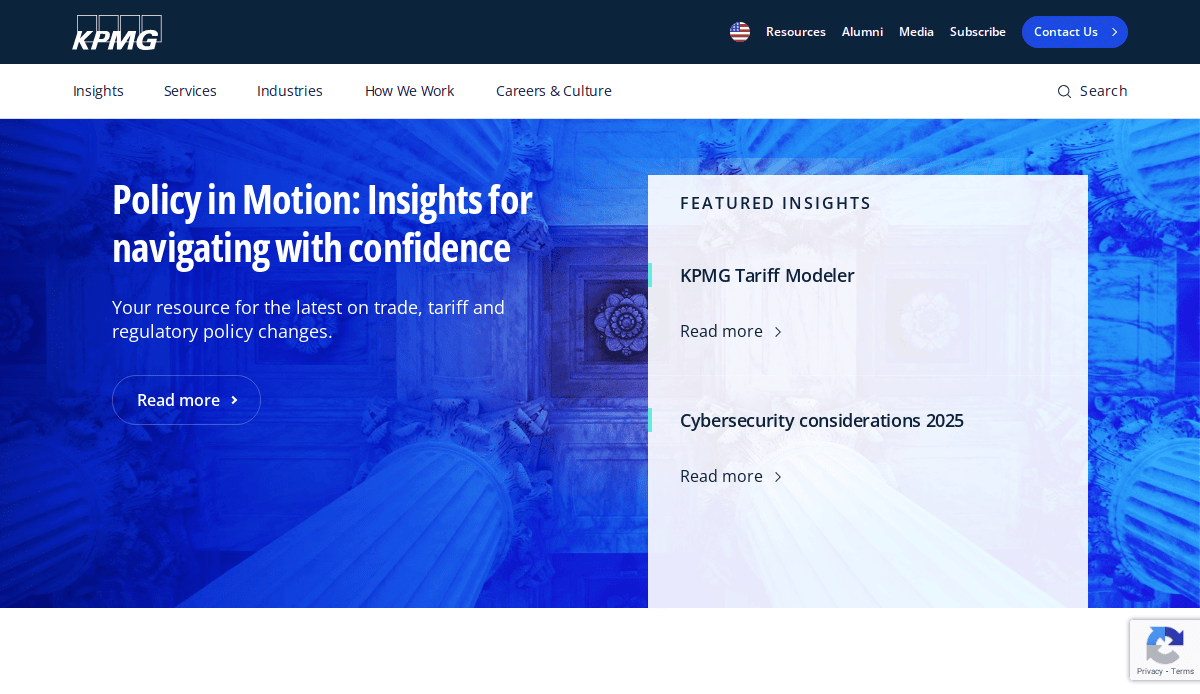
4. KPMG
Location: New York, NY
Key Takeaways:
- Sleek, modern design reflecting commitment to quality.
- Detailed service descriptions and client testimonials.
- Emphasis on expertise in various industries.

5. RSM US LLP
Location: Chicago, IL
Key Takeaways:
- Clean, professional design reflecting commitment to clients.
- Focus on industry-specific solutions with dedicated pages.
- Use of case studies and client testimonials for credibility.
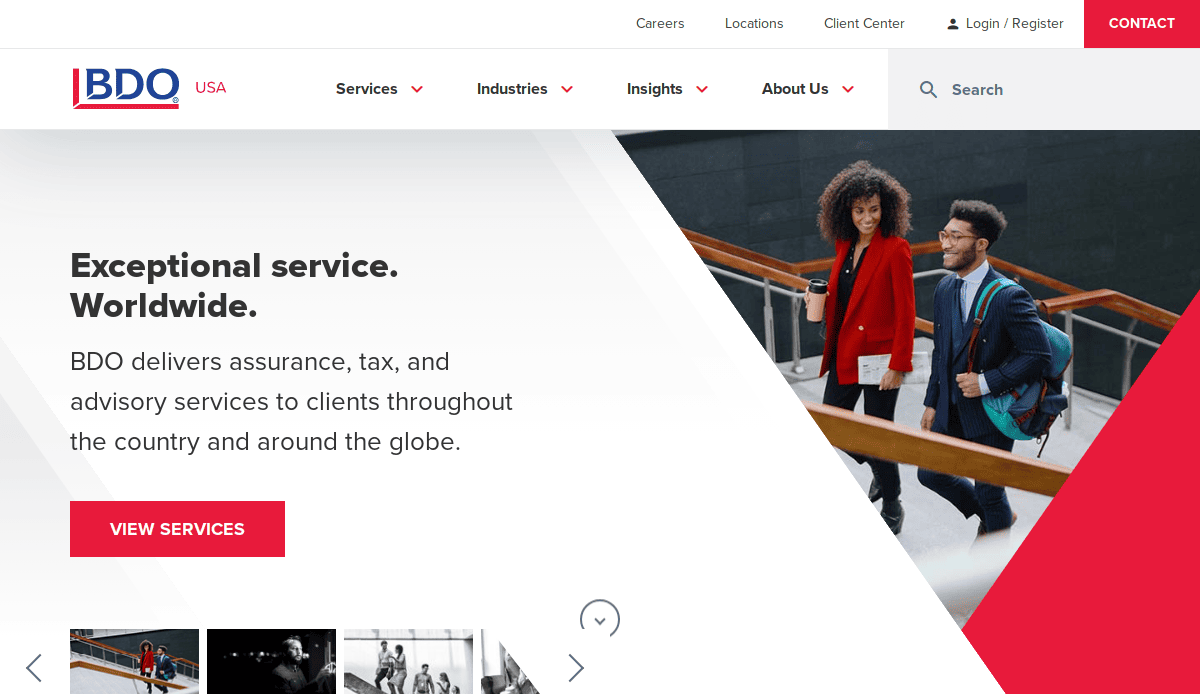
6. BDO USA
Location: Chicago, IL
Key Takeaways:
- Professional, polished website design representing global leadership.
- Clean, modern layout with sophisticated color choices.
- Elegant navigation and well-organized drop-down menus.
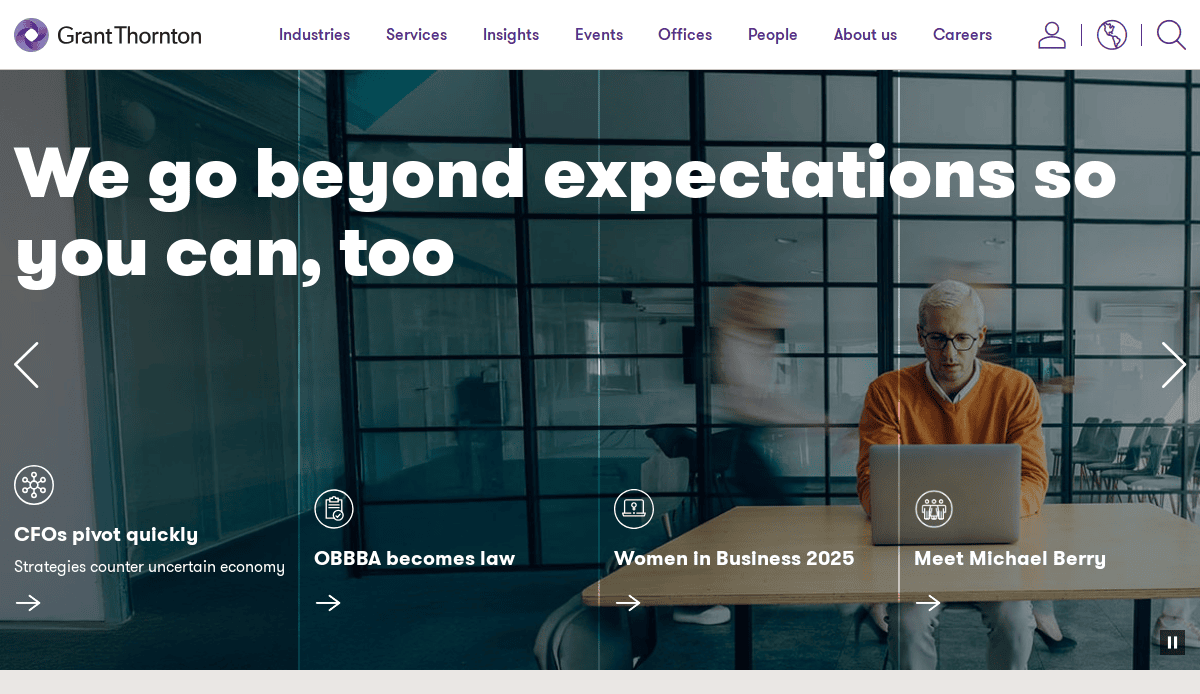
7. Grant Thornton
Location: Chicago, IL
Key Takeaways:
- Clean, professional design reflecting commitment to dynamic organizations.
- High-quality images and straightforward navigation.
- Detailed service descriptions and client testimonials.

8. FORVIS Mazars
Location: Kansas City, MO
Key Takeaways:
- Sleek, modern platform combining aesthetic appeal with functionality.
- Homepage captures attention with clean visuals and concise messaging.
- Interactive service and industry pages enhance user engagement.

9. CLA (CliftonLarsonAllen LLP)
Location: Minneapolis, MN
Key Takeaways:
- Clean, professional design reflecting commitment to clients’ goals.
- High-quality images and clear navigation.
- Detailed service descriptions and client testimonials.
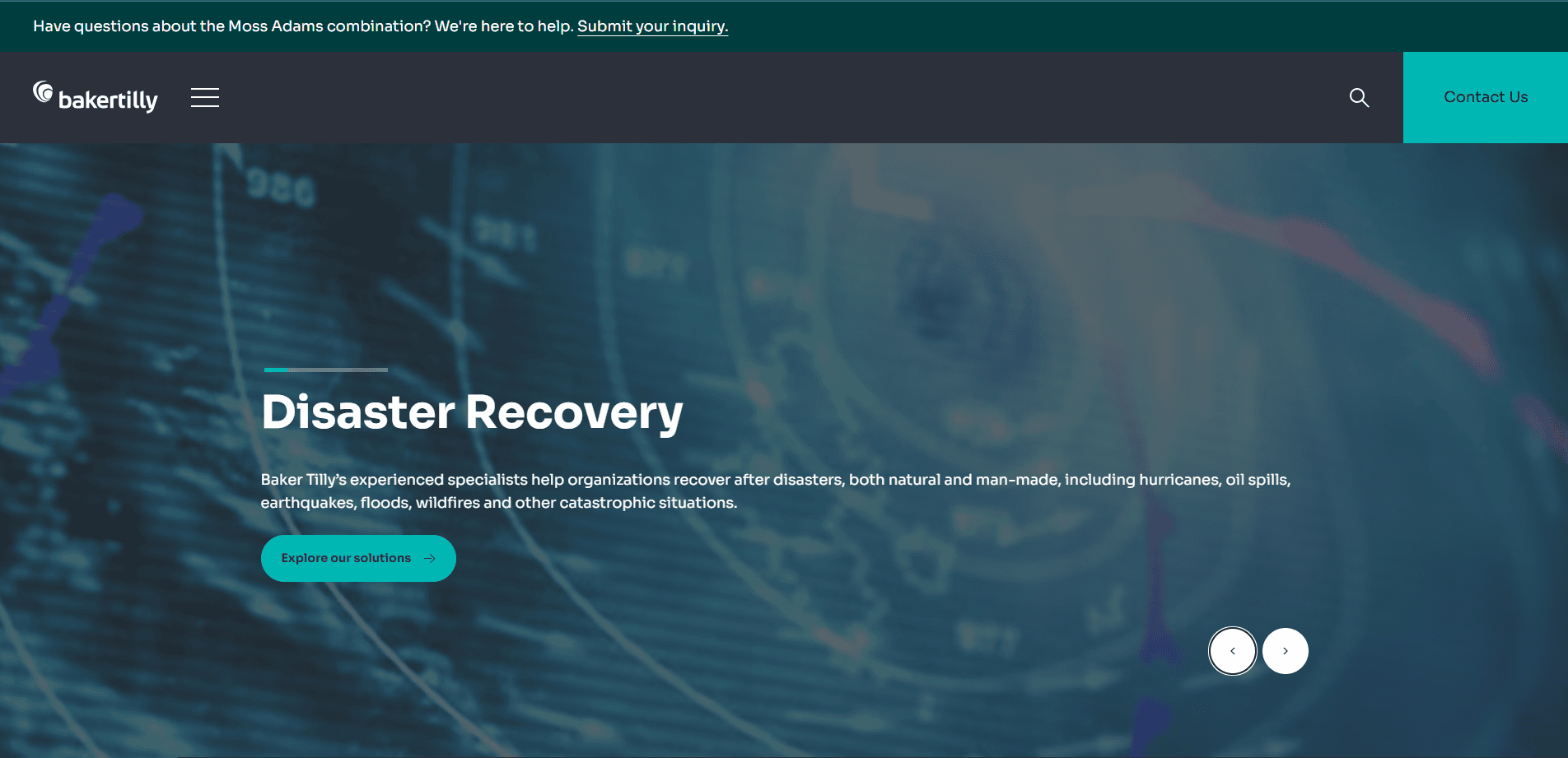
10. Baker Tilly
Location: Chicago, IL
Key Takeaways:
- Slick, professional design reflecting reputation as a top firm.
- Clean color scheme with white and green accents.
- Easy navigation allows exploration of services and insights.
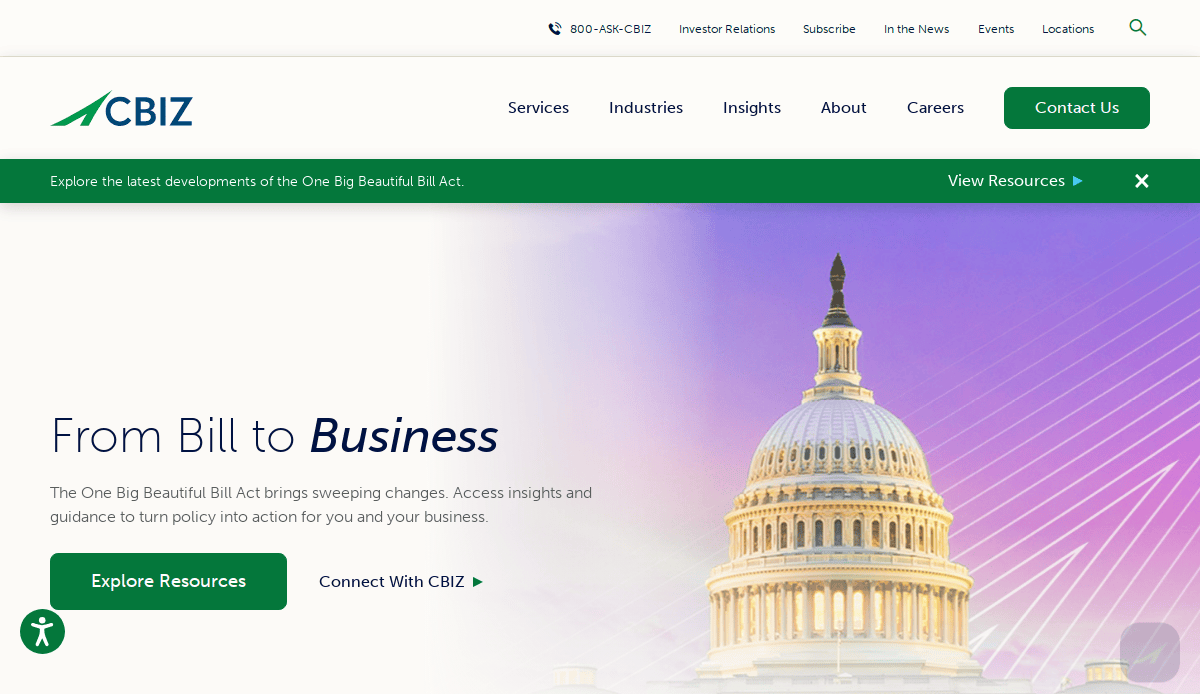
11. CBIZ & MHM
Location: Cleveland, OH
Key Takeaways:
- Slick, professional design providing excellent user experience.
- Clean, modern color design combining sophistication with ease.
- User-friendly drop-down menus for exploring services.

12. Crowe LLP
Location: Chicago, IL
Key Takeaways:
- Clean, professional design reflecting commitment to innovative solutions.
- Extensive use of call-to-action buttons for user engagement.
- Well-organized homepage with dynamic content.
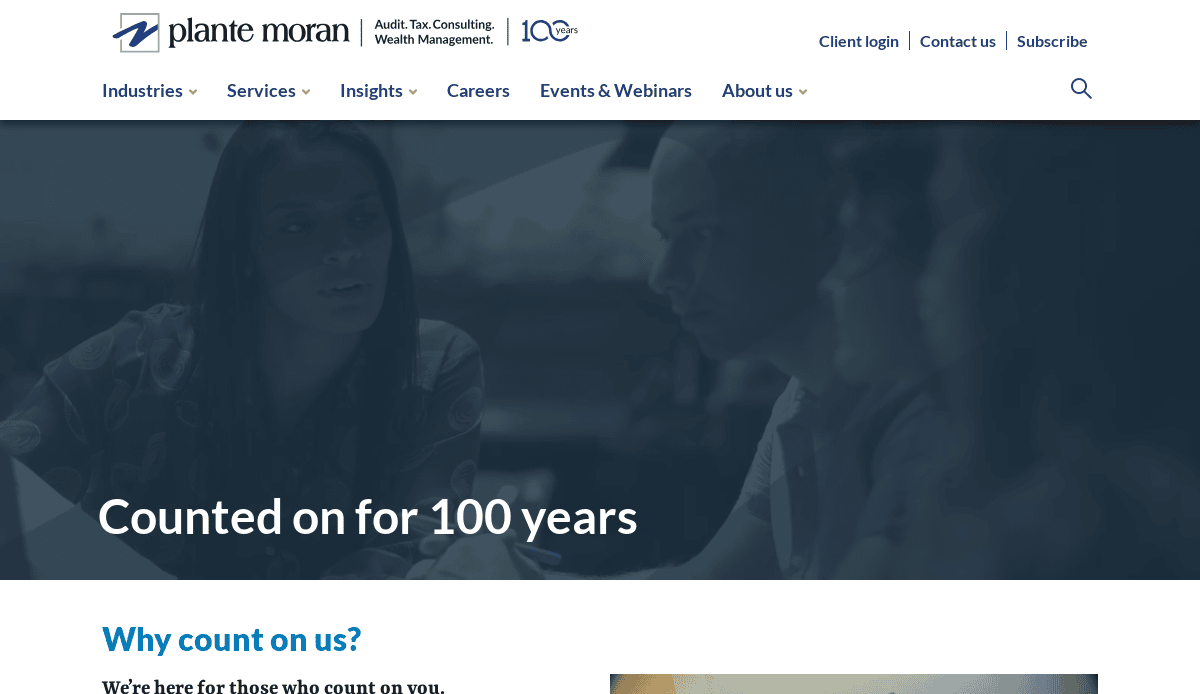
13. Plante Moran
Location: Southfield, MI
Key Takeaways:
- Clean, professional design reflecting the firm’s stature.
- High-quality images and straightforward navigation.
- Detailed service descriptions and client testimonials.
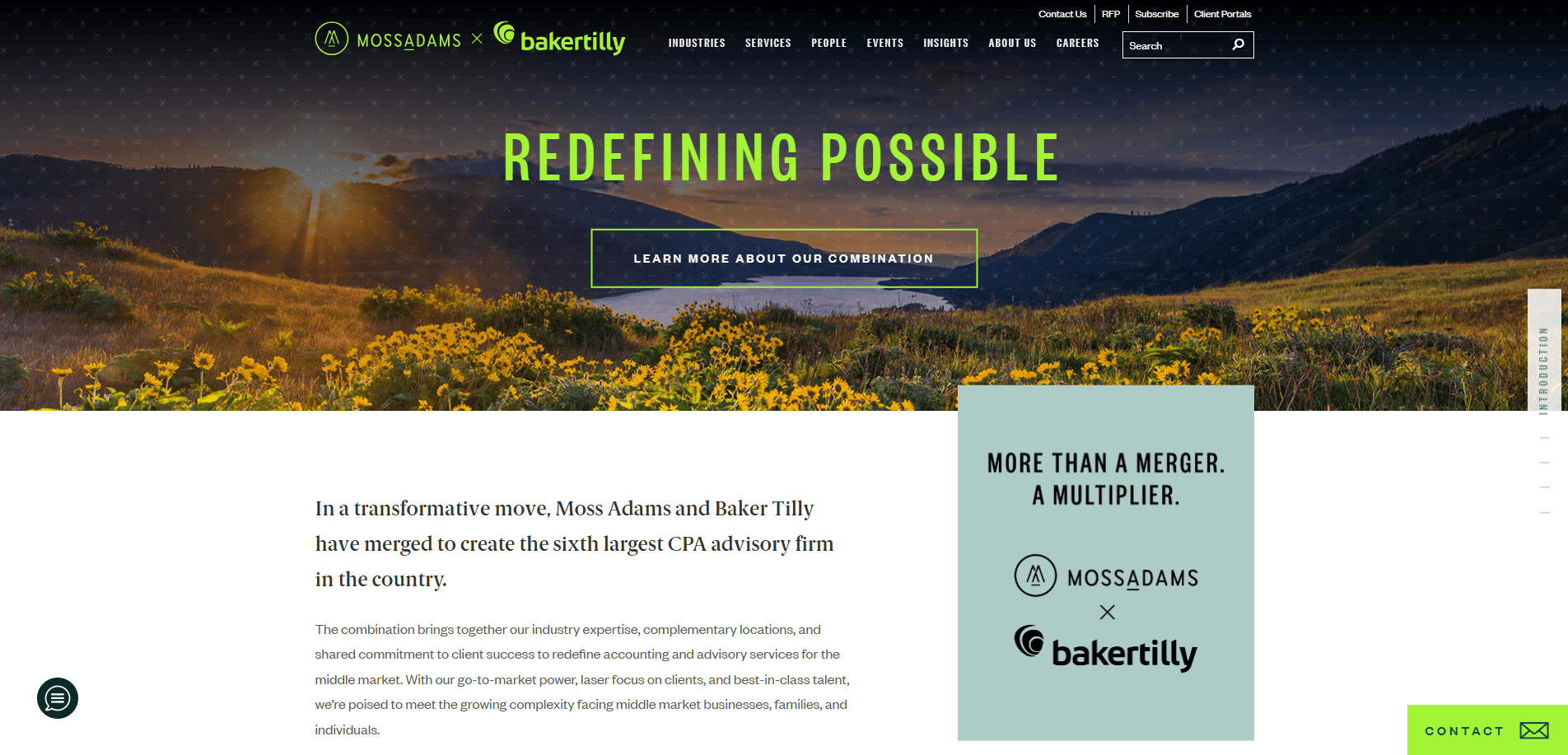
14. Moss Adams
Location: Seattle, WA
Key Takeaways:
- Balanced color palette with modern typography.
- Inviting feel despite offering a broad range of services.
- Well-organized layout with simple access to information.

15. EisnerAmper
Location: New York, NY
Key Takeaways:
- Sophisticated design simplifying a wide array of services.
- Emphasis on corporate-grade photography and balanced color scheme.
- Helpful sections like “Insights” and “Events” demonstrating commitment.
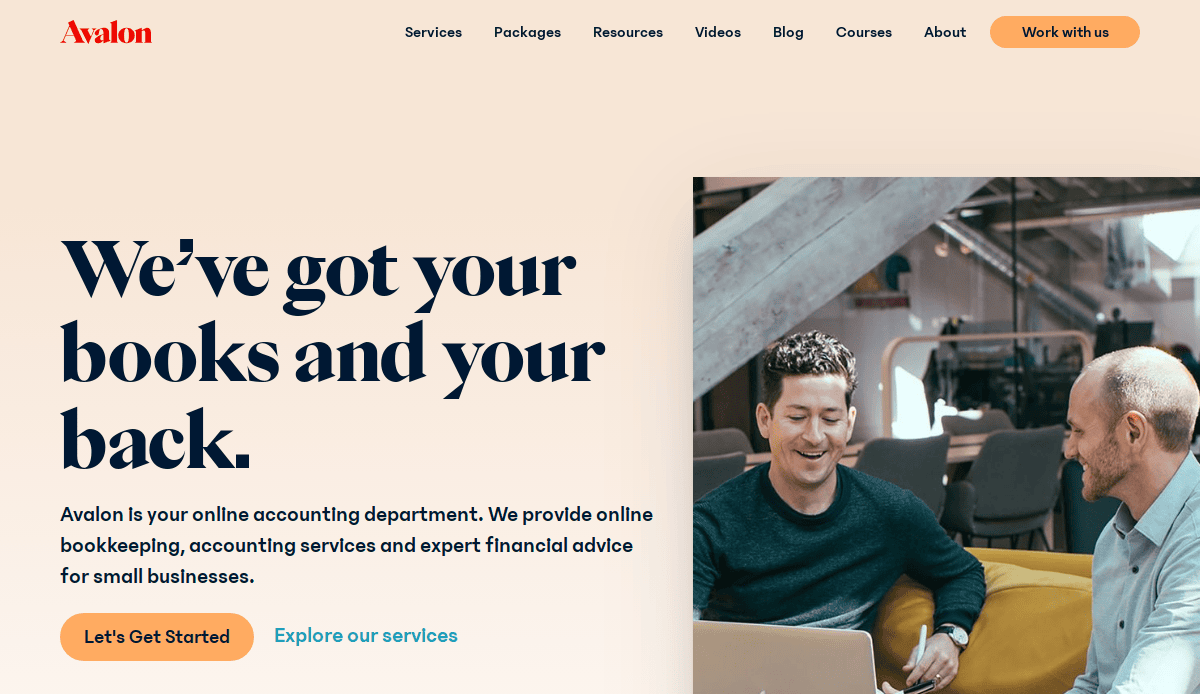
16. Avalon Accounting
Location: Vancouver, WA
Key Takeaways:
- Modern design reflects innovation and appealing to tech-savvy clients.
- Interactive elements enhancing user experience.
- Clear messaging communicating value effectively

17. Pulver CPA
Location: Miami, FL
Key Takeaways:
- High-tech, SaaS-style design with Miami aesthetic.
- Focus on crypto tax returns and traditional bookkeeping services.
- Strong CTAs guiding users towards action.

18. Asnani CPA
Location: Austin, TX
Key Takeaways:
- Clean, modern design aesthetic setting a professional tone.
- E-guide offering for lead generation.
- Photos of real accountants fostering personal connection.
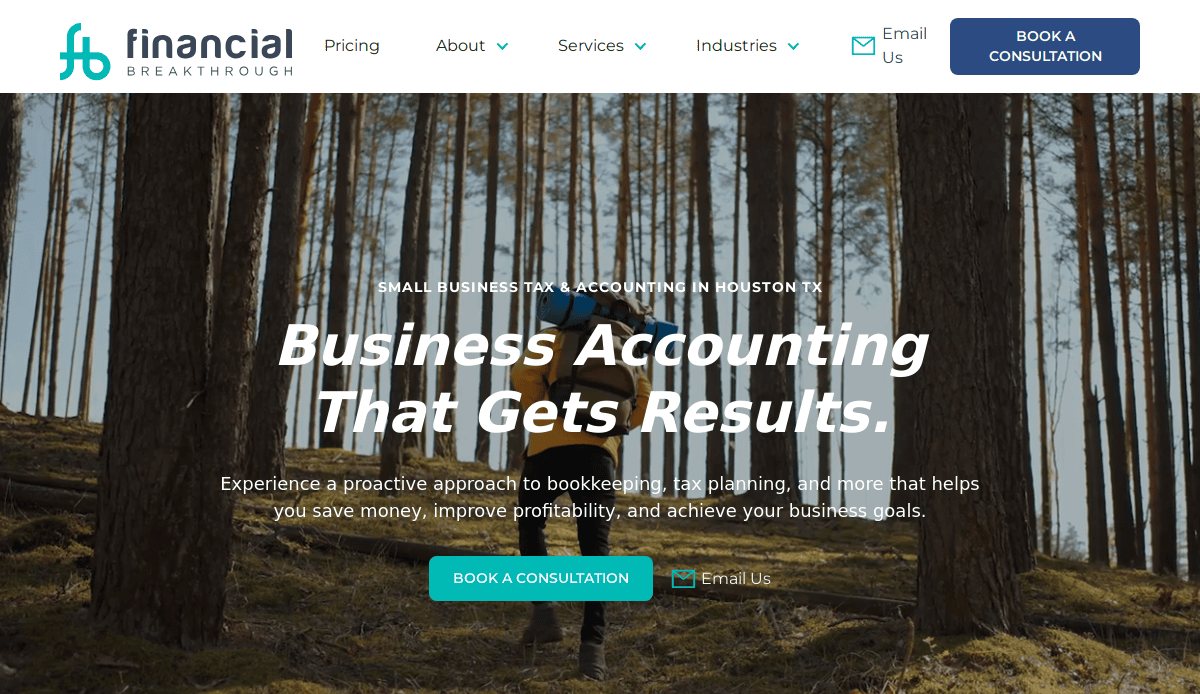
19. Financial Breakthrough
Location: Atlanta, GA
Key Takeaways:
- Clean, fresh design focused on fractional CFO services.
- Lifestyle-focused imagery appealing to CEOs.
- Clear CTAs and streamlined navigation.
Ready to Elevate Your CPA Status with a Custom Website?
An effective website design goes beyond appearance—it supports business growth, builds trust, and converts visitors into loyal clients. Whether you’re running a cpa firm, offering bookkeeping and accounting services, or leading a small business accounting practice, your website must align with how potential clients search for accounting solutions online. A custom website tailored specifically for accounting professionals makes it easier to communicate your expertise and offer services with clarity and confidence.
Don’t settle for generic website templates that fail to reflect the quality of your accounting services. Let your website serve as the front door to your business, welcoming clients with responsive design, optimized content, and a seamless user experience across your website.
If your accounting firm website needs a professional upgrade, get in touch with our expert designers today—we’ll help you create a website that stands out, performs, and supports your accounting goals.
Frequently Asked Questions About Accountant Website Design
What makes an effective accounting website design?
An effective accounting website design is clear, professional, and easy to navigate. It features responsive design, targeted service descriptions, and clear calls to action. A well-structured cpa firm website provides the confidence website visitors need to contact you or schedule a consultation.
Do I need a custom website for my accounting business?
Yes, a custom website is highly recommended. Many accounting firms use outdated templates or generic website builders that fail to reflect the professionalism of their services. A custom website provides flexibility, better SEO, and tailored features specifically for accounting and cpa services.
How does responsive design benefit my cpa website?
Responsive design ensures your website looks and functions properly on all devices. Given the rise in mobile traffic, an engaging website must deliver a seamless experience to convert mobile users. This also helps boost your visibility in search rankings, especially for local accounting searches.
Can website builders be used for accounting sites?
While website builders offer convenience, they often lack the SEO strength, flexibility, and customization required for the accounting and financial industry. If you’re looking to build trust and showcase your expertise, partnering with a professional website provider is a better long-term solution.
What are some must-have features on a CPA firm website?
Your cpa web should include:
- A homepage that highlights your unique value
- Detailed service pages for tax and accounting, bookkeeping, and online accounting
- A blog offering accounting help or bookkeeping tips
- A contact page with location and an inquiry form
- Strong calls to action across your website
These features align with industry best practices for effective accounting website design.
How can I make my bookkeeping website stand out?
Focus on clarity, branding, and user experience. Use a professional color palette, high-quality images, and simplified service explanations. Consider adding case studies or testimonials. Highlight what makes your firm unique—whether it’s technology integration, client service, or your expertise in specific niches like accounting and bookkeeping services.
Are there any recommended website templates created for CPAs?
Templates can be a starting point, but most cpa site solutions are generic. Look for templates specifically for accounting firms or work with an agency that offers accounting design and development. Our top-tier web design and development agency creates tailored website solutions for accounting companies that need a website reflecting their brand and services.
How does a strong website impact online accounting growth?
A strong website enhances credibility, generates qualified leads, and supports client retention. It also allows you to compete with larger firms by highlighting personalized service and specialized accounting help. A website gives you the platform to scale your marketing, support clients online, and promote your services more effectively.
What are some modern design tips for accounting websites?
Follow web design trends that improve user experience, such as minimalistic layouts, easy navigation, and fast-loading pages. Include real-time features like chatbots, appointment schedulers, or live financial calculators. These design tips can differentiate your accountant’s website from basic DIY website solutions.
Why is it important that my website is clear and easy to navigate?
Website clarity improves the user journey and helps website visitors find exactly what they need without confusion. Whether they’re searching for accounting services in your area or researching tax and accounting solutions, a clear layout improves engagement and boosts conversion rates.
Still have questions? Our team is ready to help with all your accounting website needs. Visit our contact page to schedule a consultation.