
Just looking for our Best Commercial Roofing Website examples list?
Key Takeaways:
- A mobile‑first, lightning‑fast website is non‑negotiable for a commercial roofing design: prioritize load times under 2 seconds, touch‑friendly layouts, and responsive nav to reduce bounce rates and capture mobile-driven local leads.
- Design elements that build trust—real project imagery, certifications, testimonials—are essential: avoid generic stock photos; use visual storytelling and social proof to establish credibility with commercial customers.
- SEO must be built into the design from the start: integrate local keyword targeting (e.g., “commercial roofing in [City]”), structured content, optimized meta elements, and location-focused service pages to dominate “near me” and service-specific searches.
- Interactive tools and innovative features differentiate you from competitors: include cost estimators, before/after sliders, live chat, and even proactive local weather or roof-alert integrations to enhance user engagement and utility areas most roofing websites overlook.
- Continuous optimization based on analytics ensures lasting ROI: deploying tools like Google Analytics/Search Console and refining your design and content over time keeps your SEO performance competitive and adaptive to market changes.
Why Your Roofing Website Design Can Make or Break Your Business
If you’re running a roofing business and your website looks like it was built a decade ago, you’re probably losing jobs to competitors, no matter how good your roofing service is. In this market, your website is more than a digital brochure. It’s your sales rep, project showcase, trust builder, and lead generator all in one.
A poorly designed roofing site can drive visitors away in seconds. Slow load times, cluttered navigation, and outdated layouts scream “unprofessional”—and that’s not the message you want to send when customers are deciding who they trust with their roof. On the other hand, a high-performing, well-structured website can attract more qualified leads, convert them faster, and build lasting credibility in the roofing industry.
This guide is designed for roofing companies that are serious about getting ahead. Whether you’re a solo roofer or managing a growing team, we’ll show you what separates a good roofing web design from a great one. From local SEO strategies and mobile responsiveness to smart content structure and interactive features, you’ll learn how to transform your site into a revenue-generating asset that sets you apart from the rest.
Let’s discuss what it really takes to create a roofing website that drives results.
Website Planning & Purpose: Building with Strategy, Not Just Style
Before a single page gets designed or written, every website should start with a clear plan. The planning phase is often overlooked, but it’s where the success of your digital presence is shaped. For roofing companies, this means aligning your online goals with the way real clients search, evaluate, and choose a roofing contractor.
First, define what success looks like for your roofing site. Is it booking more inspections? Getting quote requests from commercial clients? Educating visitors about complex roof repair options? Each of these goals requires a unique structure, set of calls-to-action, and tailored website content to be effective.
In this industry, credibility is everything. That’s why planning also involves identifying your key proof points: certifications, reviews, completed roofing projects, service area coverage, and warranties. These elements should be strategically placed throughout the site to build trust and reduce hesitation from potential leads.
Audience targeting is another critical piece. Are you speaking to commercial property managers, homeowners, or facility maintenance teams? Each audience has different pain points and expectations, and your content should speak directly to them. A one-size-fits-all message doesn’t resonate—and it won’t convert.
Finally, consider the technical aspects that influence both user experience and roofing SEO. Site speed, mobile responsiveness, and structured data aren’t just nice-to-haves—they’re must-haves that affect your visibility in search engines and your credibility with users.
If you’re starting from scratch or revamping an outdated site, take the time to plan with purpose. Your roadmap should cover messaging, design, content structure, and functionality. For a deeper dive into how to map out your roofing site’s success, check out our in-depth breakdown on roofing website design.
Design Principles: What Great Websites Get Right
Strong design is more than good looks—it’s how your site communicates, converts, and builds trust with visitors in seconds. For roofing contractors, where most customers are comparison shopping under pressure, every element of your design should be intentional and focused on guiding the user toward action.
Clarity is key. Your homepage should instantly tell visitors who you are, what services you offer, and why they should choose you. This means using concise headlines, intuitive layouts, and clean navigation. Avoid overwhelming users with too much content or flashy animations. Instead, focus on creating a seamless path from landing to conversion.
Consistency in branding reinforces professionalism. Use your brand colors, fonts, and voice throughout the site. Every page—from your service overview to your contact form—should feel cohesive and recognizable. This builds credibility and reassures visitors that your company is established and trustworthy.
Visual hierarchy helps guide attention. Use bold headlines, strategic spacing, and prominent calls-to-action to direct users through the page. Prioritize above-the-fold content and ensure that each section has a clear purpose, whether it’s showcasing roofing projects, educating on services, or prompting quote requests.
Another principle is accessibility. Your site should be easy to navigate for everyone, including those using assistive technologies. High-contrast colors, readable text sizes, and alt text for images all contribute to a better experience—and they boost your SEO at the same time.
Finally, don’t underestimate the power of social proof and visual storytelling. Incorporate high-quality images of your team, job sites, and before-and-after roofing work. Pair these with client testimonials and third-party reviews to create trust signals that resonate with both commercial and residential clients.
To see how these principles play out in real-world examples, check out our breakdown of the 15 converting elements every contractor needs.
Content & Navigation: Structuring the Site for Action and Clarity
Content and navigation are the backbone of any website. They determine how easily visitors can find information and take action. For roofing contractors, a clear content strategy and intuitive navigation structure can mean the difference between a quote request and a bounce.
Start with your core pages. Every roofing website should have a homepage, about page, service overview, individual service pages, testimonials, photo gallery, blog, and a contact page. Don’t lump all your services onto one page—break them out into dedicated pages like roof replacement, roof repair, storm damage, and commercial roofing. This improves SEO and helps guide users directly to what they need.
Organize your navigation with simplicity. Use a top-level menu that includes only the most essential categories. Nested dropdowns should be easy to scan and never overwhelming. Every click should feel intentional and bring the user closer to conversion, whether that’s submitting a form or calling your office.
When writing content, clarity and relevance should be your priorities. Speak directly to your audience’s concerns: timelines, warranties, safety, and insurance. Use plain language that builds trust and reflects your brand’s voice. Headlines should be benefit-focused, and body text should support decision-making.
Calls-to-action should be visible and consistent. “Request a Quote,” “Schedule an Inspection,” or “Call Now” buttons should be prominently placed on every page. These guide your visitors to act without having to hunt for contact information.
Internal linking is another smart strategy. Link blog posts to service pages, service pages to galleries, and all roads to your contact page. This keeps users on your site longer and boosts SEO.
For an example of how strong content and navigation power your entire digital presence, explore our insights on roofing marketing.
Visual Elements: Strengthening Brand and User Experience
Visual elements are strategic assets that reinforce your brand, clarify your message, and elevate the user experience. For roofing contractors, strong visuals can make your site feel more professional, credible, and conversion-ready in just a few seconds.
Start with photography. Real photos of your team on job sites, close-ups of roofing work, and before-and-after project comparisons all help build trust. Avoid generic stock imagery that could belong to any contractor. Authentic visuals connect with users and demonstrate the scope and quality of your roofing services.
Color and typography also play a critical role. Your site’s color palette should match your brand and support readability. Use bold, high-contrast combinations for key sections like calls-to-action or value propositions. Select fonts that are professional and easy to read across devices. Consistency in these details helps reinforce your identity and maintain a polished, unified look.
Video is increasingly important, especially in the roofing industry, where visuals help explain what words can’t. A short homepage video showing your crew in action or testimonials from happy customers adds dimension and builds familiarity. Drone footage or time-lapse clips of completed projects are particularly effective.
Icons and infographics can help simplify complex topics like roof system comparisons, installation timelines, or warranty options. When used sparingly and purposefully, these visuals break up text and guide the reader’s attention.
Whitespace is another key element. Giving your content room to breathe makes your site easier to navigate and more inviting to explore. Avoid the temptation to crowd every section—clarity and focus always win.
When you align visual elements with your content and branding, you create a roofing website that doesn’t just inform—it persuades. It shows visitors they’re in the right place, with the right contractor, from the very first click.
Ongoing WordPress Maintenance: Protecting Performance and Security
A great roofing website doesn’t end at launch. Ongoing WordPress maintenance is essential to ensure your site stays secure, fast, and functioning correctly. Roofing contractors can’t afford a broken contact form, slow load times, or a hacked site. Every moment your site underperforms, you risk losing business to a competitor.
Updates are at the core of WordPress maintenance. This includes keeping the WordPress core, themes, and plugins updated regularly. Delaying updates increases the risk of compatibility issues or security vulnerabilities that can take your site offline or expose client data.
Backups are another critical piece. A reliable website backup system ensures that, if anything goes wrong—whether from an update conflict or a cyberattack—you can restore your site quickly with minimal downtime.
Security monitoring should also be part of your routine. Roofing websites are increasingly targeted by bots and malware. Regular scans, firewall configuration, and login protections help keep your site secure.
Performance optimization is ongoing, too. As your content library grows or your traffic increases, caching, image compression, and database cleanup help maintain fast load speeds. This supports better SEO rankings and a smoother experience for your users.
Monitoring and support go hand in hand with maintenance. Whether it’s uptime monitoring, broken link checks, or real-time form testing, having a team actively watching your site ensures issues are fixed before they affect leads or reputation.
Maintaining a WordPress website as a roofer isn’t optional—it’s a commitment to your online reputation and lead generation engine. A proactive maintenance strategy protects your investment and ensures your site continues working hard for your business 24/7.
Best Commercial Roofing Website Design Examples
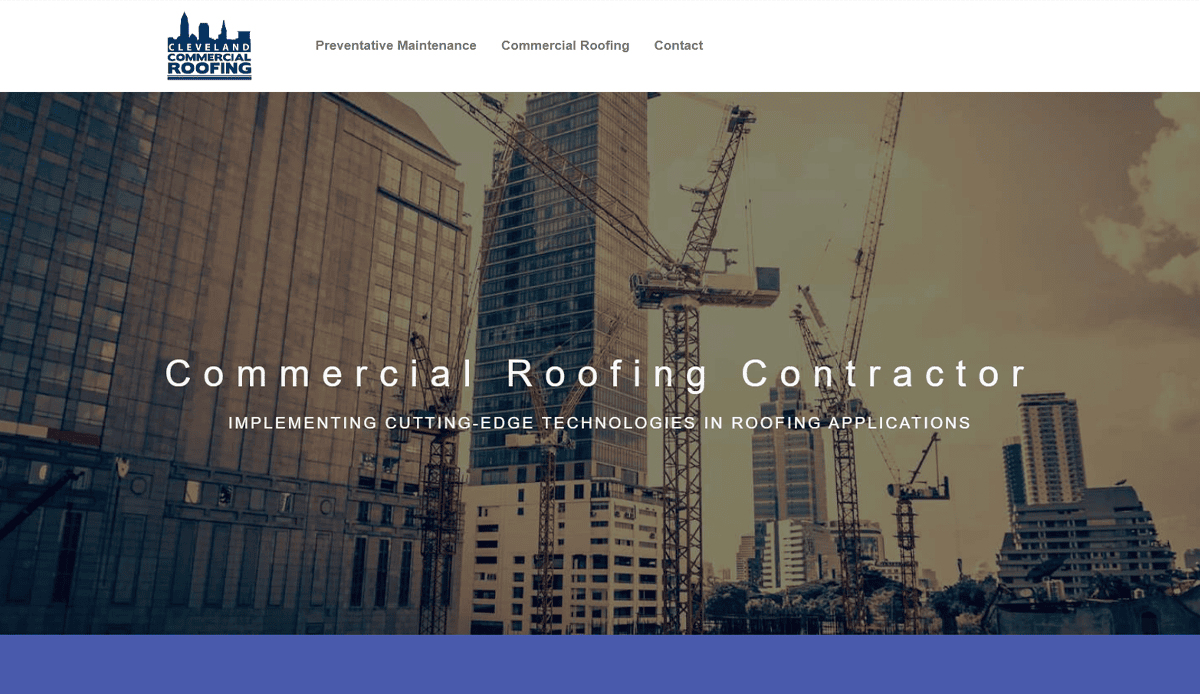
1. Cleveland Commercial Roofing
Location: Cleveland, OH
- Sleek homepage layout with most key info above the fold.
- Always-visible CTA button and sticky contact form.
- Minimal clutter and a clean menu enable fast decision-making.
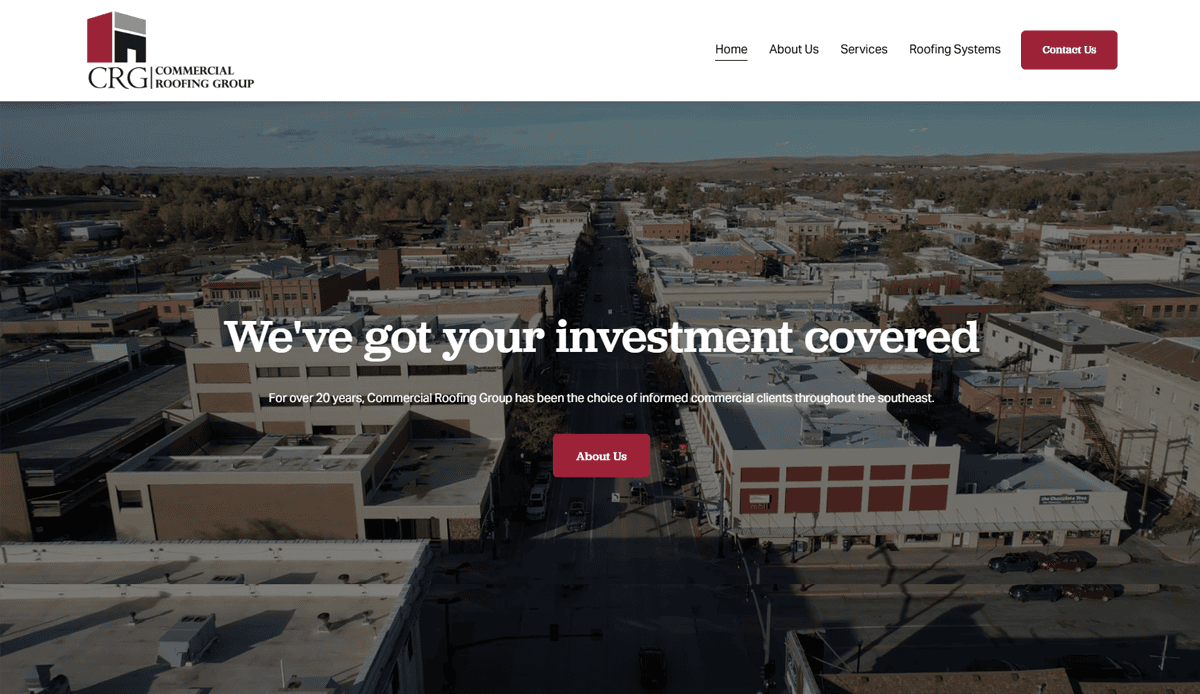
2. Commercial Roofing Group
Location: Chicago, IL
- Bold hero message stating commercial roofing expertise.
- Large project gallery showcasing industrial and retail installations.
- Includes trust signals: certifications, client logos, and primary service zones.
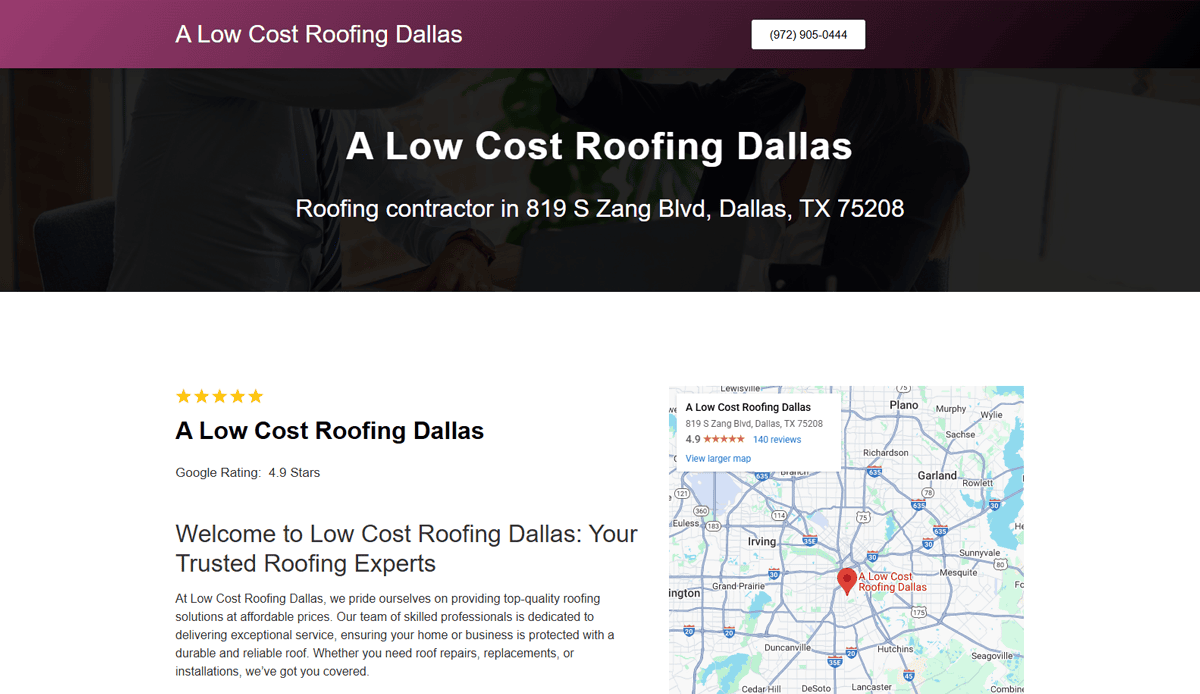
3. Skyline Commercial Roofing
Location: Dallas, TX
- Service pages are optimized for local commercial keywords.
- Seamless navigation with a clear value proposition upfront.
- Visual consistency across devices and a fast-loading layout.
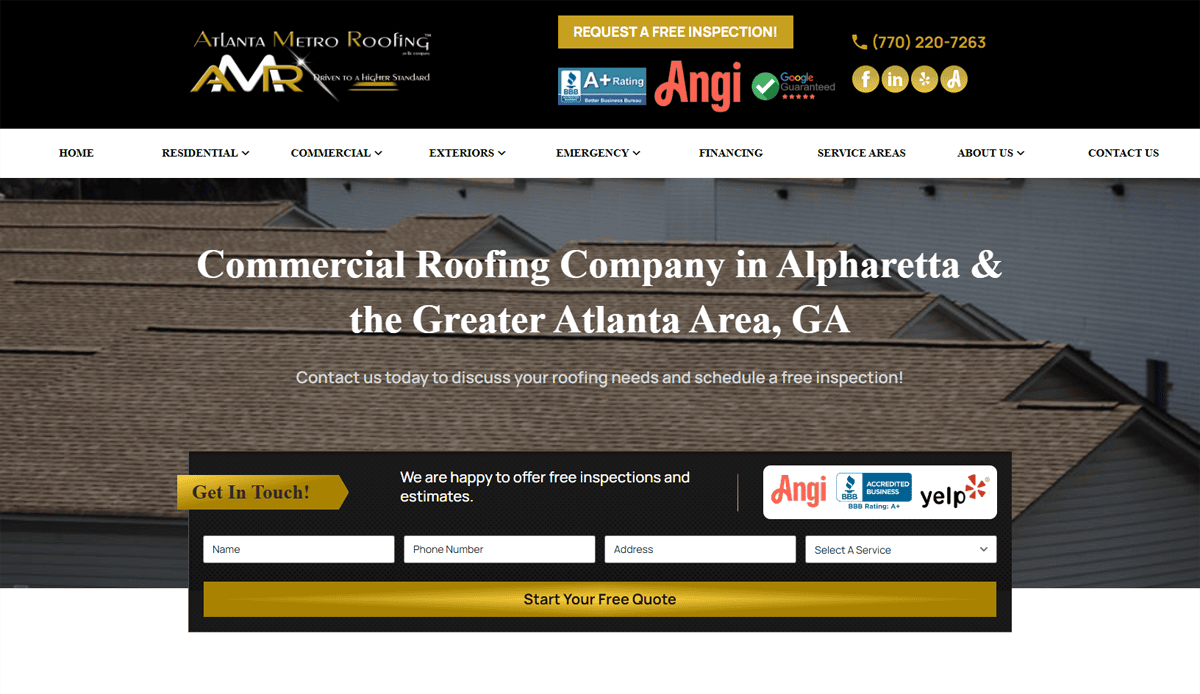
4. Metro Industrial Roofing
Location: Atlanta, GA
- High‑quality project imagery delivered with speed.
- Hero includes a contact form, testimonials, and a services menu.
- Conversion-focused design: chat widget and quote callouts.
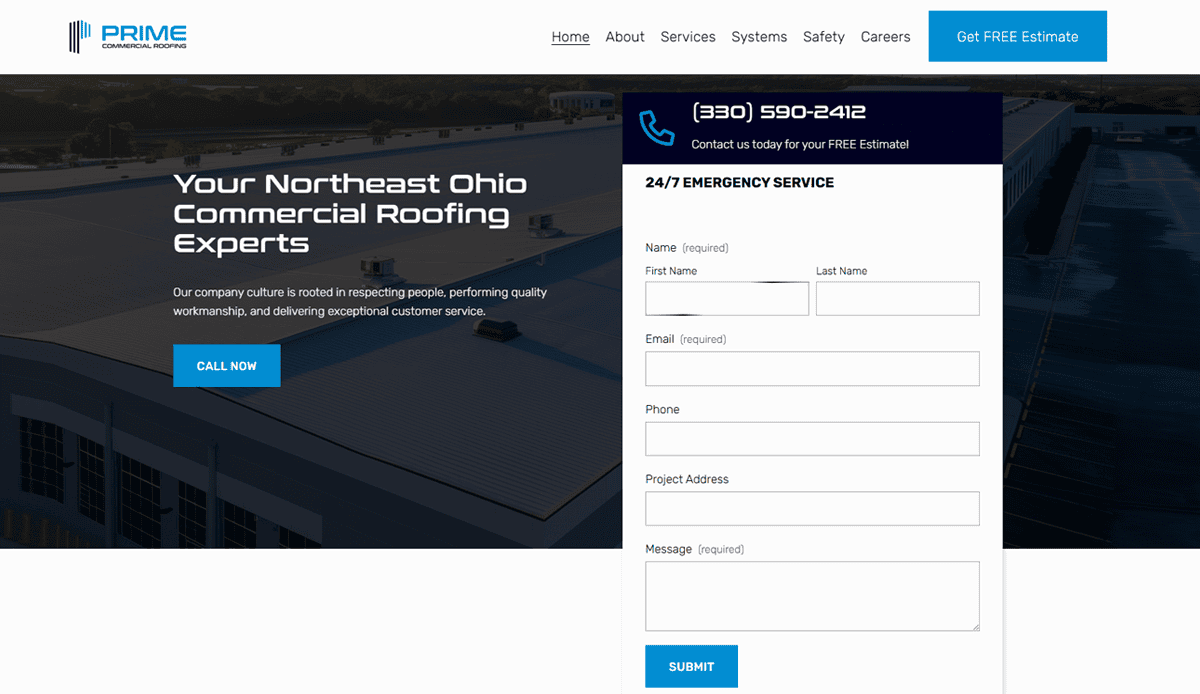
5. Prime Commercial Roofing
Location: Ohio
- Mobile-first responsive design focusing on speed.
- Emphasis on trust: awards, warranties, and client quotes.
- Structured layout dividing service categories and project types.
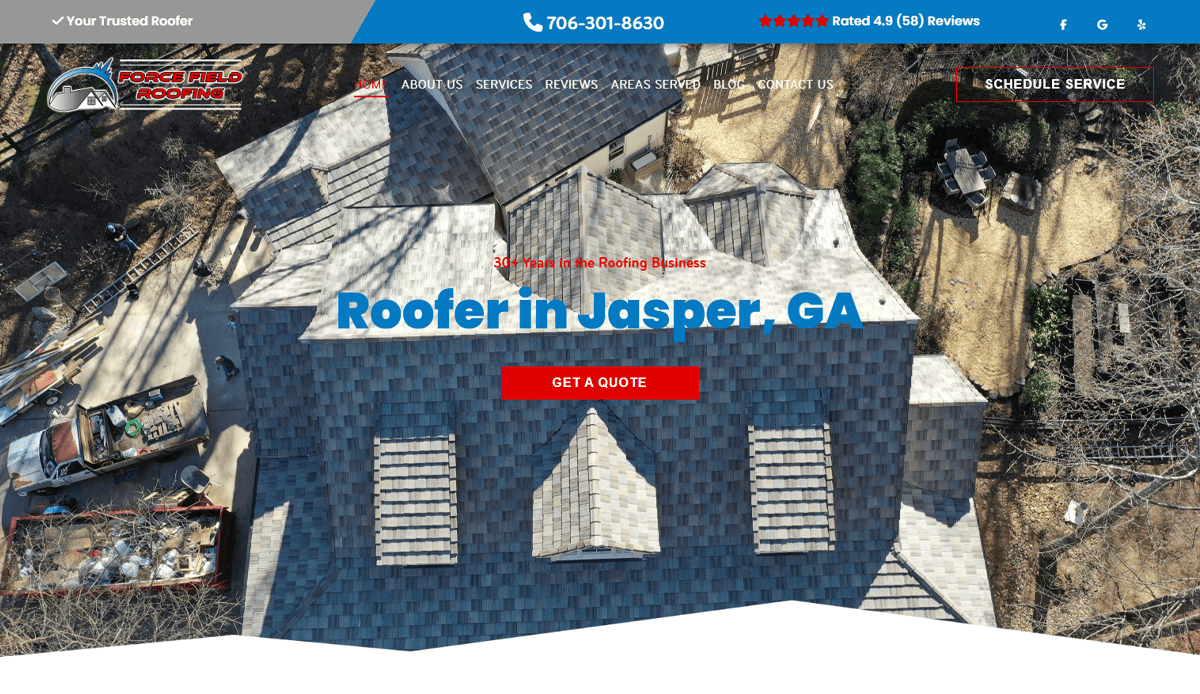
6. Force Field Roofing
Location: National (HQ in NC)
- Strong opening value proposition overlaying slideshow imagery.
- Finance options, CTA, and lead capture form above the fold.
- Clear service descriptions followed by a form-linked conversion flow.
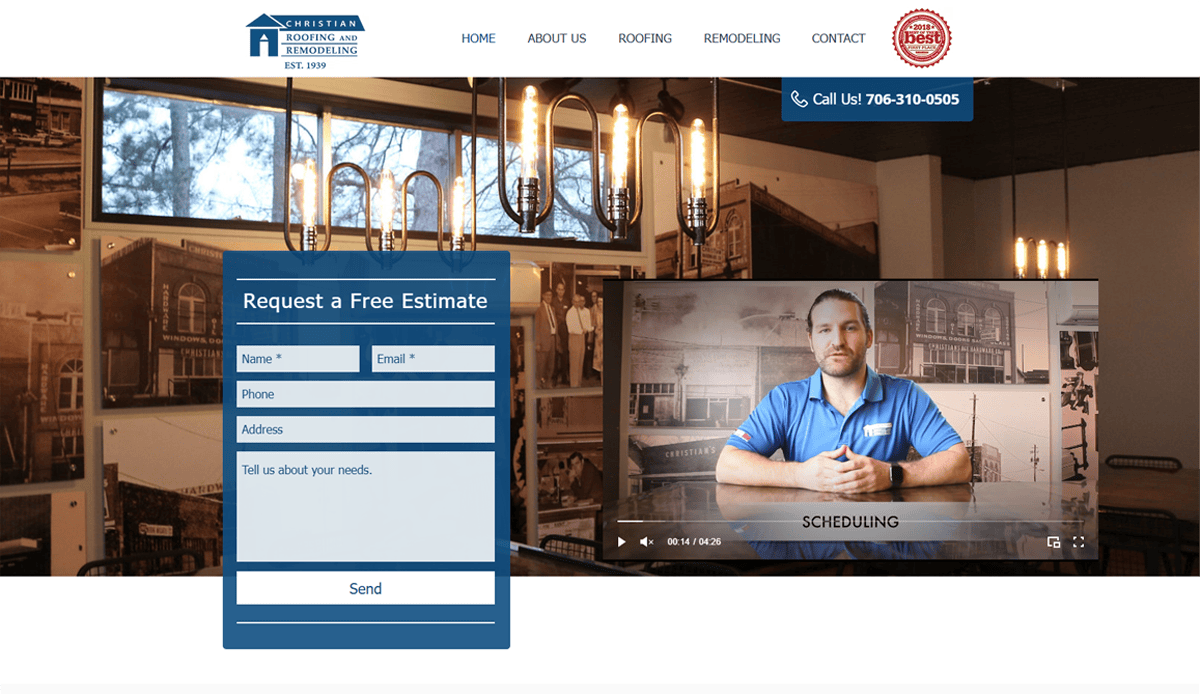
7. Christian Roofing & Remodeling
Location: Wilmington, NC
- Intro video replaces text-heavy homepage content.
- Lead capture form placed early for instant quotes.
- Emotional visuals enhance storytelling and relationship-building.
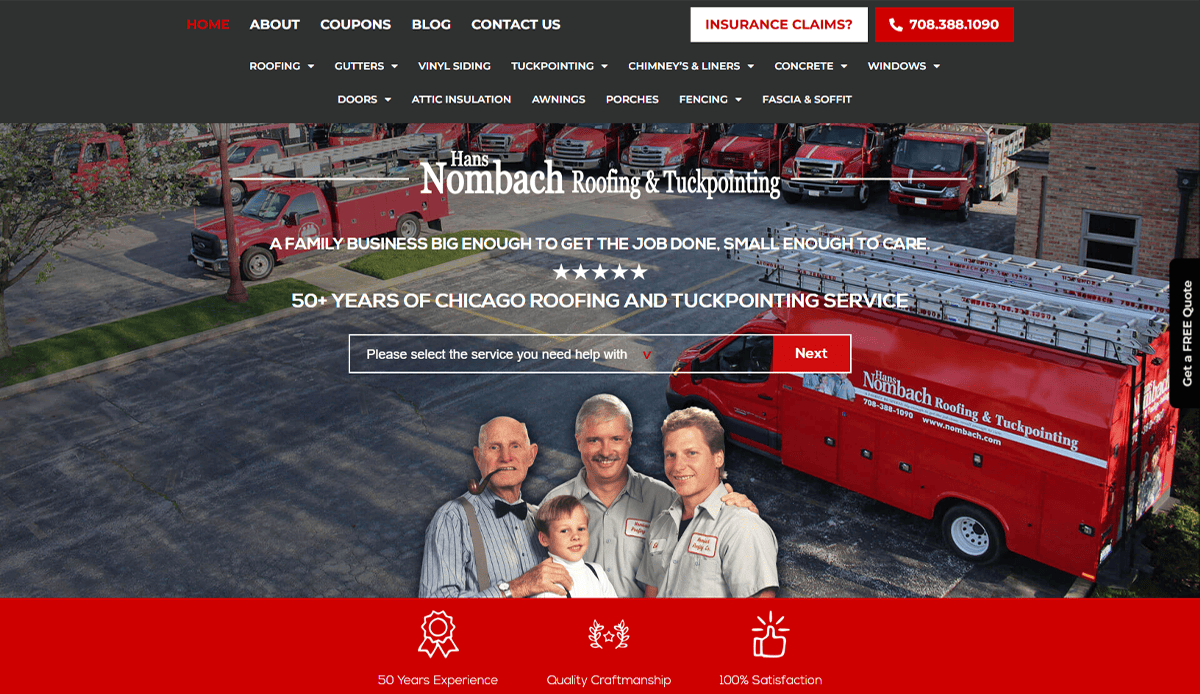
8. Hans Nombach Roofing & Remodeling
Location: Coconut Creek, FL
- Dropdown navigation organizes diverse commercial and residential services.
- Tagline “Big enough to get the job. Small enough to care.” builds credibility.
- Red, white, and black color scheme highlights CTAs and contact info.
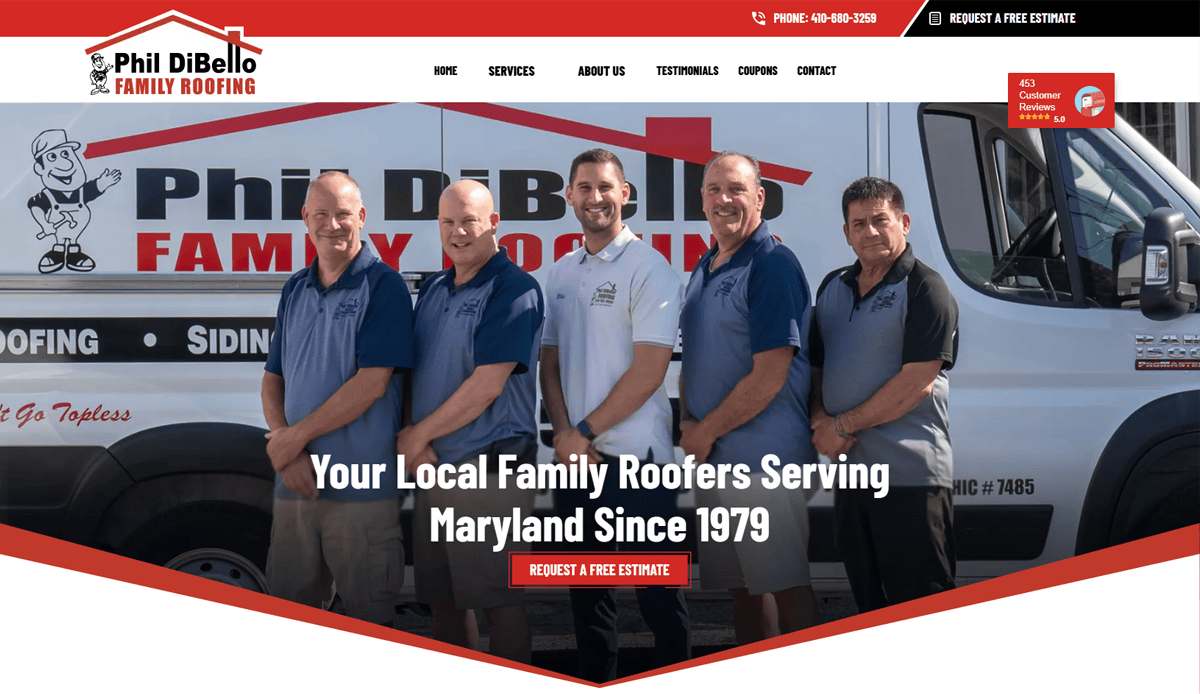
9. Phil DiBello Family Roofing
Location: Madison, WI
- Multiple “request estimate” CTAs are embedded throughout the homepage.
- Hero image features key team members to humanize the company.
- Testimonials placed above the fold deliver immediate trust cues.
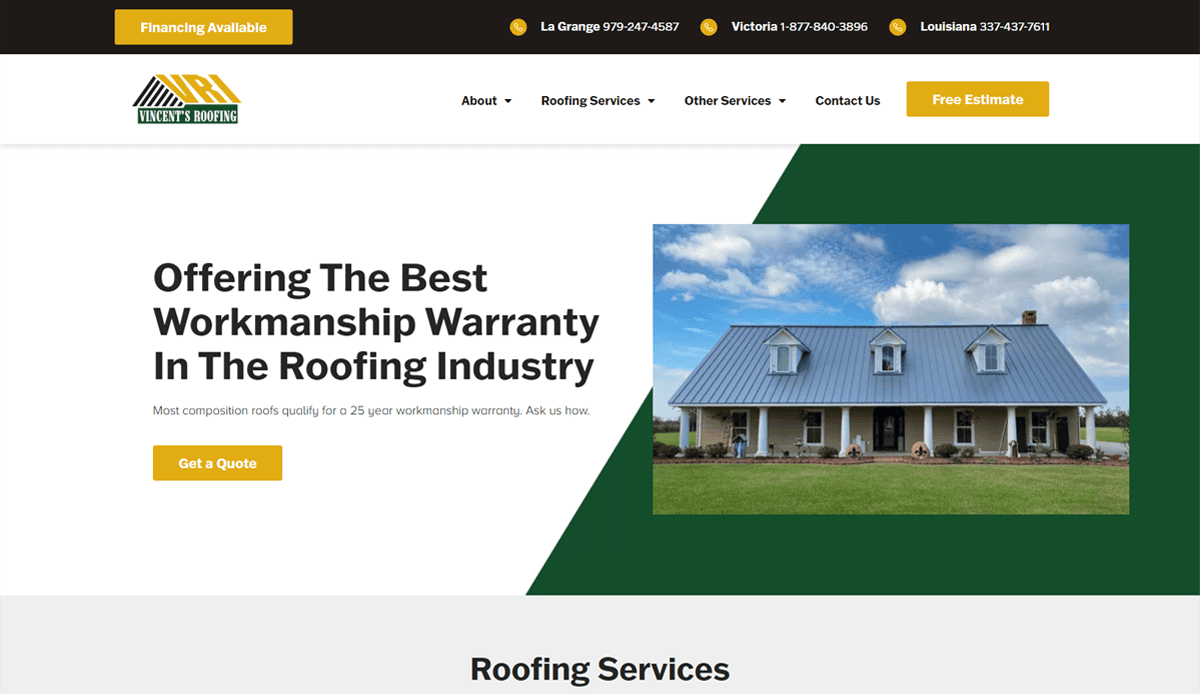
10. Vincent Roofing Inc.
Location: Nashville, TN
- Clean green-and-white design enhances professionalism and trust.
- Responsive layout that adapts well across devices.
- High‑quality project photography reinforces credibility.
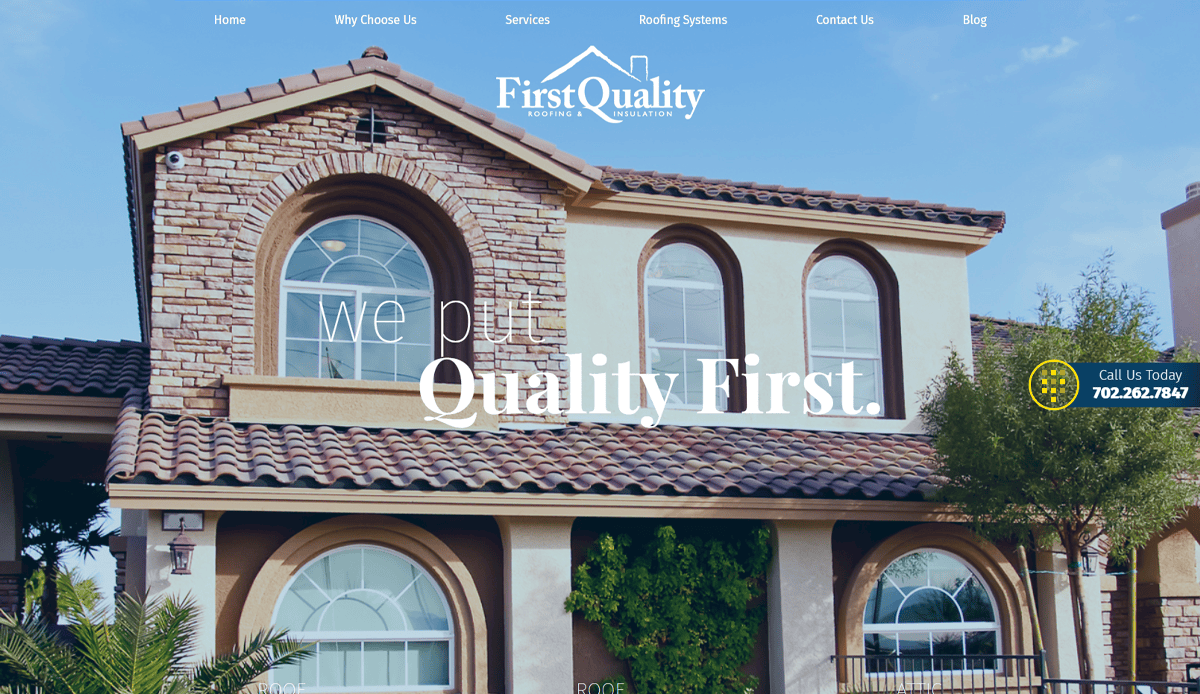
11. First Quality Roofing & Insulation
Location: Reno, NV
- Balanced homepage despite dense content.
- Large testimonial banner and service awards included.
- “Why Choose Us” tab highlights unique value propositions.
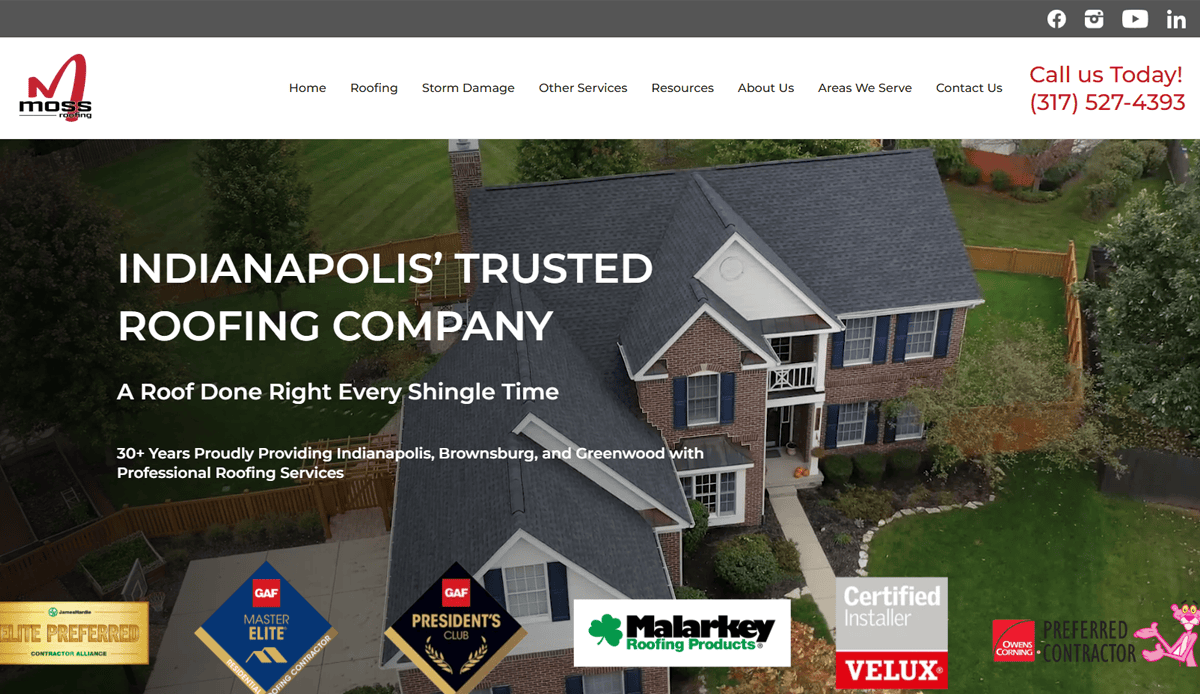
12. Moss Roofing
Location: Richmond, VA
- Integrated chatbot for immediate visitor engagement.
- Limited palette and simple navigation keep focus on CTAs.
- Virtual inspection tool reduces friction in contacting.
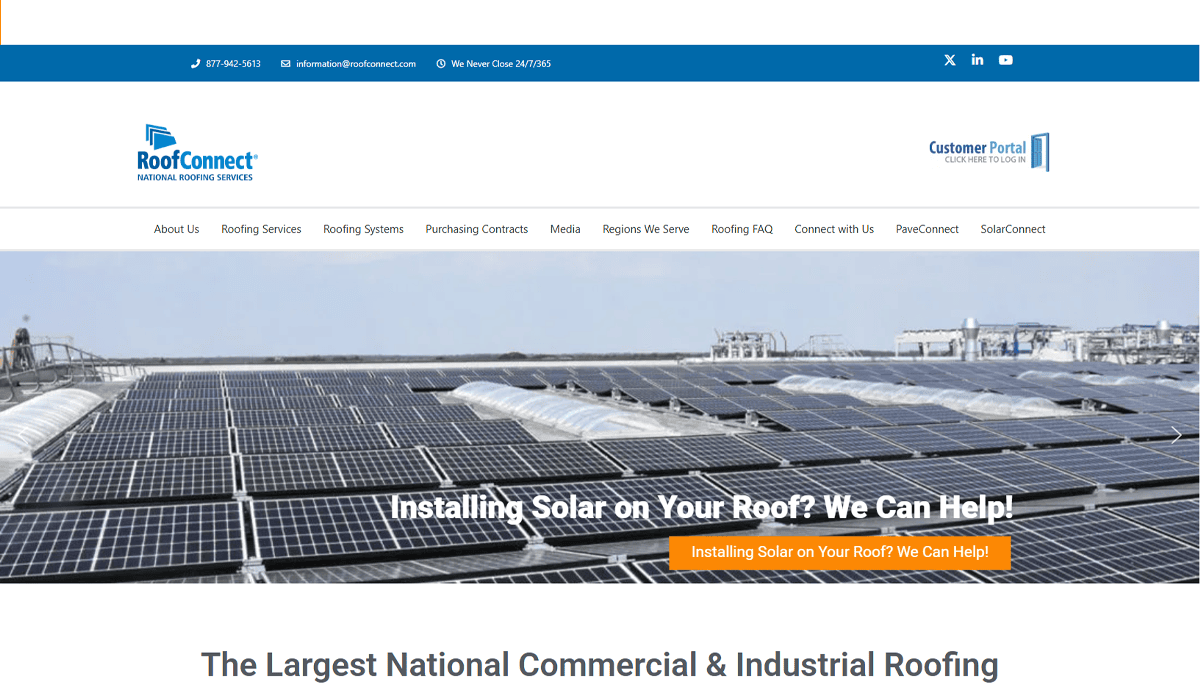
13. RoofConnect
Location: Sheridan, AR (National Coverage)
- 24/7 emergency response and regional contact points.
- Service navigation emphasizes repair, replacement, and maintenance with easy entry to request a quote.
- Strong network positioning communicates scale while offering localized lead capture and support.
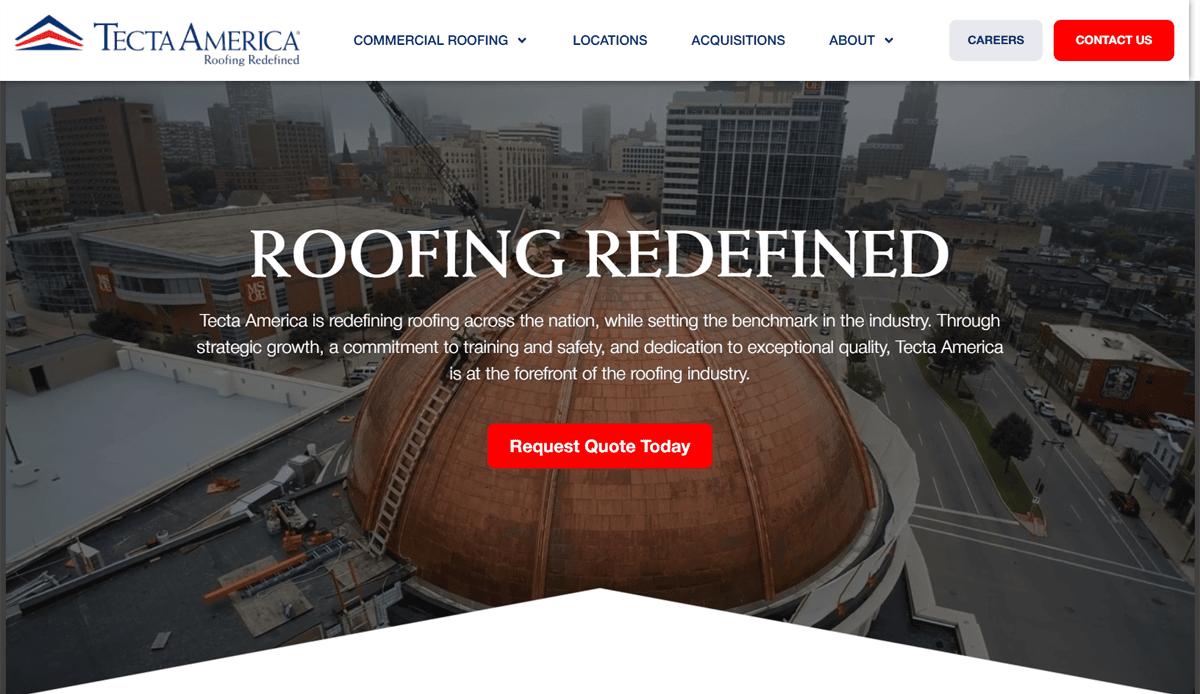
14. Tecta America Roofing
Location: Chicago, IL (national operations)
- Large gallery of architectural and commercial projects.
- Service systems clearly delineated (TPO, PVC, built-up).
- Local office breakdowns provide regional relevance.
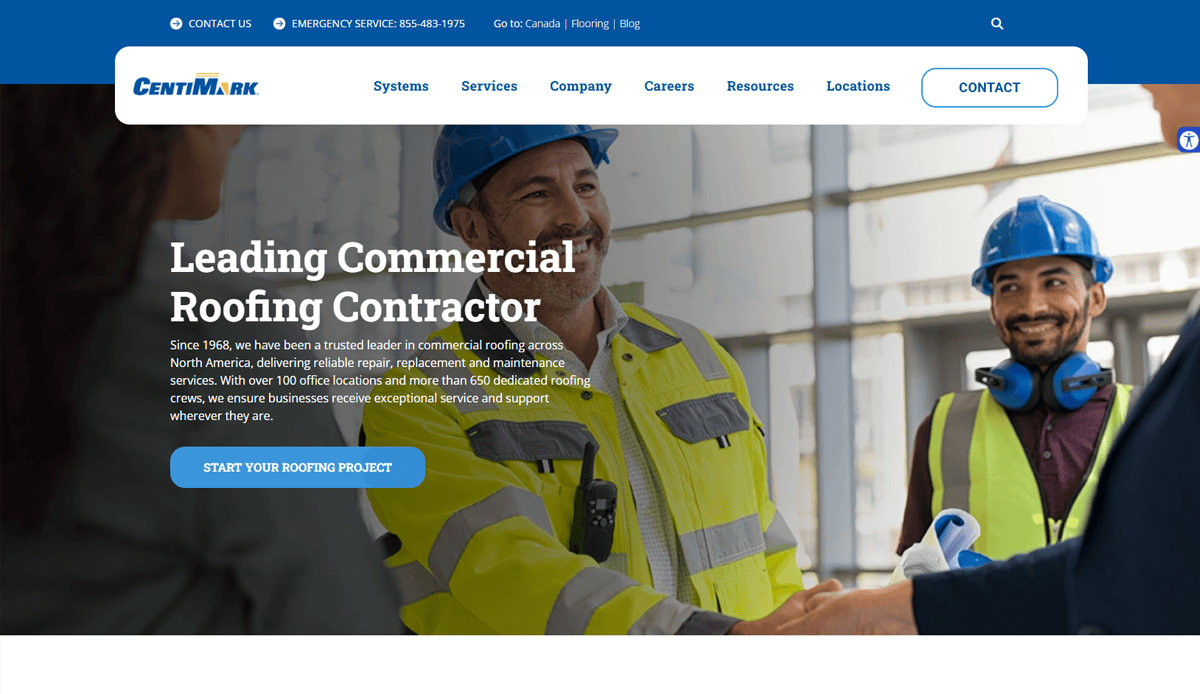
15. CentiMark Corporation
Location: Canonsburg, PA (nationwide)
- Emphasizes national scale with local office breakdowns.
- Warranty programs and safety ratings are prominently featured.
- Multiple service options are clearly explained.
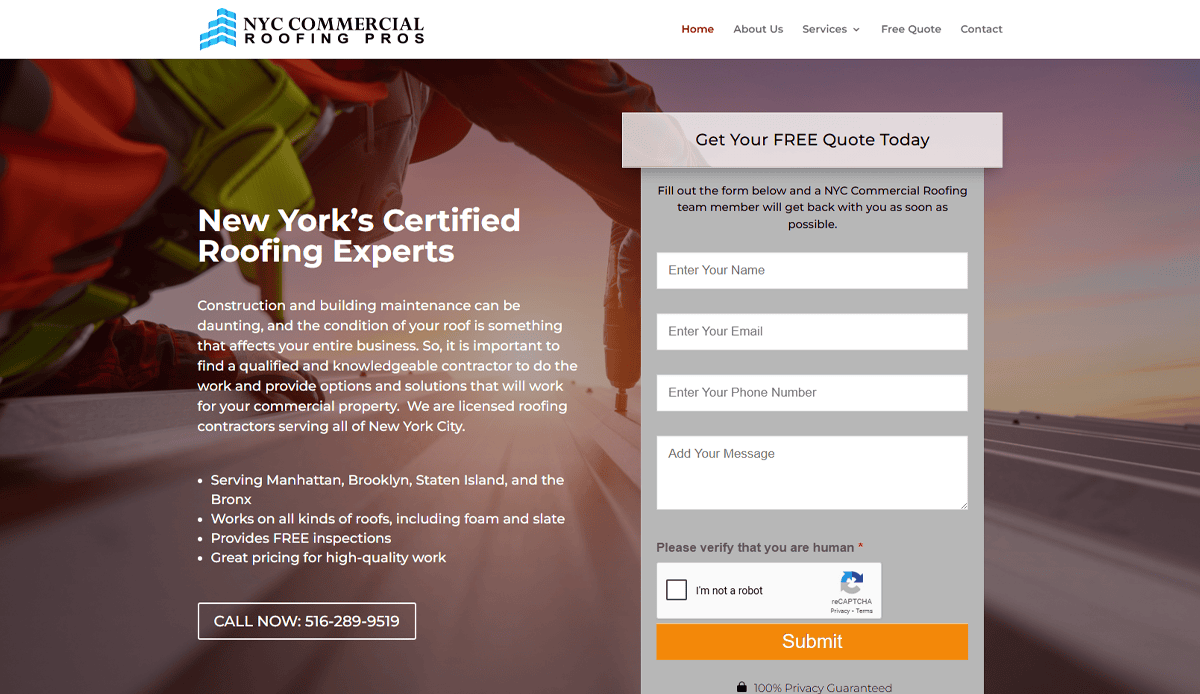
16. NYC Commercial Roofing Pros
Location: New York, NY
- Emphasizes local expertise across NYC with clear messaging for service areas.
- Simple and professional layout with an easy “Free Quote” call-to-action above the fold.
- Service pages are clear and targeted for businesses in the commercial and industrial segments.
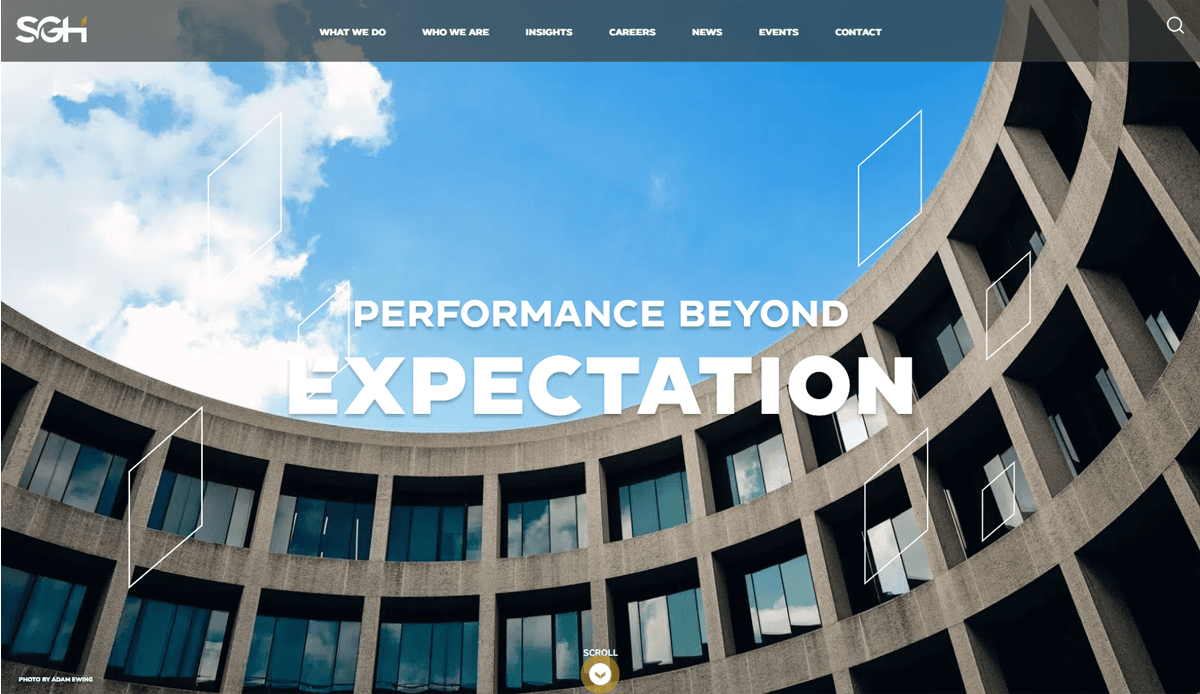
17. Simpson Gumpertz & Heger (SGH)
Location: Waltham, MA (engineering + roofing services)
- Clean corporate engineering site with strong technical credibility.
- Highlights large-scale institutional and commercial roofing case studies.
- Integrates engineering and roofing demos to show expertise.
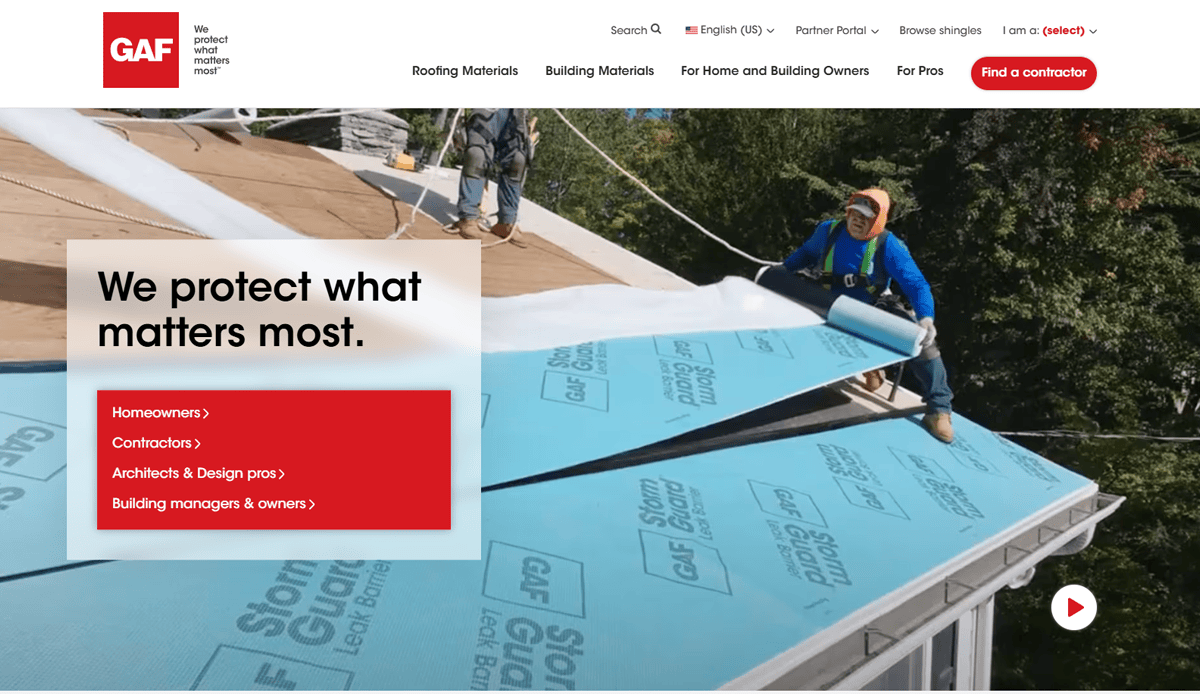
18. GAF Materials Corporation
Location: Parsippany, NJ (manufacturer, commercial roofing products)
- Product-oriented homepage with technical data on TPO, PVC, and coatings.
- Educational content and case studies aimed at commercial contractors.
- Interface is designed to support specifiers and commercial projects.
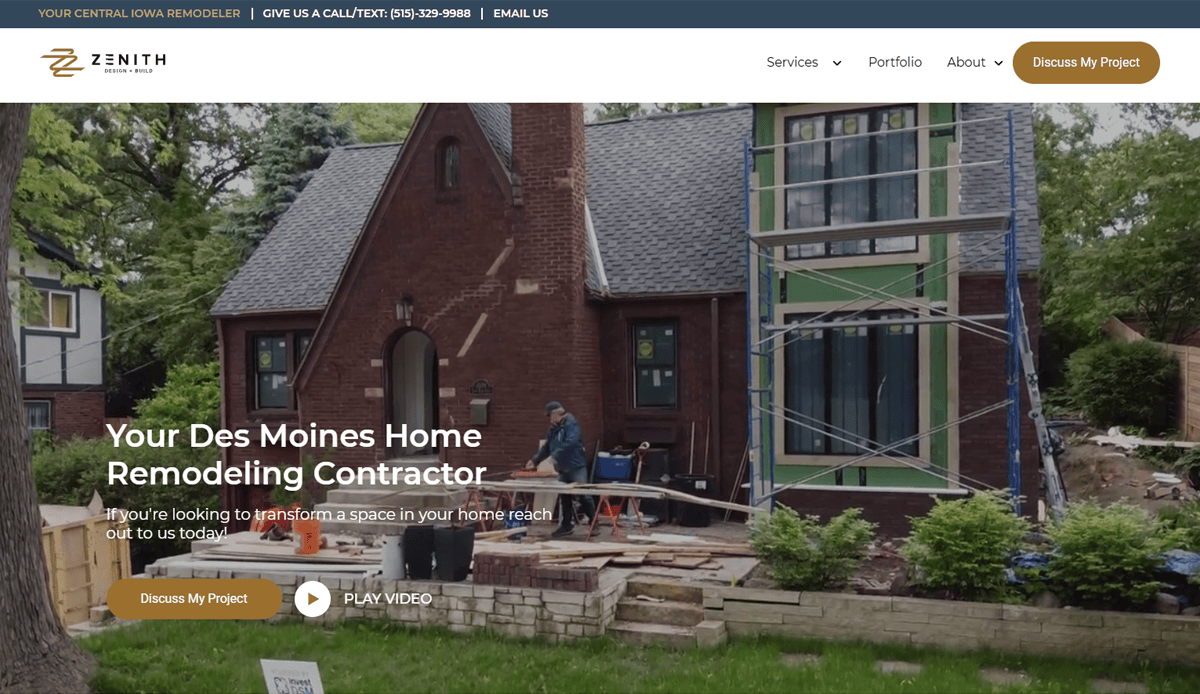
19. Zenith Design + Build
Location: Kansas City, MO
- Clean, intuitive layout, showcasing both design and roofing capabilities.
- Video hero section offers an engaging company overview without overwhelming text.
- Prominently displayed testimonials and case studies build trust and demonstrate a successful track record
Ready to Build a Roofing Website That Works for You?
You’ve seen how every part of your website—from structure and design to performance and digital marketing—impacts your ability to attract and convert website visitors. A professional website isn’t just a formality; it’s a direct extension of your brand and the most important online tool you have for winning new business.
If you’re tired of struggling with an outdated site or wasting time on a website builder that doesn’t deliver, it’s time to work with an agency that understands design and the roofing industry.
We help roofing companies build a roofing website that drives results, attracts local leads, and supports long-term growth. Request your custom website strategy from our expert team today.
Common Commercial Roofing Site Design Questions, Answered
What makes a great roofing website?
A great roofing website is fast, mobile-friendly, and built around the needs of your ideal customers. It features trust-building elements like testimonials, clear calls to action, before-and-after project photos, and a layout that’s easy to navigate. Most importantly, it speaks to the pain points of visitors actively searching for roofing services and encourages them to take the next step.
What should my roofing website include?
Your website should include a clear roofing company homepage, individual service pages for different types of roofing services (e.g., roof repair, replacement, inspections), an about page, testimonials, FAQs, a contact page, and a blog. If you specialize in different types of roofing or roofing materials, feature them on your website to improve search visibility and attract quality leads for your roofing business.
How does a well-designed website help my roofing business?
A well-designed website establishes credibility, attracts local leads, and boosts conversion rates. Think of your website as your most powerful sales tool—it’s often the first impression potential clients get of your brand. If your website is poorly designed, lacks clarity, or is hard to navigate, you’re likely losing leads before they ever contact you.
What are roofing keywords, and why are they important?
Roofing keywords are the terms people type into search engines when looking for roofing services in your area. Examples include “roof repair near me,” “TPO commercial roofing,” or “residential roof replacement.” Using these strategically throughout the website helps your roofing business rank higher in search engines, making it easier for leads to find you.
Can I use roofing website templates?
Yes, but with caution. Templates can be a fast way to build your roofing site, but they often lack customization, performance, and SEO flexibility. A roofing website built using templates may not reflect your unique brand or meet the specific requirements of roofing clients. If you don’t have a website yet, working with a website design and development agency like ours will help ensure that your website is optimized for conversions and long-term growth.
How do I design a roofing website that gets leads?
To design a roofing website that gets leads, focus on user experience, SEO, and conversion-driven content. That means a mobile-optimized layout, fast load times, content that addresses customer concerns, and consistent calls to action throughout the website. A successful roofing website also needs strong visual proof—photos, videos, and testimonials—that reinforce trust.
What’s the role of content on your website?
Content on your website educates visitors, builds trust, and helps with SEO rankings. Well-written content that explains your roofing services, showcases your work, and answers customer questions helps your site show up in search results when people are searching for roofing services. It also ensures that website visitors stay longer, increasing the chance of conversions.
Should I hire an agency that specializes in roofing design?
Yes. One that specializes in roofing understands the specific needs of the industry, like local SEO, visual proof of completed projects, and how to communicate trust quickly. They also know how to structure and write content that generates leads for your roofing business. Our full-service digital marketing agency helps roofing companies like yours build professional websites that get results.
What if my current website design isn’t working?
If your website design isn’t generating leads, looks outdated, or is difficult to use on mobile, it’s likely hurting your business. A redesign that focuses on professional web design, optimized SEO, and clear messaging can transform your site into a revenue-generating asset.
How do I start building a successful roofing website?
Start by identifying your audience and business goals. Then, plan your website structure, focus on branding, write content that answers your clients’ most common questions, and work with experienced professionals to execute the design and development. Whether you’re just starting or ready to grow your roofing brand, your website should include all the tools needed to succeed.